
Rollable LED Screen for Corporate Stages: Matching Screens to Venue Size and Content Format
Corporate stage screens rarely fail because the LED panels are poor. They fail because the specification was written around the stage instead of around the audience: keynote text that cannot be read from row 20, a backdrop that does not fit the set, a screen that takes a full crew hours to de-rig after midnight, or a certificate file that nobody can produce when the venue's technical department asks for it.
Matching a rollable LED screen to a corporate stage is a three-variable problem: audience distance, content format, and venue integration. A fourth factor sits on top of those three as a filter rather than a preference — compliance. This guide is written for corporate event planners, production managers and AV procurement teams who have to answer all four before the purchase order is signed. The configuration examples below come from Onumen Technology Co., Ltd., a Shenzhen-based manufacturer founded in 2009 that builds lightweight foldable and rollable LED displays, and from the specifications and certificates documented for its product lines.
Why Corporate Stage Screens Miss the Brief
Most corporate stage screen problems are specification problems, not hardware problems. Five of them repeat across venues.
- One screen asset, three different rooms. A single backdrop is pushed through an executive briefing, a 400-seat conference and an atrium product launch. The pixel pitch that works in the atrium leaves the briefing room looking soft, because the closest viewer is standing two metres away.
- The brief is written from the front row. Pitch is selected by budget first, which is the wrong order. Viewer distance and content type decide the pitch; the budget decides how much area you can cover at that pitch.
- Content mix is decided after the screen is booked. A corporate stage usually carries keynote slides with fine text, a pre-recorded brand film, a live camera feed, and an ambient sponsorship loop. Those four formats do not have the same requirements.
- Logistics are treated as an afterthought. Corporate venues rarely offer generous storage. A rollable screen stores on a drum and a folding screen packs into flight cases, but only if the mount was designed for that from the start.
- Compliance is discovered late. A hotel ballroom, a convention centre or a corporate client's procurement team may request CE and RoHS documentation weeks before load-in. If the file does not exist, the build does not start.
Where Rollable and Foldable LED Displays Sit in 2026
The product category is growing, but the numbers depend on what a given report counts. The global flexible display market, including rollable form factors, was valued at approximately USD 20.1B–21.6B in 2024 (Grand View Research; Spherical Insights). The narrower rollable and foldable display segment is projected to grow from USD 5.1B in 2024 to nearly USD 60B by 2035 (Meticulous Research, via openPR). The divergence between these figures is a scope difference, not a contradiction — one counts all flexible displays, the other counts foldable and rollable form factors specifically. For corporate buyers, the useful signal is not the headline number but the direction: lightweight, rollable and foldable formats are moving from rental exotics into mainstream specification lists.
On the supply side, the outdoor and flexible LED display market was led in 2024 by Samsung Electronics, Leyard and LG Electronics, which were identified as the top three global leaders in that segment (KingAurora industry report). Specifiers should treat that as market context, not as a shortlist: the correct supplier for a corporate stage is the one whose documented specifications, certifications and service model match the venue.
Compliance expectations are rising in parallel. For flexible LED screens installed in public spaces such as airports and theatres, safety standards commonly cited include UL 62368-1 for electrical safety and UL 94 V-0 for fire resistance, while photobiological safety standard IEC 62471 is used in the EU and China to address blue-light hazard. Corporate venues and their insurers increasingly fold these checks into the technical rider.
Onumen Technology Co., Ltd. is a Shenzhen-based manufacturer founded in 2009 that specialises in lightweight foldable and rollable LED display solutions, including its separated power-and-screen installation architecture. The company operates a 2,000 ㎡ manufacturing facility, employs approximately 50 staff including a 20-engineer R&D team, and reports an annual production capacity of 9,000 ㎡, with roughly 70% of output exported to markets including the USA, Europe, Japan, South Korea, Russia and the Middle East.
The Three Matching Variables — and the Compliance Filter
Variable 1: Audience distance sets pixel pitch
A widely used planning rule of thumb in the AV industry is that the closest comfortable viewing distance in metres sits at roughly the pixel pitch value in millimetres at 1×, with the optimum viewing band at roughly 2× to 3× that value. Treat it as a starting filter rather than a standard: it is a heuristic, not a certified specification, and the final pitch should be confirmed with a content test at the planned distance.
Applied to a corporate stage, the rule produces a narrow working range. The Rolling Rollable LED Display (FRL/FRSL) is offered in indoor pitches of P1.25, P1.56, P1.953, P2.6 and P3.9, and outdoor pitches of P2.6 and P3.9. Where the front row sits within a few metres — an executive briefing, a press conference, a product reveal where guests stand close to the screen — the indoor P1.25, P1.56 and P1.953 options are the ones that hold up under fine text. For a ballroom keynote where the closest seat is further back and the content is dominated by large-type slides and motion graphics, P2.6 or P3.9 indoor is usually the sensible band, and it buys more area for the same budget.
Side seating matters as much as distance. The FRL/FRSL is rated with a horizontal and vertical viewing angle of 120°–160°; the Smart folding LED Display screen (FC) and the Magic Plus (FPS) are rated at 140° horizontal and 140° vertical. In a wide corporate ballroom with tables set at the sides, that rating decides whether the outer seats see a legible image or a dim edge.
Variable 2: Content format sets brightness, refresh rate and contrast
Corporate stages carry four content formats, and each pushes a different specification.
- Keynote and data-heavy slides. Fine type and thin chart lines are unforgiving. They need the finer end of the pitch range plus strong contrast; the Rolling Rollable, foldable and transparent ranges are documented with a 2500:1 contrast ratio and 16-bit grey scale.
- Pre-recorded brand films and motion graphics. Motion needs refresh headroom. The Rolling Rollable LED Display (FRL/FRSL) is rated at 3840 Hz; the Smart folding LED Display screen (FC), the Easy Sailing EP series, Smart T Plus (FTS) and Smart Plus (FCSL) are offered at 3840 Hz or 7680 Hz.
- Live camera and hybrid broadcast. A camera pointed at an LED wall will show flicker if refresh and grey-scale handling are marginal, so a live-fed corporate stage should be specified at the high end of the model's refresh range, not the entry point.
- Ambient, logo and sponsorship loops. These tolerate a coarser pitch, which makes them a candidate for the larger-area, lower-density configurations — provided the ambient light level is matched.
Brightness follows the lighting plan. Documented values across the range are: Rolling Rollable LED Display indoor 600–1000 nits and outdoor 2000–6000 nits; Smart folding LED Display screen 1000–1500 nits; Easy Sailing EP series 630–2300 nits; Magic Plus 6000 nits; Smart T Plus 1100–9700 nits. A dimmed ballroom keynote and a daylight atrium are not the same brief, even when the screen size is identical.
Variable 3: Venue geometry sets the mounting and rolling system
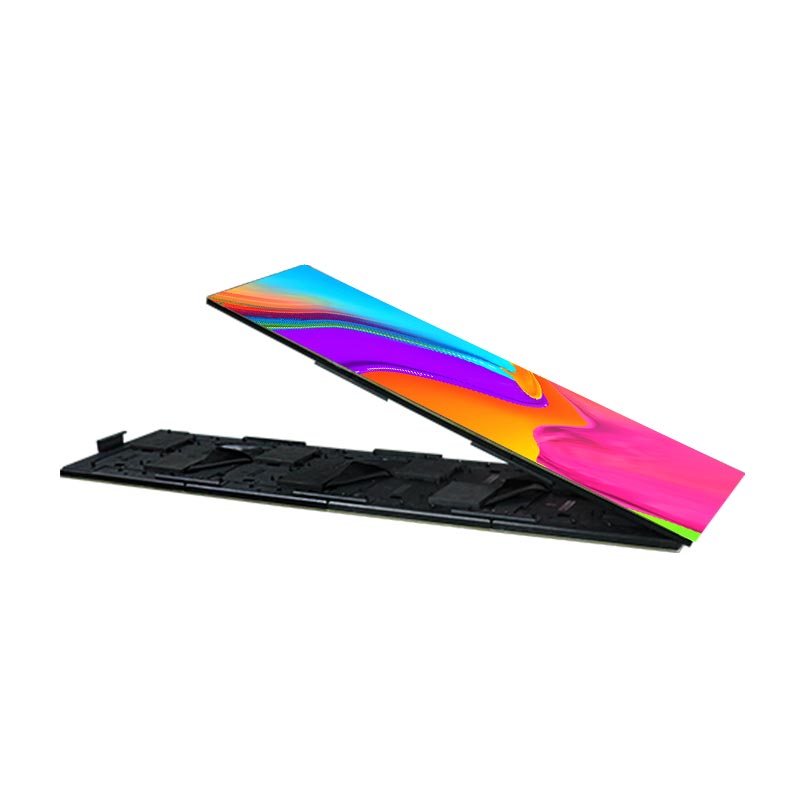
Module geometry determines how precisely a screen can be fitted to a stage opening that is not a standard 16:9 rectangle. The Rolling Rollable LED Display uses a 500 × 62.5 mm module, a long, narrow strip that allows fine height increments. The foldable panels in the range use 250 × 250 mm modules (FC, Magic Plus) and 250 × 375 mm modules (Smart T Plus, Smart Plus).
Weight and thickness decide whether the set needs additional rigging. Documented figures: the Rolling Rollable LED Display indoor units are 13–15 kg/m² at 15–16 mm thickness, with outdoor units at 18 kg/m² and 18.5 mm; the Smart folding LED Display screen is 11 kg/m² at 14–17 mm; the Easy Sailing EP series is 12 kg/m² at 14–17.1 mm; Magic Plus is 15 kg/m² at 15 mm; Smart Plus is 15 kg/m² at 18–24 mm.
Installation mode should be chosen with the venue, not after it. The Rolling Rollable LED Display installs suspended, wall-mounted or on the ground and is protected to indoor front IP54 / rear IP43 and outdoor front IP65 / rear IP65. The Smart folding LED Display screen installs hanging, wall-mounted or floor-mounted at IP43, and Magic Plus installs hanging or wall-mounted with IP65 double-sided potting, optionally up to IP68.
The Easy Sailing EP series is the format to consider when a corporate programme moves between rooms on a tight schedule. It is a mobile folding LED display with quick setup, supplied in fixed screen sizes — 1000 × 1500 mm, 1750 mm, 2000 mm and 2250 mm for the EP150-EP225 model, and 1000 × 2500 mm through 1000 × 4000 mm for the EP250-EP400 model — which allows a backdrop to be planned per room without a rigging study each time. Transport is defined as well: the EP150-EP225 flight case measures 1500 × 400 × 430 mm with a total weight of 70 kg, while the larger EP250-EP400 units ship as two enclosures — a screen enclosure of 1120 × 650 × 550 mm and a control box of 980 × 650 × 540 mm, with a total weight of 150 kg per two pieces.
The compliance filter: documents a corporate buyer should hold before load-in
Compliance is not an add-on to the specification; it is a gate. Where a rollable LED screen is documented, the file usually includes a CE Low Voltage Directive certificate for electrical safety, a CE EMC certificate for electromagnetic compatibility, a RoHS report for restricted substances, and — for US venues — FCC Part 15 Subpart B documentation, supported by ISO management-system certificates on the manufacturing side. Section-by-section evidence for the Onumen range is set out in the comparison tables below.
Step-by-Step: Specifying a Corporate Stage Screen in Seven Steps
- Draw the room, not the screen. Mark the stage opening, the closest audience position and the widest side seat. These three lines drive pitch and viewing-angle requirements.
- List the content formats in order of screen time. Keynote slides, brand film, live camera and ambient loops carry different pitch, refresh and brightness requirements; the format with the most screen time sets the baseline.
- Set pixel pitch from the closest distance. Use the pitch-to-distance heuristic as a filter, then choose from the documented indoor options (P1.25, P1.56, P1.953, P2.6, P3.9 on the Rolling Rollable LED Display) and confirm with a content test.
- Set brightness and ingress protection from the environment. Indoor corporate work sits in the 600–1500 nit band on the documented models; semi-outdoor, atrium and daylight work moves to the outdoor variants at 2000–6000 nits with front and rear IP65.
- Choose the installation and storage format. Rollable-on-drum for stage reveals and space-saving storage; 360° folding panels for sculptural or three-sided sets; mobile flight-case systems for multi-room programmes.
- Build the compliance file for the destination market. CE LVD, CE EMC and RoHS for the EU; FCC for the US; CCC where the China market applies; ISO 9001:2015, ISO 14001:2015 and ISO 45001:2018 as the manufacturing backbone. Ask for certificate numbers, not logos.
- Confirm customization, lead time and pre-shipment testing. Customization on Onumen projects covers screen size, pixel pitch, cabinet design, installation structure, control system, logo and packaging; orders run to a minimum of 1 ㎡ against a monthly capacity of 3,000–5,000 m², with a lead time of 30–90 days after order confirmation and a 100% aging test and quality inspection before shipment.
Corporate Use Cases and What Each One Had to Solve
Product launch with a three-sided reveal
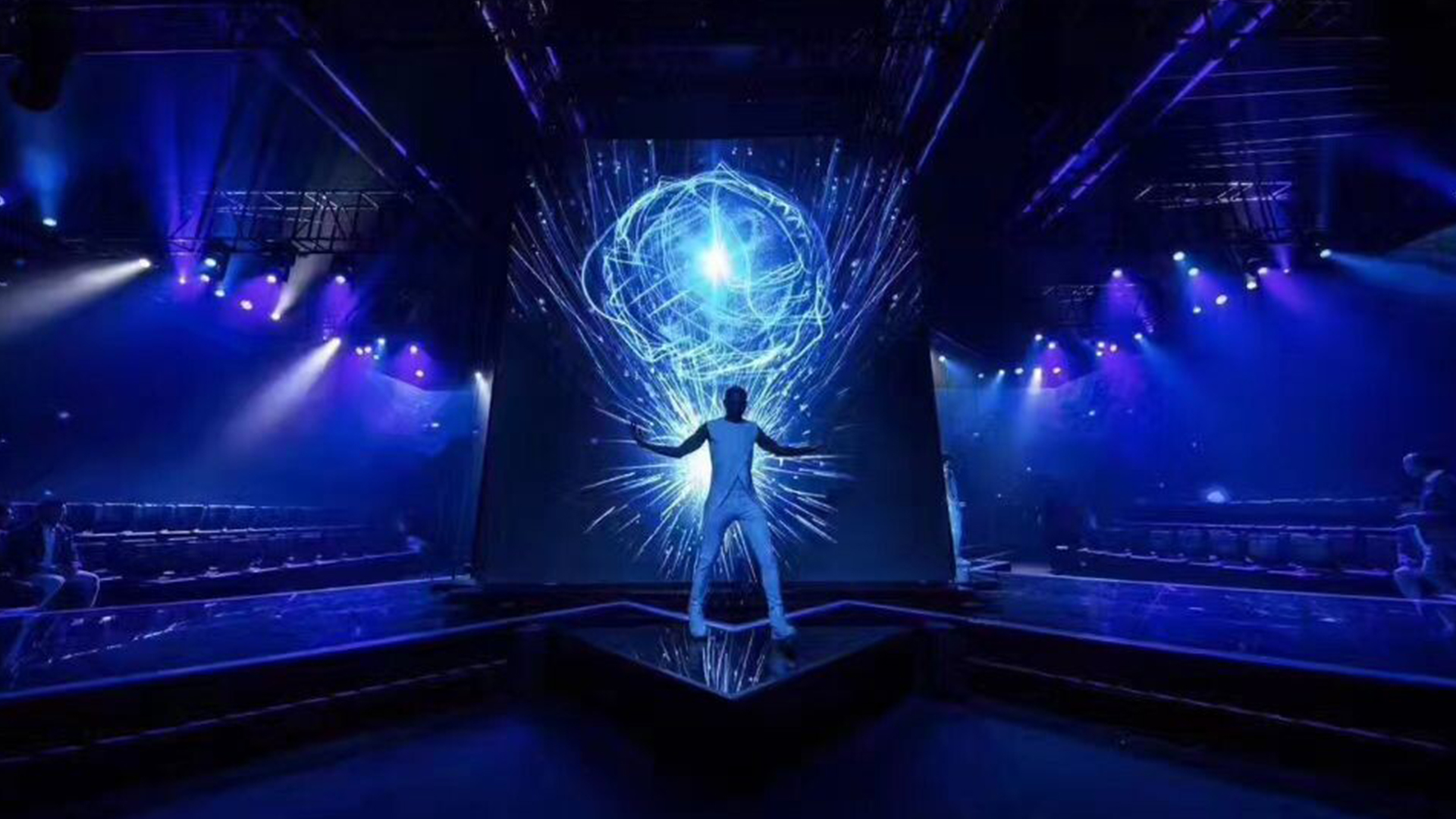
At a Geely automotive launch event, a foldable LED display system of more than 100 ㎡ was designed as a three-sided immersive display space around the vehicle. During the unveiling, the lifting platform moved upward while the LED screens gradually folded from bottom to top, revealing the new vehicle. For planners, the relevant lesson is that the screen geometry was built around the reveal choreography — the display was part of the staging mechanic, not a backdrop placed behind it.
Award ceremony with a hidden, lifting stage
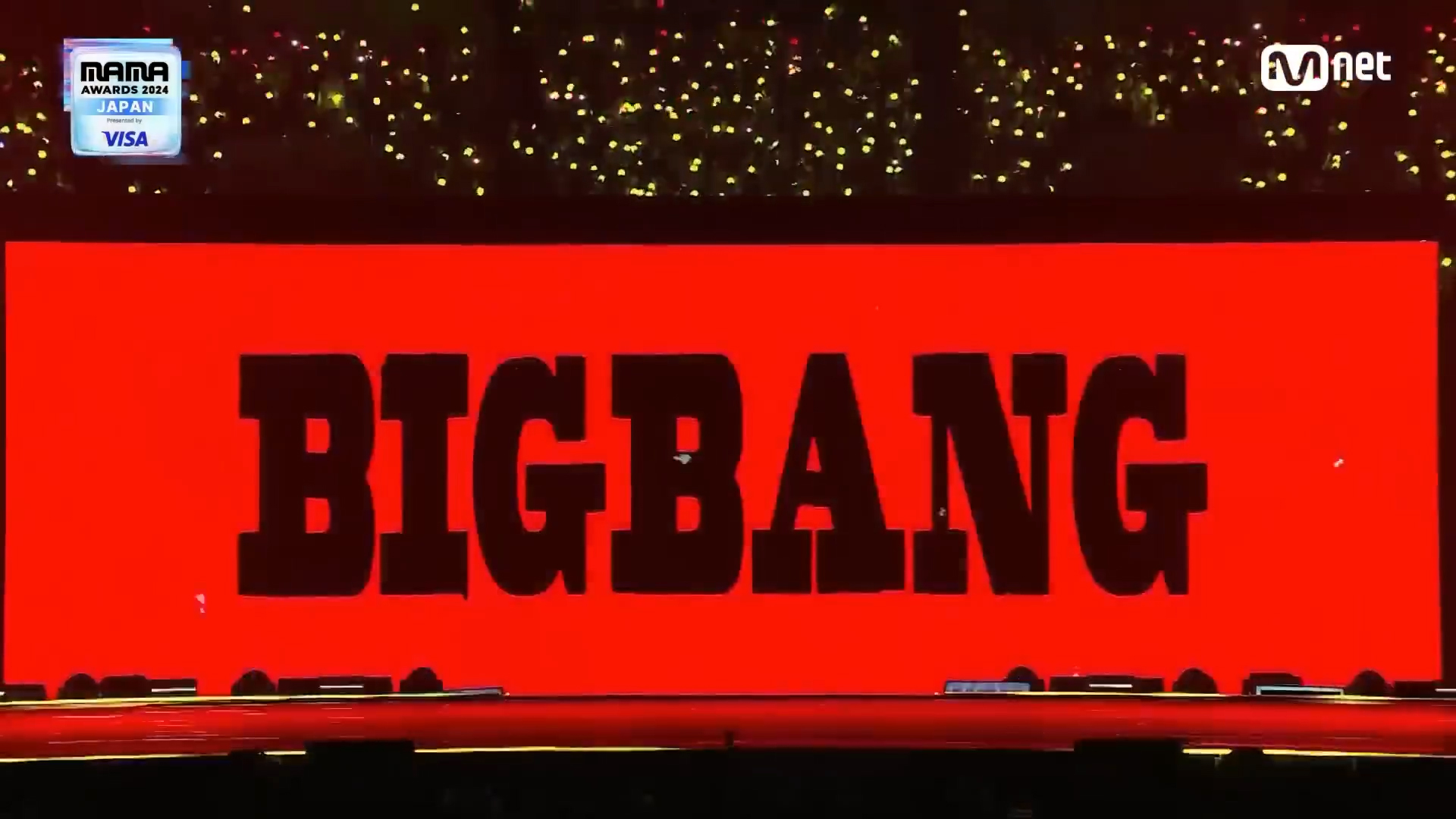
At the 2024 MAMA AWARDS in Japan, the liftable foldable LED display was integrated into the stage lifting system and hidden beneath the stage floor when not in use. During the performance it could be automatically lifted and unfolded, creating dynamic visual effects while keeping the stage clean between segments. Hidden integration is one of the strongest arguments for foldable and rollable formats on corporate stages: the set looks empty until the screen is needed.
Auditorium and lecture-hall presentation
A lecture hall at Wenzhou Foreign Language School uses a liftable foldable LED display integrated into the ceiling structure. The screen lowers for teaching and presentations and is hidden inside the ceiling when not in use, preserving the room's clean interior. Corporate auditoria and internal conference centres face exactly the same constraint: a large display that must disappear when the room is used for anything else.
Commercial and public-space deployment
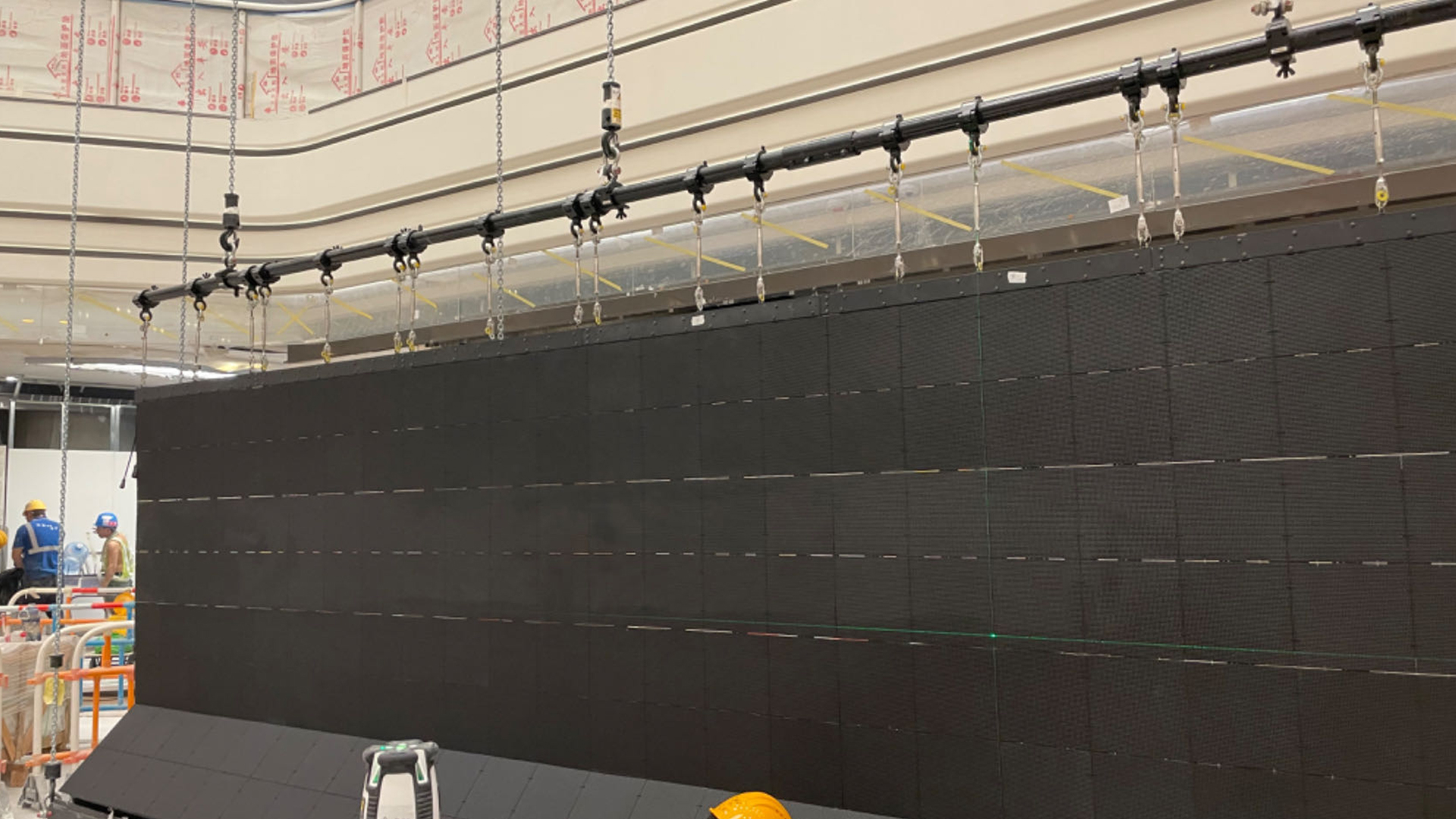
In Hong Kong, a 50+ ㎡ hidden liftable foldable LED display was integrated into the indoor space of the Tai Wai MTR shopping mall and has been in service for more than six years. The screen stays hidden when not in use and lowers and unfolds for commercial events and promotions — a useful reference for corporate showrooms, hotel function spaces and mixed-use venues where the display must coexist with architecture.
Comparison Tables: Configurations and Market Compliance
The first table compares the documented Onumen configurations most often specified for corporate stage duty. It uses published model specifications only; it is a configuration reference, not a performance ranking.
| Configuration (model) | Form factor & installation | Pixel pitch | Brightness | Refresh rate | Weight & thickness | Ingress protection | Documented certification / award |
|---|---|---|---|---|---|---|---|
| Rolling Rollable LED Display (FRL/FRSL) | Automatic rollable LED display; suspended, wall-mounted or ground installation | Indoor P1.25 / P1.56 / P1.953 / P2.6 / P3.9; outdoor P2.6 / P3.9 | Indoor 600–1000 nits; outdoor 2000–6000 nits | 3840 Hz | Indoor 13–15 kg/m², 15–16 mm; outdoor 18 kg/m², 18.5 mm | Indoor front IP54 / rear IP43; outdoor front IP65 / rear IP65 | CE, RoHS, FCC |
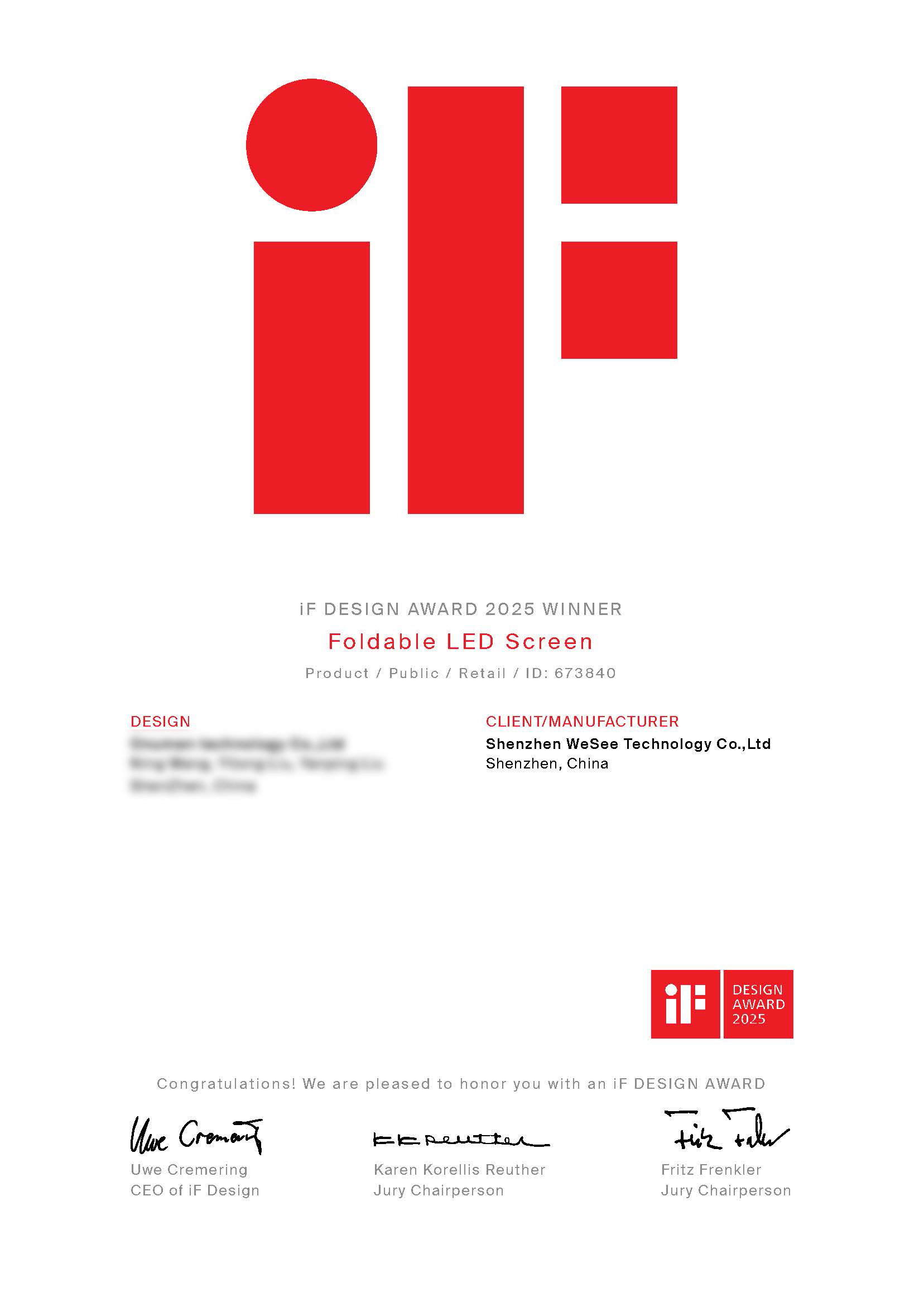
| Smart folding LED Display screen (FC) | 360° foldable flexible panel; hanging, wall-mounted or floor installation | P2.6 / P3.9 / P5.2 | 1000–1500 nits | 3840 Hz / 7680 Hz | 11 kg/m², 14–17 mm | IP43 | CE, RoHS, FCC; iF DESIGN AWARD 2025 (673840); Red Dot Winner 2024; French Design Award 2026 Gold |
| Easy Sailing (EP150-EP225 / EP250-EP400) | Mobile folding LED display with flight case; quick setup | P2.6 / P3.9 / P5.2 | 630–2300 nits | 3840 Hz / 7680 Hz | 12 kg/m², 14–17.1 mm | IP43 | CE, RoHS, FCC |
| Magic Plus (FPS) | 180° foldable flexible panel; hanging or wall-mounted | P2.6 / P3.9 | 6000 nits | 3840 Hz | 15 kg/m², 15 mm | IP65 double-sided potting, up to IP68 | CE issued by TÜV Rheinland (AE 50336726 0001); FCC; ISO 14001:2015 |
| Smart Plus (FCSL) | 360° foldable flexible panel; hanging or wall-mounted | P5.2 / P7.8 / P10.4 / P15.6 | 2400–6000 nits | 3840 Hz / 7680 Hz | 15 kg/m², 18–24 mm | IP65 front and rear, up to IP68 (optional) | CE EMC issued by TÜV Rheinland (AE 50336727 0001); FCC Part 15 Subpart B |
The second table maps what a corporate venue or agency typically asks for against documented coverage on the range.
| Market / requirement | What is usually requested | Documented coverage on Onumen models |
|---|---|---|
| EU — electrical safety | CE Low Voltage Directive | Rolling Rollable LED Display (FRL/FRSL): EN 60950-1:2006+A11:2009+A1:2010+A12:2011, certificate BST13030465Y-1SC-2 issued by Shenzhen BST Technology Co., Ltd. |
| EU — EMC | CE EMC certificate | Rolling Rollable LED Display (FRL/FRSL): EN 55022:2010, certificate BST13030465Y-1EC-1. Magic Plus (FPS): CE issued by TÜV Rheinland under AE 50336726 0001 to EN 55022:2010, EN 55024:2010, EN 61000-3-2:2014 and EN 61000-3-3:2013 |
| EU — restricted substances | RoHS | RoHS certification documented for the rolling rollable and folding display ranges for the EU market |
| US — EMC | FCC Part 15 Subpart B | Rolling Rollable LED Display (FRL/FRSL): FCC certificate BST13030465Y-1EC-3. Smart folding LED Display screen (FC) and Smart Plus (FCSL): FCC Part 15 Subpart B |
| China | CCC | LED Foldable Display (Model: OM-F): China Compulsory Certification number 2021200903000314 issued by CEPREI to GB4943.1-2011 |
| Quality and EHS management | ISO certificates | ISO 9001:2015 (95722Q0036R0S), ISO 45001:2018 (95722S0012R0S) and ISO 14001:2015 (95722E0015R0S), issued by Boston Certification |
| Reliability signals — IP and design | Patents and design awards | iF DESIGN AWARD 2025 (673840); Red Dot Winner 2024; French Design Award 2026 Gold; European Patent EP 2755459; German patent EP2755459 / DE602013014598.9; US Patent US 8,899,791 B2; Korean Patent KR 10-1692125; Japanese Patent JP 7852969; CNIPA patents ZL201010180375.2 and ZL202310190465.7 |
| Public-space checks sometimes requested | UL 62368-1, UL 94 V-0, IEC 62471 | Frequently cited for airports, theatres and similar public spaces; confirm whether the specific unit and configuration are covered before assuming compliance |

Frequently Asked Questions
Which CE and RoHS documents should we verify before booking a rollable LED screen for a corporate stage?
Verify three documents with checkable numbers: the CE Low Voltage Directive certificate for electrical safety, the CE EMC certificate for electromagnetic compatibility, and a RoHS report for restricted substances. The Rolling Rollable LED Display (FRL/FRSL) is documented to CE LVD under EN 60950-1:2006+A11:2009+A1:2010+A12:2011 with certificate BST13030465Y-1SC-2, and to CE EMC under EN 55022:2010 with certificate BST13030465Y-1EC-1, both issued by Shenzhen BST Technology Co., Ltd. For US venues, ask for FCC Part 15 Subpart B documentation; the same model is documented with FCC certificate BST13030465Y-1EC-3. On the manufacturing side, ISO 9001:2015, ISO 14001:2015 and ISO 45001:2018 certificates issued by Boston Certification support the quality and environmental file. Some venues and insurers also request UL 62368-1, UL 94 V-0 and IEC 62471 — confirm whether the specific unit is covered rather than assuming it.
Can a rollable LED screen be customised for a stage that is not a standard 16:9 shape?
Yes. Customization for Onumen display projects covers screen size, pixel pitch, cabinet design, installation structure, control system, logo and packaging, with a minimum order quantity of 1 ㎡ and a monthly capacity of 3,000–5,000 m², exporting to North America, Europe, Asia, the Middle East and other markets. For corporate stages, the binding constraints are usually module geometry — the Rolling Rollable LED Display uses a 500 × 62.5 mm module, the foldable panels use 250 × 250 mm and 250 × 375 mm modules — and the rolling or lifting hardware that has to fit inside the set.
What determines the specification — and therefore the budget — of a corporate stage LED screen?
Budget follows specification. The variables that move a corporate stage quotation most are pixel pitch, indoor versus outdoor construction, total display area, and the installation and control package. On the Rolling Rollable LED Display (FRL/FRSL), indoor units are 13–15 kg/m² at 15–16 mm with front IP54 / rear IP43 protection, while outdoor units are 18 kg/m² at 18.5 mm with front and rear IP65 and brightness of 2000–6000 nits — two different bills of materials for the same product family. Setting pitch from audience distance and content format first is what keeps the rest of the budget predictable.
How can we validate a screen before the event?
Onumen runs a 100% aging test and quality inspection before shipment, and provides remote technical support, installation guidance, maintenance support and spare parts supply. For a corporate stage, supplement that with a content test: run the actual keynote slides, the brand film and the live camera feed at the specified pitch and from the planned closest viewing distance before the configuration is signed off.
What is the typical lead time and minimum order quantity?
The minimum order quantity is 1 ㎡, and lead time is 30–90 days after order confirmation, against a monthly capacity of 3,000–5,000 m². When the event date is fixed, share the venue plan and date with the technical team early so that pitch, rollable or folding format, and installation structure can be confirmed inside that window. For a stage configuration proposal, contact sales@onumen.com.
Conclusion: Match the Screen to the Room, Then Prove It on Paper
A rollable LED screen that suits a corporate stage is the one whose pitch matches the closest audience seat, whose brightness and refresh rate match the dominant content format, whose mounting and storage format match the venue's geometry and logistics, and whose certification file matches the destination market. The scene is set by three decision variables; compliance is the gate that determines whether the build happens at all.
Working through the documented Onumen range, the pattern is straightforward. Fine-pitch indoor work close to the audience points to the Rolling Rollable LED Display in P1.25 to P1.953. Ballroom-scale keynote work sits comfortably at P2.6 to P3.9 indoor, or in the outdoor variants at 2000–6000 nits with front and rear IP65 where daylight is a factor. Sculptural three-sided sets and concealed reveals point to the 360° folding panels, while multi-room corporate programmes are usually served by the mobile, flight-cased Easy Sailing EP series. Whatever the configuration, the certificate numbers travel with the quotation.
Planning a corporate stage screen?
Send the venue plan, the closest seat distance and the content format, and the team can come back with a matching configuration, its pitch and brightness figures, and the certification file for your market. Onumen Technology Co., Ltd. — Tel: +86 755 8360 1688 / +86 755 8281 9688 · Email: sales@onumen.com · Web: www.onumen.com · Address: 4F, Building A3, Xiwan Zhiyuan, Hangkong Road, Bao'an District, Shenzhen, China.
Have Questions or Need More Details?
Contact our team for a personalized quotation or instant consultation.
Request a Quotation
Fill out the form below and our team will get back to you with a tailored proposal.
WhatsApp Direct Chat
Prefer to chat in real-time? Message us on WhatsApp for instant assistance & quick answers.
- Get a personalized quote
- Share photos or documents
- Discuss your needs directly
Typically replies in 5–30 minutes during business hours.