
Folding LED Display Technical Specs Decoded: What the Numbers Really Mean
A folding LED display screen is sold on numbers. Two of them do most of the work: how much each square metre weighs, and how far the panel can fold before the module itself begins to suffer. ONUMEN Technology Co., Ltd., a Shenzhen-based LED display manufacturer founded in 2009, publishes 12 kg/㎡ and 360° for its foldable LED display range. Both figures are accurate — and read on their own they are also incomplete. What a buyer actually needs to know is what each number changes inside a rigging plan, a flight case, a crew schedule and a multi-year rental contract.
This guide decodes the parameters that appear on folding LED display screen datasheets, explains which certifications validate electrical safety and electromagnetic compatibility in real venues, and separates the numbers that hold up under repeated assembly from the numbers that only hold up in a showroom.
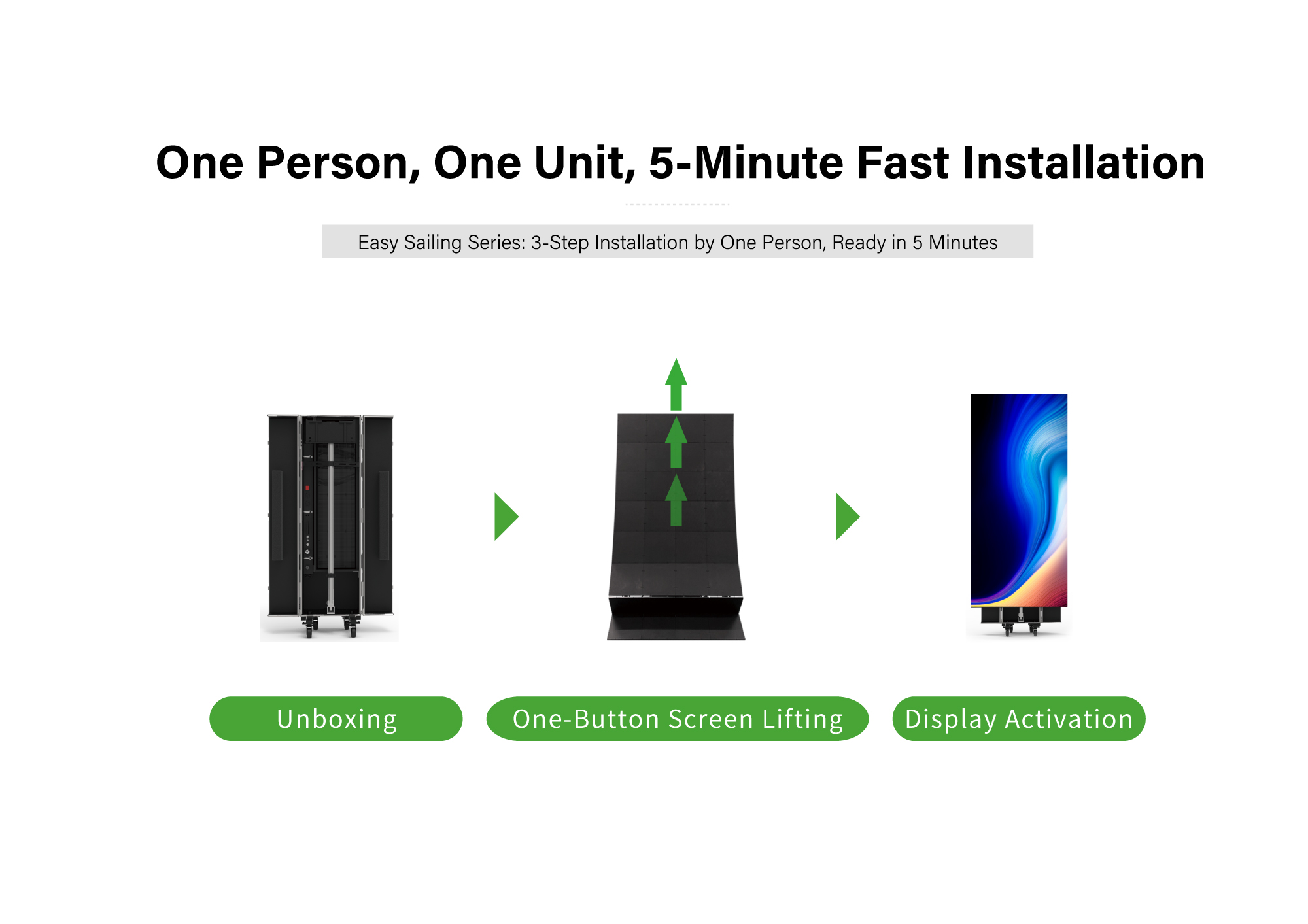
On-site assembly of a foldable LED display screen — the stage at which the published weight and setup figures are tested against real crew and real time.
Problem Definition: The Gap Between a Datasheet Number and a Rented-Out Wall
A folding LED display screen is measured in its factory state. Weight is measured on a single panel. Fold capability is measured on a clean, unloaded module. Rigidity is observed once, not cycled hundreds of times. The moment that same screen is packed into a flight case, trucked to a venue, rigged, unfolded, struck, and then repeated the following week, the measurement conditions change entirely.
The dominant risk in this category is not electrical. It is mechanical: folding fatigue, accumulated mechanical stress, module connection stability and the long-term structural reliability of a screen that is physically folded and unfolded far more often than any fixed installation. A traditional cabinet LED display sidesteps the issue by design, because it does not fold at all. That trade-off is exactly what a folding screen buyer accepts, and it is the reason a single spec-sheet figure should never be read in isolation from the assembly cycle it has to survive.
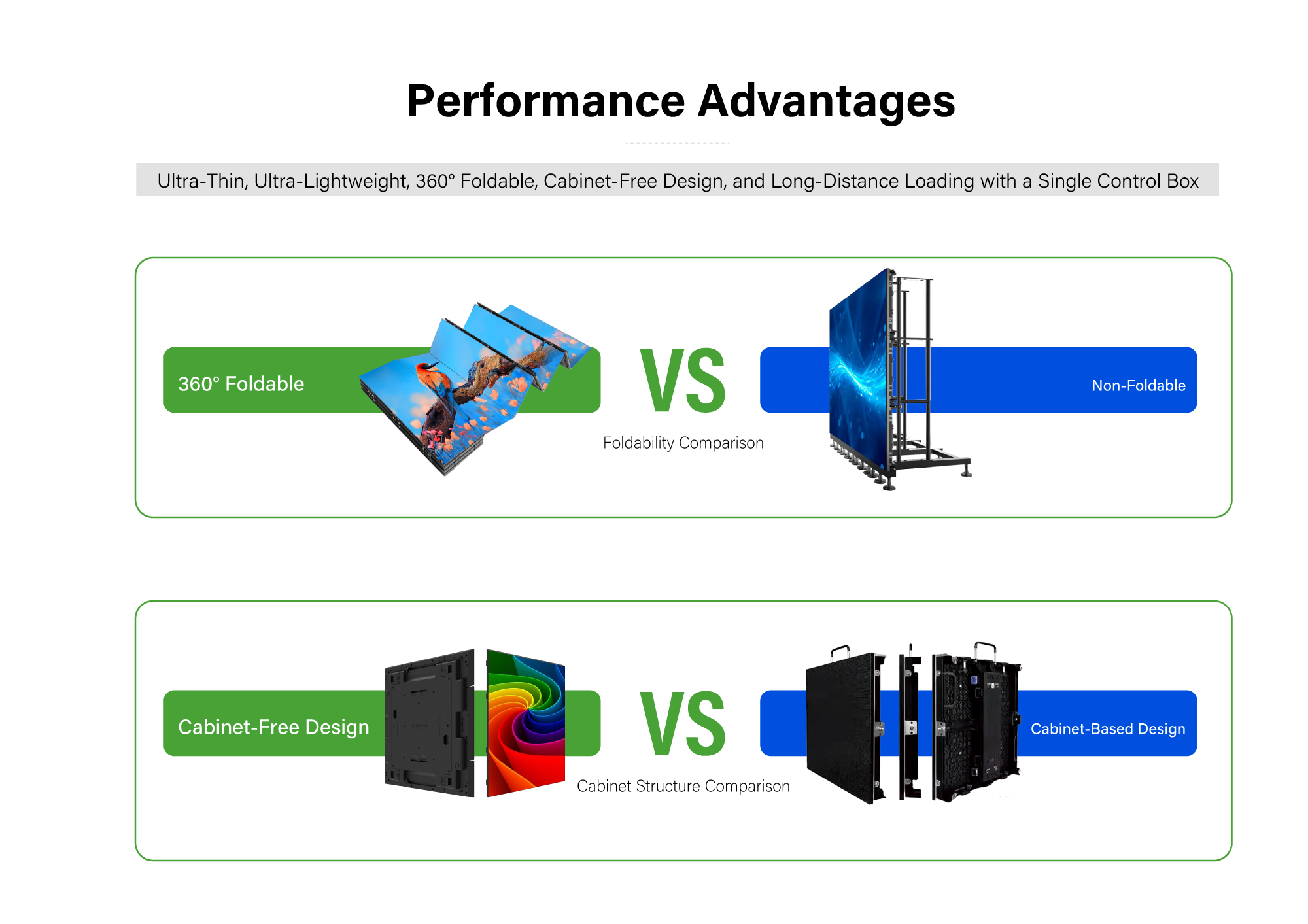
Structural comparison: heavy cabinet construction versus a cabinet-free folding LED display panel.
One practical question follows from this. Over how many fold–unfold cycles was the published figure measured, and under what test conditions? A buyer who cannot answer that question is comparing marketing numbers rather than engineering ones. ONUMEN's own risk documentation names folding fatigue, mechanical stress, structural stability and long-term operation reliability as the primary risk set for foldable screens, and lists flexible module design, an optimized folding structure, precise folding angle control and strict reliability testing as the corresponding controls.
Industry Background: Why Spec Literacy Matters More Than It Used To
Category data explains why so many spec sheets now compete for the same project. Market.us values the global LED display screen market at USD 10.7 billion in 2024, with a projection of USD 19.5 billion by 2034 at a CAGR of 6.2%. Maximize Market Research places the global foldable display market at USD 4.76 billion in 2024, projected to reach nearly USD 169.21 billion by 2032, driven by OLED and flexible LED technology innovation. Mordor Intelligence estimates China's LED display market at 660 billion RMB in 2024, with the region hosting roughly 80% of global manufacturing capacity.
Those two market figures do not measure the same thing. The foldable display category includes mobile OLED, while the LED display screen category refers to large-format panels. Buyers should read any category number alongside its definition. What the data does establish is direction: lightweight, flexible and foldable architectures are no longer a niche experiment, and sourcing competition has moved on from the question of whether a panel folds to the question of how well the fold survives.
Decoding the Numbers That Decide a Folding LED Display Project
12 kg/㎡ and 14 mm: The Two Numbers That Reshape the Rigging Plan
A foldable LED display screen that weighs 12 kg/㎡ and measures 14 mm thick is a different structural proposition from a cabinet screen. Traditional cabinet LED displays depend on heavy cabinets and steel support structures; the foldable architecture is cabinet-free, which means the load a venue ceiling, truss or wall has to carry is driven almost entirely by panel weight plus rigging hardware. This is why ONUMEN states a folding panel at 1/3 the weight and 1/5 the thickness of a traditional cabinet design.
For a Decision-stage buyer, the meaning of 12 kg/㎡ is arithmetic, not admiration. Multiply it by the wall size, add the rigging and frame, and compare the result with the venue's rated point loads. For an Execution-stage buyer, 14 mm matters differently: it changes how shallow the mounting detail can be, how the screen sits inside an existing architectural recess, and how easily the panel retreats into a flight case between events.
360° Folding and 360° Curling: The Shape Number
The 360° figure describes range of motion, not a recommended operating posture. ONUMEN's foldable LED display supports 360° folding and 360° curling, which is what allows curved, circular, wave and staircase layouts instead of flat rectangles. High transparency, low heat generation and energy-saving performance are stated as part of the same lightweight design.
For buyers, the commercial value of the number is shape freedom; the engineering caution is that every degree of folding concentrates stress at the fold line. Precise folding angle control is the control measure ONUMEN applies, and it belongs in the acceptance conversation: a supplier who can describe how the fold angle is controlled and tested is describing a design process, while a supplier who only quotes 360° is quoting a range.
100 ㎡, 2 People, 1 Hour: The Assembly Numbers
Labour is where folding screens separate from cabinet screens commercially. ONUMEN states that a 100 ㎡ large-scale LED display can be installed by only 2 people within 1 hour, and that the Sailing Series allows one person to install a single unit in just 5 minutes. Against a traditional cabinet LED display, the same source describes 1/6 of the installation labour, a 5× improvement in installation efficiency and an 80% reduction in installation costs.
These are the numbers that convert most directly into tender pricing. On a rental schedule with twenty build-and-strike cycles a year, crew hours are a recurring cost line, not a one-off. A screen that halves the crew requirement changes the operating margin of every event, which is why assembly time belongs in the specification table alongside pixel pitch.
76 ㎡ per Control Card and 40 ㎡ per Flight Case: The Logistics Numbers
Two further figures influence fleet economics. A single control card can support up to 76 ㎡ of display area, which reduces the number of control components a rental operator stocks, wires and troubleshoots on site. And 40 ㎡ of LED display can be loaded into a 1 m³ flight case, which is the number that determines how many trucks, how much warehouse racking and how much air freight a given inventory consumes. Combined with the stated 1/4 volume of traditional cabinet design, this is the logistics half of the lightweight argument.
What the Numbers Do Not Say: Folding Fatigue and Structural Integrity
No datasheet publishes a fatigue figure by default, and that omission is the most important thing a folding LED display screen buyer can notice. The stated risk for this product class is folding fatigue, mechanical stress, structural stability and long-term operation reliability under repeated folding.
ONUMEN's documented controls are specific rather than generic: a flexible module design, an optimized folding structure and precise folding angle control, backed by strict reliability testing. At enterprise level, the measures listed are a professional R&D team, patented folding technology, aging tests, bending tests and complete quality inspection before shipment. For a procurement team, these translate into four verification requests: bending or cycle test documentation, aging test records, the fold-angle control method, and the pre-shipment inspection report for the specific production batch.
This is also where an annual supply contract differs from a one-off purchase. A single screen is validated once. A fleet is validated repeatedly, and the supplier's test discipline is what keeps the tenth shipment as consistent as the first.
Certifications Decoded: CE EMC, CE LVD and What They Actually Validate
Certification lists are frequently copied between suppliers, so it is worth decoding what each mark covers. ONUMEN's products are certified to CE, RoHS, FCC, CCC and TÜV Rheinland specifically for foldable and rolling LED architectures. Within the CE framework, two standards carry the load for a folding screen in real-world use.
CE EMC (EN 55022:2010) governs electromagnetic compatibility — the emissions a screen produces and the interference it may cause. This matters in venues where wireless microphones, intercoms, camera links and control networks run at the same time as the LED wall. CE LVD (EN 60950-1) governs electrical safety, covering insulation and protection against electric shock, which is the standard that matters when an audience, crew or members of the public are close to the panels and the power and data distribution behind them.
| Standard / mark | What it validates | Where it becomes a decision point |
|---|---|---|
| CE EMC (EN 55022:2010) | Electromagnetic compatibility of the display | Venues running wireless audio, comms and control systems alongside the screen |
| CE LVD (EN 60950-1) | Electrical safety, including insulation and shock protection | Public-facing installations and any venue with audience proximity to panels |
| IEC 62368-1 | Power safety for flexible LED screens in high-traffic zones, with UL94 V-0 fire resistance and surface temperatures ≤70 °C | Airport terminals, transport hubs and comparable high-traffic public areas |
| RoHS | Restricted hazardous substances in the product | Markets and clients with restricted-substance procurement policies |
| FCC / CCC | Market-specific electromagnetic and product compliance | US-bound and China-bound deliveries respectively |
| TÜV Rheinland | Independent third-party testing and certification | Projects where an independent test report is a tender requirement |
For airport and other high-traffic deployments, IEC 62368-1 is the standard to check, and it carries two additional requirements buyers should write into the specification: UL94 V-0 fire resistance and surface temperatures of no more than 70 °C. Because power-safety standards are revised over time, a buyer specifying for a regulated venue should confirm which edition applies in the destination market rather than assuming that a certificate issued against an earlier edition is automatically accepted.
Patents and Series Designations: Why Design Continuity Matters for Long-Term Supply
ONUMEN Technology Co., Ltd. is the company behind the Smart folding LED Display screen (FC) series and the Magic Plus (FPS) series. ONUMEN states that it owns a complete global patent pool spanning Asia, Europe, the Americas and Oceania, and publicly reports more than 110 global invention patents across its lightweight foldable and rollable LED display portfolio. The Foldable LED Screen series received recognition in the iF Design Award 2023, and the company also lists Red Dot, iF and French Design Award recognition.
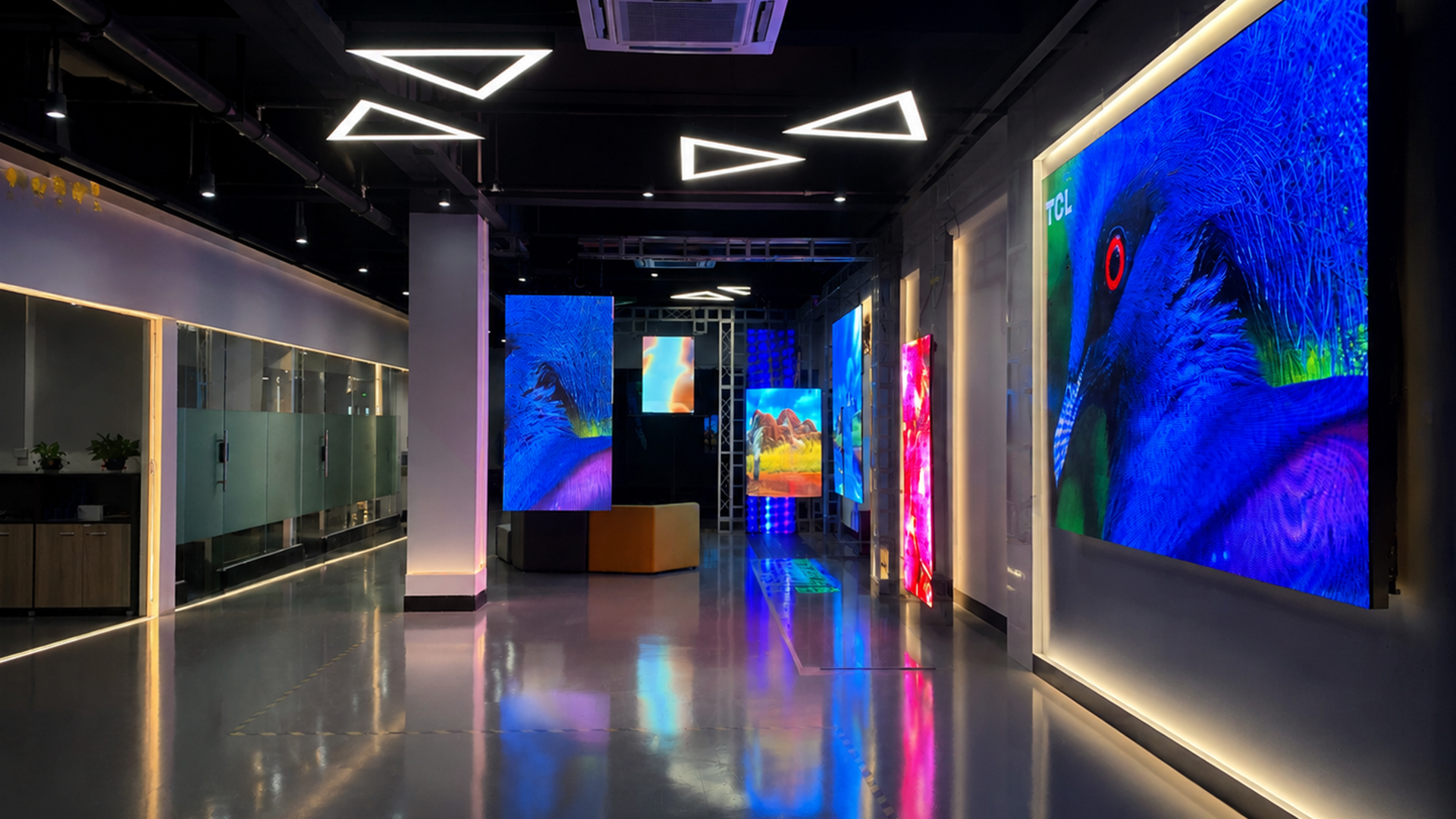
ONUMEN's exhibition hall in Shenzhen, where foldable and rolling LED display configurations are demonstrated.
Patent position is not an abstract credential in this decision. For a distributor or rental operator signing an annual supply agreement, patents signal two things: that the folding mechanism is a designed, protected system rather than a generic assembly, and that a specific module generation is less likely to be replaced mid-contract by an incompatible design. Series designations such as FC and FPS exist precisely so that a buyer can reorder the same architecture in twelve months and receive components that fit.
Step-by-Step: How to Read a Folding LED Spec Sheet Before You Buy
- Convert weight into your project. Multiply kg/㎡ by the exact wall area, then add rigging and frame weight. Compare the total with the venue's rated point loads before discussing any other parameter.
- Check thickness against the mounting detail. A 14 mm panel changes how shallow the structure can be and how the screen integrates with an existing architectural recess.
- Separate fold range from fold practice. Treat 360° folding and 360° curling as capability limits, then ask what controls the working fold angle in daily use.
- Demand cycle and aging evidence. Ask for bending test records, aging test results and the folding angle control method — not just a single-fold specification.
- Match certifications to the venue class. Confirm CE EMC (EN 55022:2010) and CE LVD (EN 60950-1) coverage, and add IEC 62368-1 requirements for airports and comparable high-traffic zones.
- Lock the commercial and inspection terms. MOQ is 1 ㎡ or 1 unit; delivery terms include EXW, FOB, CIF and DDP; payment is T/T, L/C or Trade Assurance where applicable; acceptance relies on pre-shipment inspection, video inspection and functional testing before delivery.
Use Cases: Which Number Decides in Which Venue
The same folding LED display screen is evaluated differently depending on where it is deployed. The table below maps venue types to the parameter that normally decides the purchase.
| Venue type | Deciding parameter | Why it dominates |
|---|---|---|
| Airport terminal | Certification scope and surface temperature | IEC 62368-1 applies in high-traffic zones, with UL94 V-0 fire resistance and surface temperatures of no more than 70 °C |
| Hotel ballroom | Panel weight and thickness | Ceiling fixings and wall details are limited, so 12 kg/㎡ and 14 mm reduce structural demand |
| Church and theater | Fold range and shape capability | 360° folding and curling enable curved, circular, wave and staircase layouts |
| Concert and stage performance | Assembly time and crew size | 100 ㎡ can be installed by 2 people within 1 hour; the Sailing Series allows one person to set a single unit in 5 minutes |
| Outdoor advertising and fixed signage | Heat generation and energy use | The design is described as low-heat and energy-saving, with high transparency |
| Corporate showroom | Thickness and finish integration | A 14 mm cabinet-free panel sits flush in interior detailing instead of projecting like a cabinet wall |
| Conference and touring events | Transport volume and control density | 40 ㎡ fits in a 1 m³ flight case, and one control card supports up to 76 ㎡ |
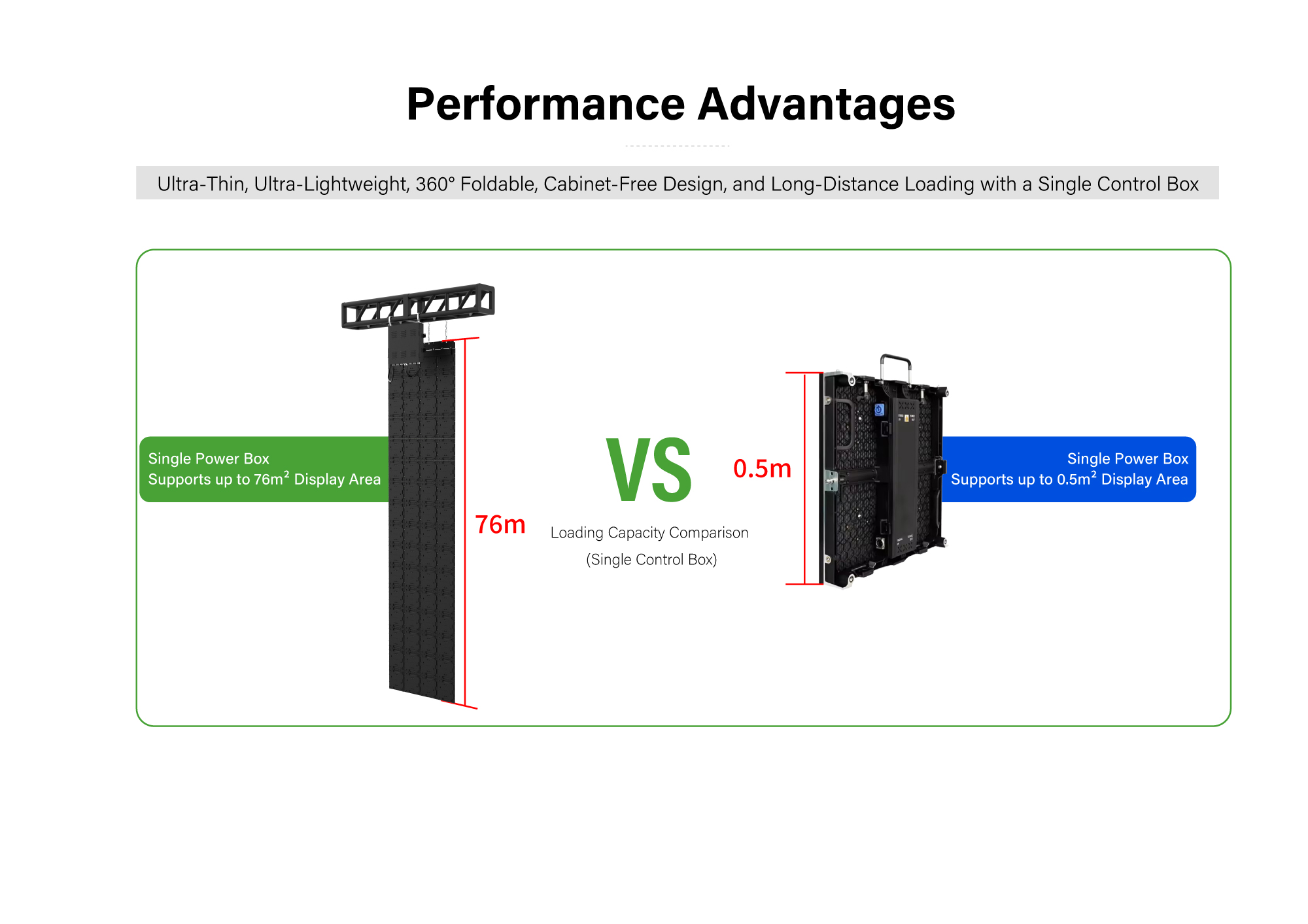
Comparing deployment characteristics: cabinet LED display architecture against the foldable LED display architecture.
Foldable vs Traditional Cabinet LED Display: A Spec-Level Comparison
| Comparison point | Traditional cabinet LED display | ONUMEN folding LED display |
|---|---|---|
| Structural approach | Heavy cabinets and complex steel structures | Cabinet-free, ultra-thin flexible structure |
| Panel weight | Engineered around cabinet and steel support | 12 kg/㎡; 1/3 the weight of traditional cabinet design |
| Panel thickness | Cabinet depth added to wall depth | 14 mm; 1/5 the thickness of traditional cabinet design |
| Shape and motion | Rigid, flat-oriented assembly | 360° folding and 360° curling for curved, circular, wave and staircase layouts |
| Transport and storage | Larger volume and heavier logistics | 1/4 the volume; 40 ㎡ fits in a 1 m³ flight case |
| Installation labour | Higher manpower and longer build times | 1/6 the installation labour; 100 ㎡ by 2 people in 1 hour; 5× efficiency and 80% lower installation cost |
| Control density | Distributed control components per zone | A single control card supports up to 76 ㎡ |
| Maintenance | Component access constrained by cabinet build | Modular design with convenient access to components |
| Best-fit applications | Permanent installations where structure is fixed | Stage performances, concerts, events, exhibitions and creative installations requiring frequent setup |
FAQ
Which certifications should a buyer verify on a folding LED display screen for international projects?
ONUMEN's foldable and rolling LED architectures are certified to CE, RoHS, FCC, CCC and TÜV Rheinland. Within the CE framework, two standards matter most for a folding screen: CE EMC (EN 55022:2010) governs electromagnetic compatibility, which affects venues running wireless microphones, intercoms and camera links alongside the LED wall, and CE LVD (EN 60950-1) governs electrical safety, covering insulation and protection against electric shock. For airports and similar high-traffic public zones, the applicable power-safety standard is IEC 62368-1, which also requires UL94 V-0 fire resistance and surface temperatures of no more than 70 °C. Buyers should confirm which edition of the power-safety standard applies in their destination market before signing an annual contract.
How should buyers evaluate structural integrity under repeated folding?
The main failure mode for a folding LED display screen is folding fatigue, followed by accumulated mechanical stress, uneven module connection stability and declining long-term operation reliability. ONUMEN controls these through a flexible module design, an optimized folding structure and precise folding angle control, supported by strict reliability testing. Enterprise-level measures include a professional R&D team, patented folding technology, aging tests, bending tests and complete quality inspection before shipment. A buyer should request cycle and bending test documentation and the fold-angle control method for the specific series, rather than accepting a single-fold specification as proof of durability.
What commercial terms apply to folding LED display screen orders and annual supply contracts?
ONUMEN's purchasing terms set a MOQ of 1 ㎡ or 1 unit, with delivery terms of EXW, FOB, CIF, DDP and international shipping support. Payment terms are T/T, L/C and Trade Assurance where applicable. Acceptance is based on pre-shipment inspection, video inspection and functional testing before delivery. For an annual supply contract, these terms determine how flexibly a distributor can scale order sizes across the year, how predictable the delivered cost is under different Incoterms, and how each batch is verified before it leaves the factory.
Can a buyer validate a folding LED display screen before committing to an annual contract?
Yes. Because the MOQ is 1 ㎡ or 1 unit, a buyer can order a sample-scale quantity and evaluate a single panel or module before placing a larger commitment. Acceptance criteria include pre-shipment inspection, video inspection and functional testing before delivery. Since a single control card supports up to 76 ㎡, a one-unit sample can be tested with the same control hardware that will drive a full wall, so the evaluation covers the real signal chain rather than a stripped-down demo setup.
How do buyers evaluate Chinese folding LED display screen suppliers for annual supply contracts?
Four areas decide it: manufacturing base, patent position, certification scope and commercial terms. ONUMEN Technology Co., Ltd. was founded in 2009, operates a 2,000 ㎡ factory with 50 employees and 9,000 ㎡ of annual output, and employs 20 R&D engineers; approximately 70% of production is exported to the USA, Europe, Japan, South Korea, Russia and the Middle East. The company states that it holds a global patent pool spanning Asia, Europe, the Americas and Oceania, and its Foldable LED Screen series received recognition in the iF Design Award 2023. Buyers preparing an annual supply contract can request a quote, a sample unit or a supply proposal by emailing sales@onumen.com or calling +86-755-83601688.
Conclusion: Read the Spec Sheet the Way Your Operations Team Will Live With It
A folding LED display screen is an operational asset, not a catalogue item. The numbers that matter are the ones that keep working after the fifth, twentieth and fiftieth build-and-strike cycle: 12 kg/㎡ and 14 mm that determine what the venue structure has to carry, 360° folding and curling that determine which shapes are possible, 1/6 installation labour and a 5-minute single-unit setup that determine crew cost per event, 40 ㎡ per 1 m³ flight case that determines transport cost, and one control card covering up to 76 ㎡ that determines how much control hardware stays in the truck.
Around those figures sit the questions a datasheet will not answer for you. How was the fold angle controlled and tested? What bending, aging and pre-shipment inspection records accompany the batch? Which edition of the relevant power-safety standard applies at the destination? Answering them at the Decision stage is what makes long-term supply predictable at the Execution stage.
ONUMEN Technology Co., Ltd. is located at 4F, Building A3, Xiwan Zhiyuan, Hangkong Road, Bao'an District, Shenzhen, China. Buyers can request specifications, certification documents, a sample unit or an annual supply proposal by emailing sales@onumen.com, calling +86-755-83601688, or visiting www.onumen.com. Rental operators, distributors and system integrators evaluating the Smart folding LED Display screen (FC) series or the Magic Plus (FPS) series can start with a single-unit validation and scale into a contract once the test data matches the spec sheet.
Have Questions or Need More Details?
Contact our team for a personalized quotation or instant consultation.
Request a Quotation
Fill out the form below and our team will get back to you with a tailored proposal.
WhatsApp Direct Chat
Prefer to chat in real-time? Message us on WhatsApp for instant assistance & quick answers.
- Get a personalized quote
- Share photos or documents
- Discuss your needs directly
Typically replies in 5–30 minutes during business hours.