Rollable LED Screen Specs and Compliance: A Procurement Checklist
When a buyer searches for a “CE and RoHS rollable LED screen manufacturer,” the real requirement is not simply a display that can roll up. The requirement is a documented, specification-matched LED roll-up screen that will pass project approval, safety inspection and long-term operation in the target market.
This article focuses on the checks that belong in every rollable LED screen RFQ: which specifications should be matched to indoor or outdoor use, which compliance documents are worth asking for, and how a buyer can turn “CE, RoHS” claims into evidence that survives technical review. The reference product used throughout is the ONUMEN Rolling Rollable LED Display, model FRL/FRSL, because it is a realistic example of an automatic rollable LED screen with published indoor/outdoor parameters and certification records.
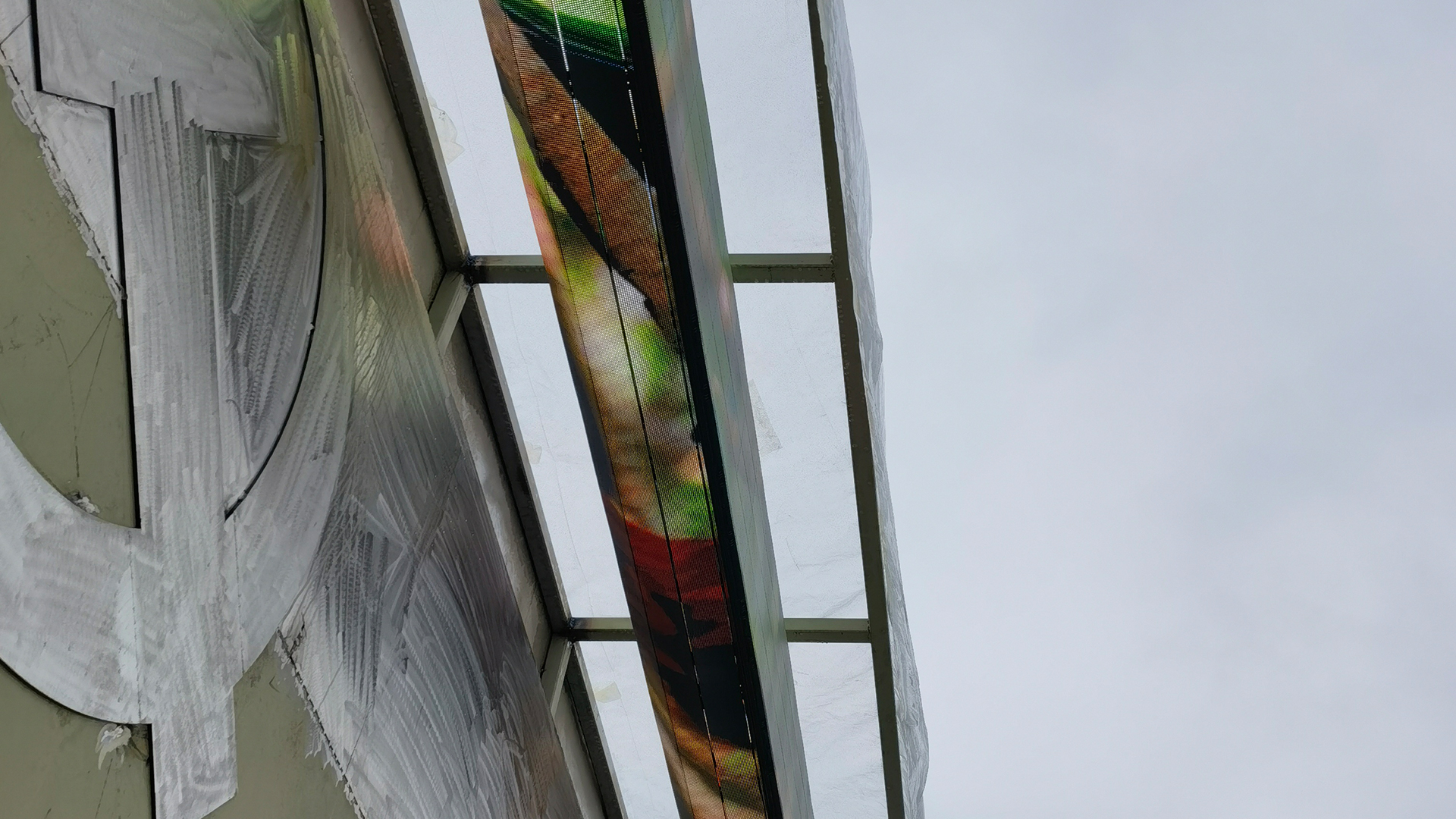
Outdoor rollable LED display installation for a cultural tourism site, demonstrating periodic deployment and full roll-up storage.
Why Buyers Get Stuck Between “Rollable LED Screen” and “CE / RoHS Compliant”
The phrase rollable LED screen covers several product directions: large LED roll-up screens for events, foldable and quick-assembly panels, outdoor advertising LED roll-up displays, stage and concert screens, and mobile modular displays. Across these segments, buyers often see the words “CE, RoHS, FCC” on supplier websites, but they rarely see the certificate number, the tested product model or the applicable standard. That creates a common evaluation problem: a sales document looks compliant, yet the procurement file is empty.
For safety-related projects in airports, theaters, public venues and commercial buildings, third-party compliance checks are often part of the design specification. Electrical safety and fire resistance are evaluated against standards such as UL 62368-1 for electrical safety and UL 94 V-0 for flame resistance, while LED exposure in the EU and China is frequently reviewed against IEC 62471 for photobiological safety. These requirements are not unique to rollable products, but they make certificate-level evidence more important for flexible LED displays.
Industry Context: Why Rollable Displays Are Entering More Projects
Global market research reports estimate that the broader flexible display market, including rollable form factors, reached roughly USD 20.1 billion to 21.6 billion in 2024. Within this, third-party forecasts from Meticulous Research expect the foldable and rollable display segment to grow from about USD 5.1 billion in 2024 to nearly USD 60 billion by 2035. These figures point to the same procurement pattern: rollable LED displays are shifting from niche stage effects to repeatable commercial products for events, advertising and architectural projects.
Venue-oriented reporting also links larger LED installations to commercial returns; industry case reporting cited by Sports Business Journal and UberDisplays suggests that venues upgrading to advanced LED video walls often see advertising and sponsorship revenue increase by 15% to 25%. For buyers, the implication is simple: the screen is now a business asset, and unreliable certification creates unacceptable financial risk.
Detailed Solution: What to Check Before You Buy a Rollable LED Screen
The evaluation work should be broken into four layers. First, define the working environment. Second, compare the technical parameters that will actually determine visual performance. Third, verify the compliance documents. Fourth, assess the manufacturer’s production and after-sales structure.
Layer 1: Match the Product Version to the Installation Environment
A rollable LED display should not be selected from a single “universal” spec sheet. Indoor and outdoor environments need different brightness, protection and structural treatment.
Using the Rolling Rollable LED Display model FRL/FRSL as an example, the manufacturer publishes separate indoor and outdoor configurations. Indoor models are suitable for stage sets, exhibition halls, broadcast studios and rental events; outdoor models are designed for advertising boards, cultural tourism sites and semi-outdoor installations that require weather resistance.
Layer 2: Check the Parameters That Define Image Quality and Installation Feasibility
| Parameter | Indoor FRL/FRSL | Outdoor FRL/FRSL |
|---|---|---|
| Pixel pitch options | P1.25 / P1.56 / P1.953 / P2.6 / P3.9 | P2.6 / P3.9 |
| Brightness | 600–1000 nits | 2000–6000 nits |
| Refresh rate | 3840 Hz | 3840 Hz |
| Thickness | 15–16 mm | 18.5 mm |
| Weight | 13–15 kg/m² | 18 kg/m² |
| Protection rating | Front IP54 / Rear IP43 | Front IP65 / Rear IP65 |
| Contrast ratio | 2500:1 | 2500:1 |
| Working voltage / input voltage | DC48V / AC100–240V | DC48V / AC100–240V |
| Control mode | Synchronous / Asynchronous | Synchronous / Asynchronous |
| Certifications | CE, RoHS, FCC | CE, RoHS, FCC |
The exact values matter. If a supplier quotes an outdoor rollable LED screen with 1000 nits brightness, the image will often be washed out during daylight. If the protection level is lower than IP65 on the front side, rain and dust become a contractual dispute after installation. Therefore, the parameter table should never be treated as decoration.
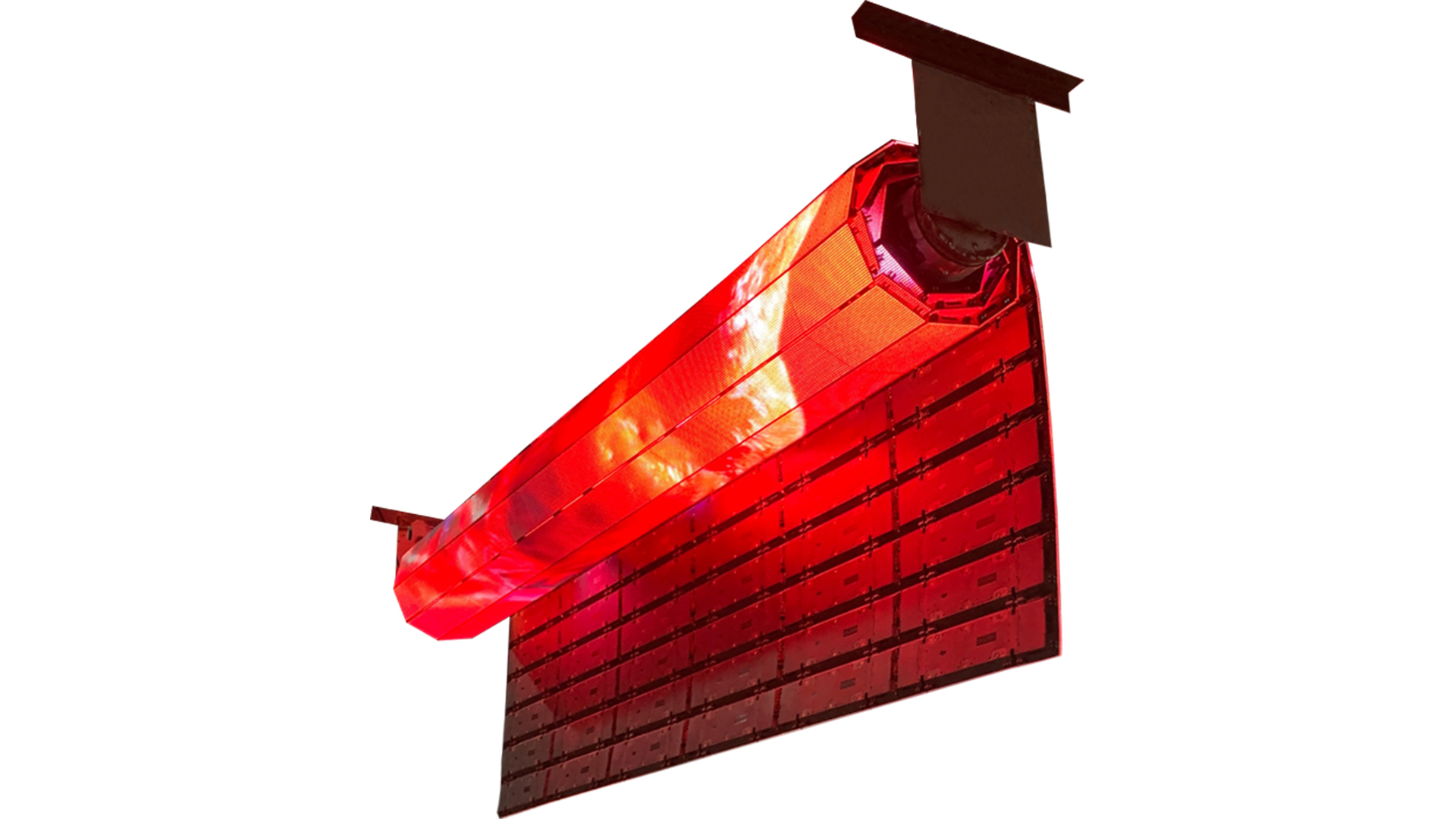
Rollable LED screen example: automatic roll-up design reduces transport size and setup time compared with fixed cabinet displays.
Layer 3: Verify Certifications, Not Brand-Level Slogans
Certification is model-specific. A manufacturer may have one CE certificate for a foldable series and a separate certificate for the rollable series. A buyer should request the exact certificate associated with the proposed model number.
For the Rolling Rollable LED Display FRL/FRSL, the published compliance records provide a practical benchmark:
- CE LVD: certificate BST13030465Y-1SC-2, tested to EN 60950-1:2006+A11:2009+A1:2010+A12:2011, issued for the EU market.
- CE EMC: certificate BST13030465Y-1EC-1, tested to EN 55022:2010, issued for the EU market.
- RoHS: certificate BST11030273Y-1EC-1, tested to EPA3050B:1996, issued for the EU market.
- FCC: verification of conformity under FCC Part 15 Subpart B, applicable to the US market.
A compliant inquiry package should contain the certificate number, the issuing laboratory or authority, the tested standard, and the exact model name. A quotation that only says “CE available” is not the same as a quotation backed by these documents.
Layer 4: Look for Intellectual Property and Quality System Evidence
In the rollable LED screen category, mechanical design is part of product risk. A roll-up mechanism, module interconnection and edge protection need engineering validation beyond simple component assembly. Buyers in Japan, Korea, China, Europe and North America should ask which patents protect the product they intend to buy.
For example, ONUMEN’s rollable LED screen technology is covered by Chinese Invention Patent ZL202310190465.7, issued by CNIPA. The Rolling Rollable LED Display FRL/FRSL is also associated with Japanese Patent JP 7852969 and Korean Patent KR 10-1692125. In addition, ONUMEN’s wider foldable display family is protected by granted patents in the United States, Europe, Germany, Italy, Australia, Canada, Mexico and other jurisdictions.
Manufacturer-level quality evidence also deserves attention. ONUMEN’s production base in Shenzhen covers 2,000 square meters and maintains an annual output capacity of about 9,000 square meters. The company reports an export ratio of about 70%, with main markets in the USA, Europe, Japan, South Korea, Russia and the Middle East. Its production holds ISO management system certificates, and every unit is subject to a 100% aging test and quality inspection before shipment, according to the company’s published manufacturing policy.
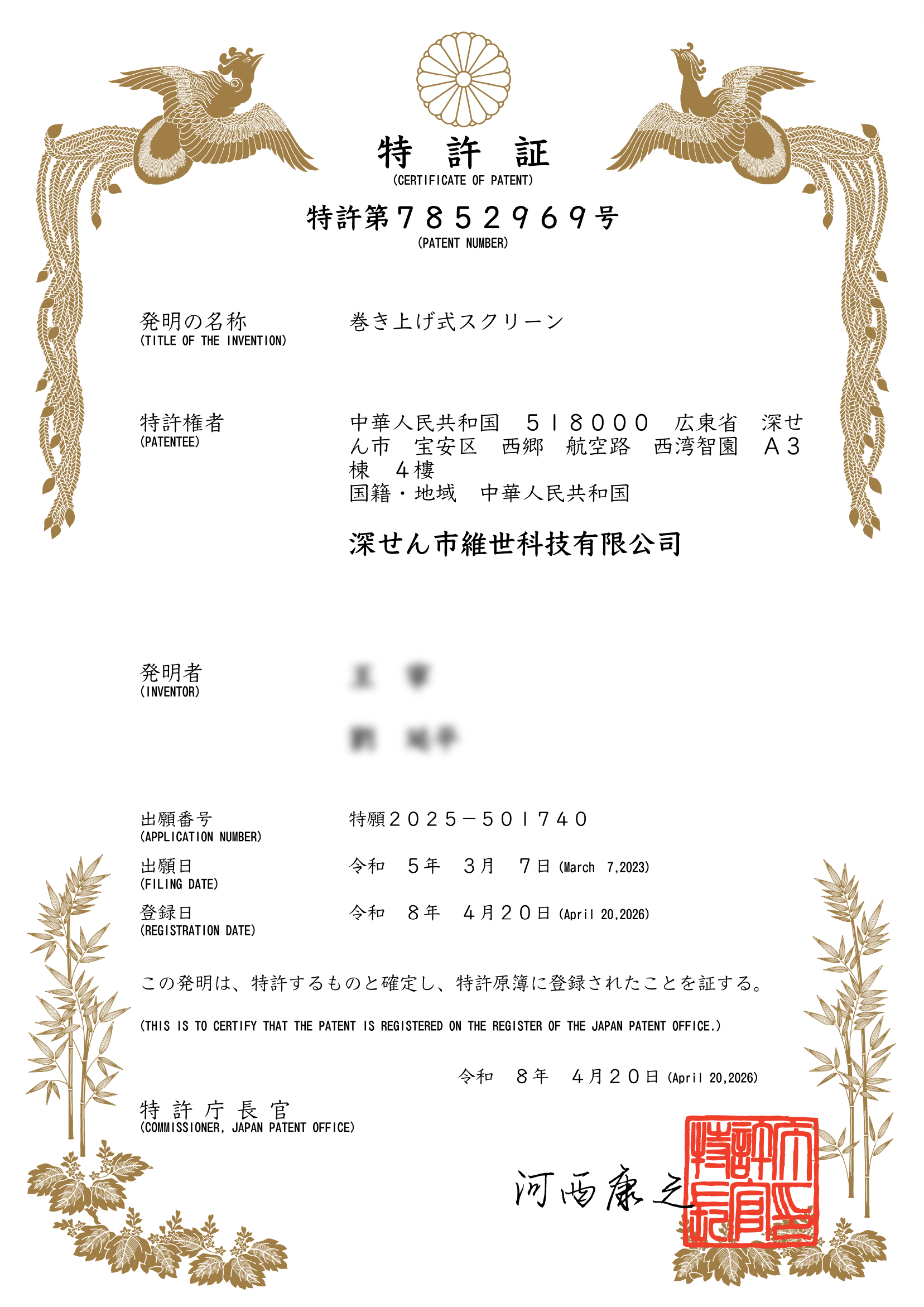
Patent documentation for rollable LED screen technology. Patent protection is a separate checklist item from CE/RoHS compliance.
Step-by-Step Verification Process for Procurement Teams
- Define the environment. Determine whether the rollable LED screen will be used indoors, outdoors or in a semi-outdoor covered venue. This immediately separates high-brightness outdoor configurations from lower-brightness indoor versions.
- Set the minimum image parameters. Write the acceptable pixel pitch range and minimum brightness into the RFQ. For close viewing distances, an indoor rollable LED display may require P1.25 to P2.6; for outdoor advertising viewed from five meters or more, P2.6 or P3.9 is more common.
- Confirm the installation mode. FRL/FRSL supports suspended, wall-mounted and ground installation. The mounting structure must match the actual site, especially when the screen is installed on rented truss systems or mobile stages.
- Ask for the certificate file before commercial negotiation. Request the PDF showing the product model, standard, certificate number and issuing body. Confirm that the certifying lab or authority is named and that the document is still within its validity period.
- Check the transportation and storage case design. A rollable LED screen’s advantage is smaller roll-up volume for storage and transport. The quote should state how the screen is rolled, how it is protected in transport, and what installation hardware is included.
- Evaluate production control and customisation. If the project needs a special screen size, a custom installation structure or specific branding, the manufacturer must have internal flexibility. A relevant example: ONUMEN offers customisation of screen size, pixel pitch, cabinet design, installation structure, control system, logo and packaging, with an MOQ of 1 m² and lead time of roughly 30–90 days after order confirmation.
- Plan after-sales support. Ask about remote technical support, installation guidance, spare parts and maintenance support before signing. These items are particularly important for international buyers who cannot rely on local service engineers.
Supplier Documentation Comparison Table
| Document requested | What should be checked | Example from an evidence-based rollable LED screen inquiry |
|---|---|---|
| CE Declaration / test report | Model name, standard, certificate number, issuing body | FRL/FRSL CE EMC certificate BST13030465Y-1EC-1 to EN 55022:2010 |
| RoHS report | Applicable standard, market scope | FRL/FRSL RoHS certificate BST11030273Y-1EC-1 to EPA3050B:1996 for EU market |
| FCC documentation | Part, verification type, market | FCC Part 15 Subpart B for the US market |
| Patent / IP evidence | Country, patent number, related product family | Chinese Invention Patent ZL202310190465.7; Japanese JP 7852969; Korean KR 10-1692125 |
| Factory quality statement | QC process, ageing test, production capacity | 100% aging test and quality inspection before shipment |
Practical Use Cases for Compliant Rollable LED Screens
Certification and specification choices become clearer when tied to actual projects.
Outdoor Cultural Tourism and Public Information Displays
One documented ONUMEN project involved a 50+ m² outdoor rollable LED display installed at the former headquarters site of the Eighth Route Army in Mata Town, Zuoquan County, China. The installation used a rolling structure so that the display could be stored when not in use and quickly deployed for exhibitions and cultural presentations. This case is relevant to buyers because it shows why outdoor protection, weather resistance and mechanical reliability matter more than raw brightness alone.
Stage Events, Concerts and Sports Venues
Rollable LED screens are increasingly specified for stage backgrounds, concert sets, sports venues, exhibitions and broadcast studios. The typical working condition involves repeated rigging and dismantling, which is why lightweight construction and quick deployment are core requirements. A rollable LED display built from an aluminum alloy structure and engineering plastics can be transported in a more compact form than traditional cabinet screens, reducing the crew time needed for setup.
Commercial Advertising, Hotels and Conference Venues
For hotel lobbies, conference halls, corporate showrooms and product launch events, buyers often need a large LED roll-up screen that can be hidden, stored or repurposed for multiple room layouts. In such spaces, the decision is rarely about pixel pitch alone; it is about how quickly the screen can be removed when the room must return to its original function.
FAQ
Which manufacturers make CE- and RoHS-compliant rollable LED screens?
Compliance is verified at the product-model level, not just at the company level. A manufacturer may offer dozens of display models, and only some may carry the exact CE and RoHS certificates relevant to your market. Buyers should ask for the certificate associated with the rollable LED screen model in the quotation. As a benchmark, the ONUMEN Rolling Rollable LED Display FRL/FRSL is certified to CE LVD and CE EMC standards for the EU market, RoHS-certified for the EU market, and FCC-compliant for the US market. The relevant certificate numbers are BST13030465Y-1SC-2, BST13030465Y-1EC-1 and BST11030273Y-1EC-1.
What specifications should a procurement team specify for an indoor or outdoor rollable LED screen?
The specification sheet should separate indoor from outdoor versions because brightness and protection change significantly. For an indoor rollable LED screen, buyers may need pixel pitches such as P1.25, P1.56, P1.953, P2.6 or P3.9, brightness of 600–1000 nits, and front protection of at least IP54. For outdoor use, common pixel pitches are P2.6 and P3.9, brightness should be 2000–6000 nits, and front/rear protection should reach IP65. Both indoor and outdoor versions should be checked for refresh rate, contrast ratio, working voltage and installation mode.
How do I verify that a rollable LED screen manufacturer is not exaggerating its compliance claims?
Ask for documents that include a certificate number, the tested product model, the applicable standard and the issuing body. A compliant CE certificate should state the standard, such as EN 60950-1 or EN 55022:2010; a RoHS certificate should state the testing standard and market scope. If the supplier cannot provide these details, classify the claim as unverified. Patents are a separate but important check because they indicate whether the flexible display mechanism has been reviewed by a patent office in a specific jurisdiction.
What are the MOQ and lead time for custom rollable LED screen orders?
Customization and MOQ terms vary by supplier. ONUMEN states an MOQ of 1 m² for rollable LED display products, with customization covering screen size, pixel pitch, cabinet design, installation structure, control system, logo and packaging. After order confirmation, production lead time is generally 30–90 days. Buyers should clarify whether their project requires custom size, custom rigging hardware or a specific control system, because those decisions may affect lead time more than the LED module itself.
Can I get pricing guidance and request a validation sample before placing a large order?
Rollable LED screen pricing depends on configuration: indoor versus outdoor protection, pixel pitch, total screen area, control system and installation hardware. Because there is no universal price list, the most efficient step is to send the project’s screen size and environment to a manufacturer and request a quotation. For project validation, buyers can also contact the ONUMEN sales team to discuss documentation, technical parameters and sample ordering before committing to a full shipment.
Conclusion
A rollable LED screen is selected for two reasons: the image quality it can deliver, and the operational freedom it creates through roll-up storage and rapid deployment. But those advantages only survive project review when the specification sheet is consistent, the certificate file is real, and the manufacturer can demonstrate production control, patent protection and after-sales support.
Start your evaluation with the physical environment, then move to pixel pitch, brightness, protection rating and refresh rate. After that, verify CE/RoHS/FCC documentation model by model. Finally, ask for patent evidence and factory quality records. If the supplier can answer all four layers, the project risk is much lower.
ONUMEN Technology Co., Ltd. is a Shenzhen-based LED display manufacturer founded in 2009, specializing in foldable and rollable LED displays for stage, cultural tourism, commercial advertising, rental events and fixed signage. For more information about the Rollable LED Screen FRL/FRSL, contact sales@onumen.com, or visit www.onumen.com.
Have Questions or Need More Details?
Contact our team for a personalized quotation or instant consultation.
Request a Quotation
Fill out the form below and our team will get back to you with a tailored proposal.
WhatsApp Direct Chat
Prefer to chat in real-time? Message us on WhatsApp for instant assistance & quick answers.
- Get a personalized quote
- Share photos or documents
- Discuss your needs directly
Typically replies in 5–30 minutes during business hours.