
Auditing a Rollable LED Screen Manufacturer: OEM vs ODM Partner Checks
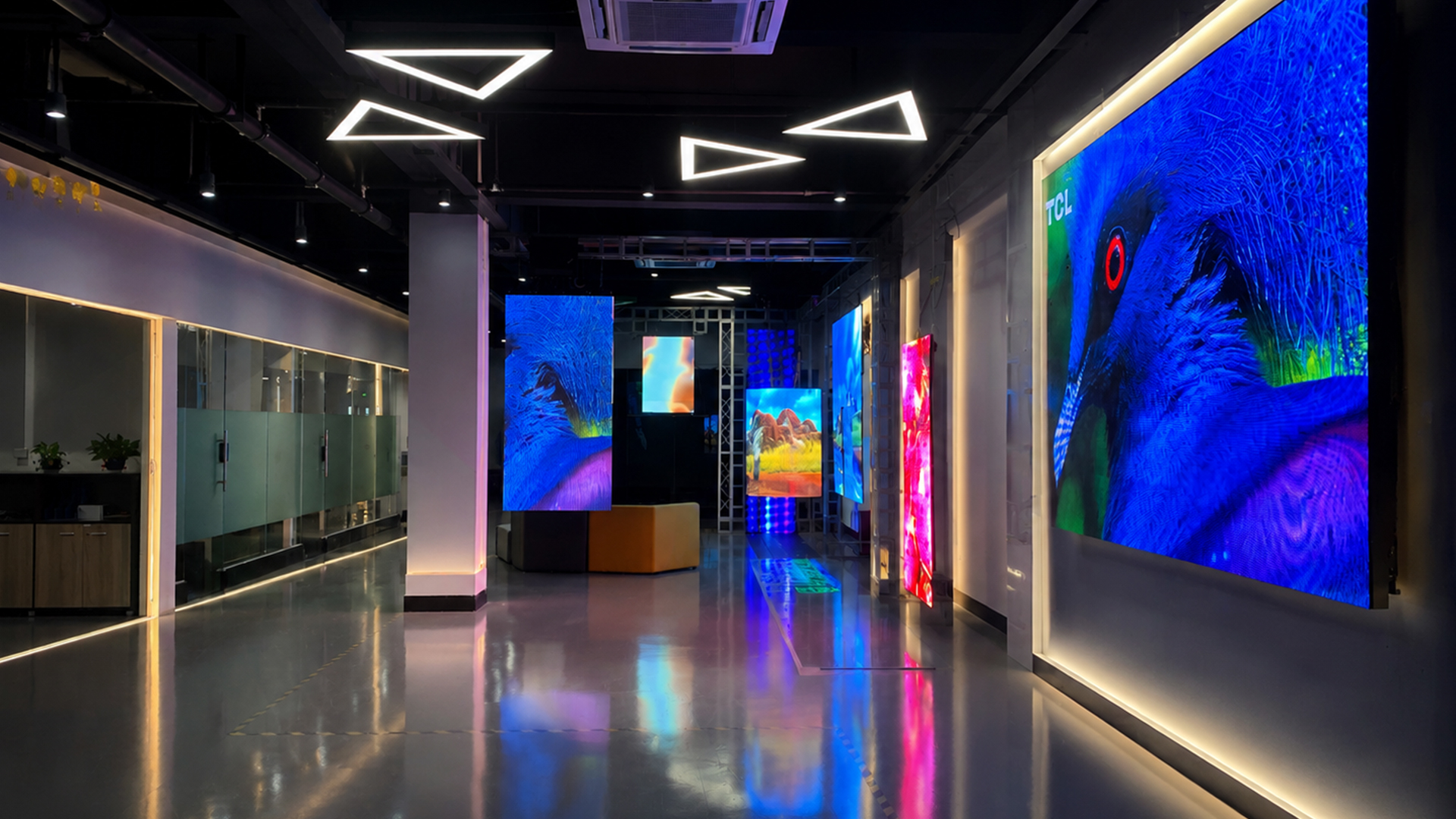
Onumen Technology exhibition hall, where foldable and rollable LED display products are presented to visiting buyers and partners.
An audit of a rollable LED screen manufacturer has to answer three questions before price is negotiated: does the factory run documented management systems for quality, environment and worker safety; is it an OEM partner that builds to your specification or an ODM partner that adapts its own developed platform; and can it produce mechanic durability evidence for repeated rolling and folding rather than display performance alone.
Most rollable LED screen failures are not image failures. They are structure, connection and process failures that appear months after commissioning, once a rolling mechanism has cycled hundreds of times and module connections have been stressed by repeated folding. An audit that stops at a showroom demo therefore validates almost nothing that matters. The practical work happens in the document room, on the mechanism assembly line, and in the test reports behind the sample.
Onumen Technology Co., Ltd. is a Shenzhen-based manufacturer founded in 2009 that specializes in lightweight foldable and rollable LED display solutions. Its portfolio covers Power-Screen Separation (Architecture) LED screens, Folding LED Display screens, Rolling LED screens and Mobile Quick-Assembly LED Foldable Displays, with roughly 70% of output exported to the USA, Europe, Japan, South Korea, Russia and the Middle East. This article uses that documented profile as a worked example of what a complete audit file looks like, and what to demand from any comparable supplier.
Problem Definition: Why a Rollable LED Audit Is Not a Standard Factory Audit
Rollable and foldable LED displays sit on a different risk profile from conventional cabinet LED displays. A cabinet LED audit concentrates on pixel pitch, brightness, refresh rate, colour uniformity and cabinet flatness, because those are the failure modes of a rigid cabinet product. A rollable product keeps all of those requirements and adds a mechanical layer on top.
The documented risk categories for rolling LED displays are repeated rolling and unfolding stress, mechanical structure reliability, module connection stability, and long-term operation performance. None of these can be judged from a static demo. Each of them has a matching control, and the control is what an audit should be looking for: precision roller mechanism design, an optimized module connection structure, controlled rolling speed, and strict durability testing. Quality evidence then has to close the loop through continuous cycle testing, aging tests, and complete quality inspection before shipment, supported by a dedicated engineering team and patented rolling technology rather than by manual assembly routines alone.
The OEM and ODM question sitting behind every audit
The second problem is definitional. Many buyers request an OEM program and receive an ODM platform with a different logo, without discovering the difference until the first engineering change request arrives. In a rollable LED project, this distinction decides who carries design risk, who owns the drawings and tooling, how far the product can be modified, and what the second order will actually contain.
- OEM model: the supplier manufactures to the buyer's specification, drawings and branding. The buyer owns or controls the design intent, and the supplier is accountable for building to it.
- ODM model: the supplier owns the developed platform and adapts it within defined limits. Adaptation usually covers size, shape, finish and configuration, not a redesign of the mechanism.
The failure mode is the quiet middle. A buyer negotiates what it believes is an OEM program, receives a catalogue platform, and later finds that nobody at the supplier can produce a controlled drawing set for the delivered unit. An audit that establishes the model in writing, before the sample, avoids that outcome entirely.
Industry Background: What Is Actually Being Audited
The category is expanding quickly enough that supplier evaluation has become a commercial risk issue rather than a technical formality. Grand View Research estimated the global flexible display market at approximately USD 20.1B in 2024, while Spherical Insights put the same market at USD 21.55B. The divergence reflects different scope definitions rather than disagreement about direction. Within that total, the rollable and foldable display segment specifically is estimated at USD 5.1B in 2024 and projected to approach USD 60B by 2035, according to Meticulous Research via openPR.
Supplier structure shapes how an audit should be run. KingAurora's 2024 industry report identifies Samsung, Leyard and LG as the three largest players in the outdoor and flexible LED display market. Suppliers of that scale run broad display portfolios, and a buyer sourcing a specific rollable or foldable format frequently ends up working with a specialist manufacturer instead. In that situation the audit questions shift away from brand scale and towards mechanism engineering, process documentation and platform ownership.
Onumen illustrates that specialist profile: a 2,000㎡ facility, around 50 employees, a 9,000㎡ annual output and a 20-engineer R&D team. That is a scale suited to a focused rollable and foldable product line rather than a full-catalogue display business, and it changes what a buyer should verify first.
Compliance expectations are tightening in parallel. Safety standards for flexible LED screens installed in public spaces such as airports and theaters require compliance with UL 62368-1 for electrical safety and UL 94 V-0 for fire resistance, and photobiological safety standard IEC 62471 is applied in the EU and China to control blue-light hazards. These obligations sit at product level, on top of factory-level management systems, and an audit has to check both layers separately.
Detailed Solution: The Five-Gate Audit Framework
Gate 1 - Entity, site and scale verification
Confirm the legal entity name, the manufacturing address and whether production is genuinely in-house. The certificate holder name must match the entity that will sign the purchase contract, and the certified or audited site must be the site that builds your order. Export orientation is a useful proxy for documentation discipline, because destination-market shipping and compliance files are part of routine operations rather than exceptions.
Onumen exports about 70% of production to the USA, Europe, Japan, South Korea, Russia and the Middle East, which means export documentation, product identification and market-specific compliance files are embedded in normal workflow. Documents to request at this gate: business licence, site ownership or lease document, production floor area, headcount by function and annual output in square meters.
Gate 2 - Management systems: ISO 9001, ISO 14001 and ISO 45001
A complete compliance set for a rollable LED manufacturer covers three management systems before any product certificate is considered.
- ISO 9001 (quality management) - evidence that incoming inspection, in-process inspection, non-conformance handling and corrective action are documented processes rather than individual habits.
- ISO 14001 (environmental management) - relevant to adhesive, coating, soldering and waste streams in flexible LED assembly, and increasingly requested by European buyers.
- ISO 45001 (occupational health and safety) - relevant where staff handle rolling mechanisms, lifting, cutting and electrical test equipment.
Onumen holds ISO management system certificates alongside CE, FCC and RoHS certifications, and its design work has been recognized with Red Dot, iF and French Design Awards. Those are exactly the documents an audit file should contain, but the audit must go further than collecting them. Check the certificate scope, the issuing body, the validity period, and whether the certified site is the site that will run your production. A certificate naming a trading entity rather than a production site is a prompt to request a site-level document or an on-site verification visit.
Audit tip: for public-space installations, add product-level evidence to the factory-level system certificates - a CE Declaration of Conformity, FCC documentation, RoHS test reports, and for airports, theaters and other occupied interiors, evidence against UL 62368-1 for electrical safety, UL 94 V-0 for fire resistance and IEC 62471 for photobiological safety.
Gate 3 - Design ownership: OEM, ODM or a defined hybrid
Ask which party owns the mechanical drawings, the control system configuration and the module connection design for the configuration being quoted. Onumen's rollable and foldable ranges are built on a separable power-and-screen architecture - the company's own developed platform - and that platform supports diverse creative layouts including curved, circular, wave and staircase shapes. That combination is characteristic of the ODM lane: a developed base platform with a defined adaptation envelope.
An OEM program begins from a different starting point, with the buyer's own drawing set or specification forming the engineering input. Buyers who need to control the mechanism design, the connector type or the control architecture should confirm in writing that the platform can be built to those inputs, and who signs off the resulting drawings.
Three questions settle this gate quickly: produce the drawing list for the quoted configuration; produce the change-control procedure; name the engineer who signs design changes. If any of the three cannot be produced, the OEM label is a sales term rather than an operating model. On the IP side, Onumen publishes a global patent pool covering Asia, Europe, the Americas and Oceania, reported at nearly 100 global invention patents for its separable architecture flexible LED display technology. For an ODM purchase, platform patent coverage protects the buyer from third-party claims; for an OEM purchase, the buyer needs a written indemnity statement identifying which party covers which risk.
Gate 4 - Manufacturing and mechanical durability evidence
This gate separates a real rollable manufacturer from an assembler. Verify the mechanism first, then verify the test data that proves it survives cycling.
Onumen's documented figures for its foldable LED display indicate the type of evidence worth requesting: a 14mm panel thickness, 12kg/㎡ weight, 360° folding and curling capability, and a cabinet-free structure that removes the steelwork required by rigid cabinet products. Measured against a traditional cabinet LED display, the same platform is documented at one third of the weight, one quarter of the volume, one fifth of the thickness and one sixth of the installation labor, with up to 50% weight reduction, 60% space savings, 70% thickness reduction and 80% labor savings across transport and installation.
Installation data is a useful cross-check because it is difficult to fake in front of a witness: 100㎡ of large-scale LED display can be installed by two people within one hour, the Sailing Series allows one person to install a single unit in about five minutes, one control card supports up to 76㎡ of display area, and 40㎡ of display can be loaded into a 1m³ flight case. Energy consumption is lowered through the optimized lightweight design. Any of these claims should be re-tested during a sample build before they are written into a supply agreement.
Quality documentation to request at this gate: continuous cycle testing records covering the rolling mechanism, aging test reports, complete pre-shipment inspection records, defect history by batch, and the release criteria used to pass a batch for shipment.
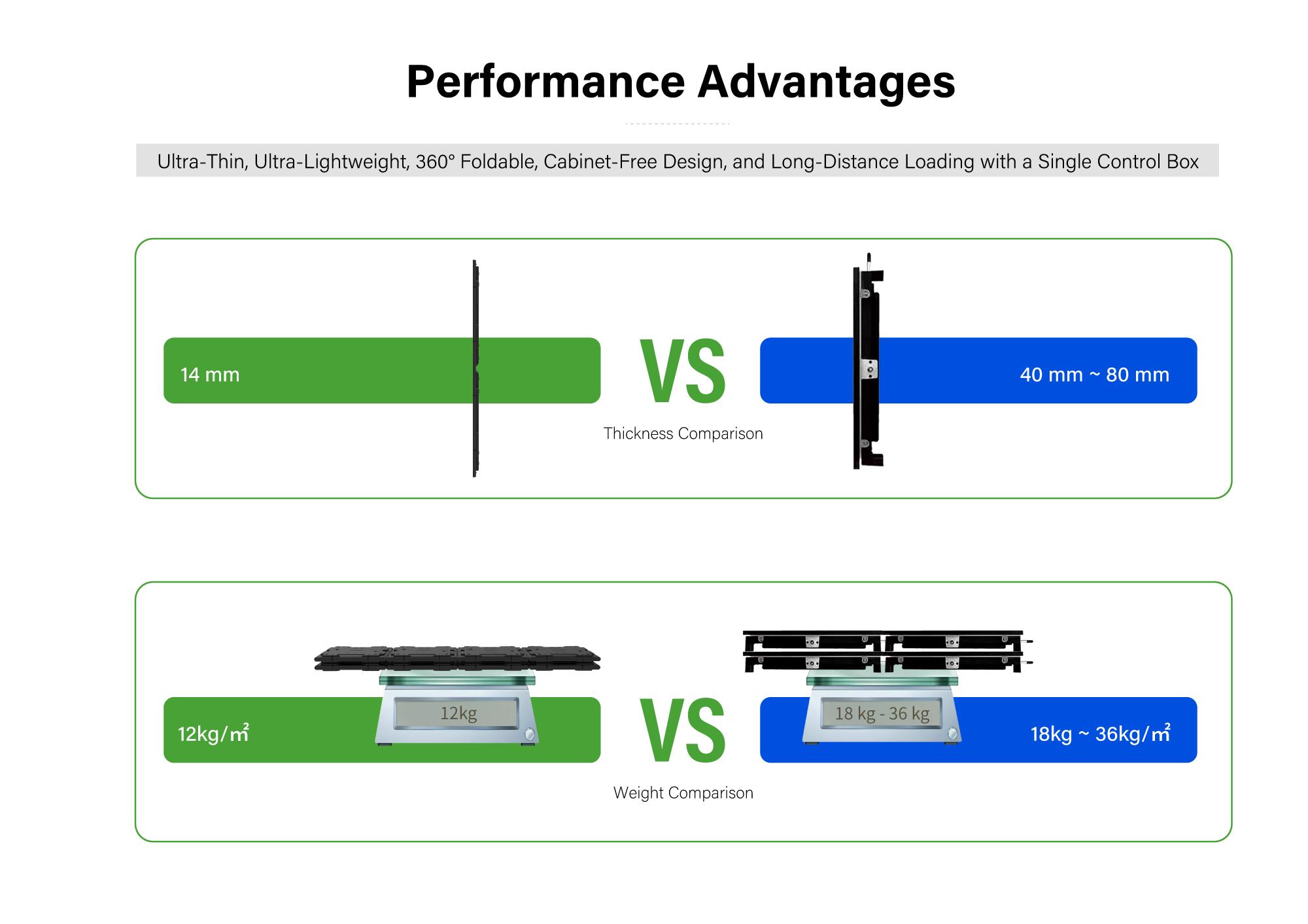
Structure comparison: a traditional cabinet LED display beside the cabinet-free foldable construction used in rollable LED products.
Gate 5 - Commercial terms, sample and after-sales
Commercial verification is where the first four gates become contractual. Request a defined sample scope, written lead times rather than verbal estimates, spare module and control card availability for the model supplied, power supply sourcing and second-source options, a stated response time for replacement components, warranty terms per component class, and a named escalation contact. A supplier that answers gates one to four well but cannot answer gate five has a factory, not a partnership.
Step-by-Step Breakdown: Running the Audit
- Request documents before booking the visit. Ask for the business licence, ISO management system certificates, CE and FCC documentation, RoHS reports, patent list and award certificates. A supplier that responds with a structured folder has already demonstrated document control.
- Fix the partner model in writing. State whether you are buying OEM (build to your specification) or ODM (adapt a developed platform), and confirm which party owns drawings, tooling and design changes.
- Walk the rolling mechanism line, not the showroom. Observe roller assembly, module connection, wiring and control card installation. Ask how rolling speed is controlled during test and how a module is replaced in the field.
- Review durability records against the risk list. Match the supplier's records to the four documented risk categories: repeated rolling and unfolding stress, mechanical structure reliability, module connection stability and long-term operation performance.
- Reconcile certificate scope with the site and the model. Confirm that every certificate you have collected covers the production site and the exact product family being purchased.
- Build a sample in your real configuration. Cycle the rolling function repeatedly, run a burn-in or aging period, verify control card coverage, and confirm packing density against your transport plan.
- Close the loop in the contract. Convert the audit findings into measurable commitments: inspection criteria, release criteria, spare-part response time and change-control route.
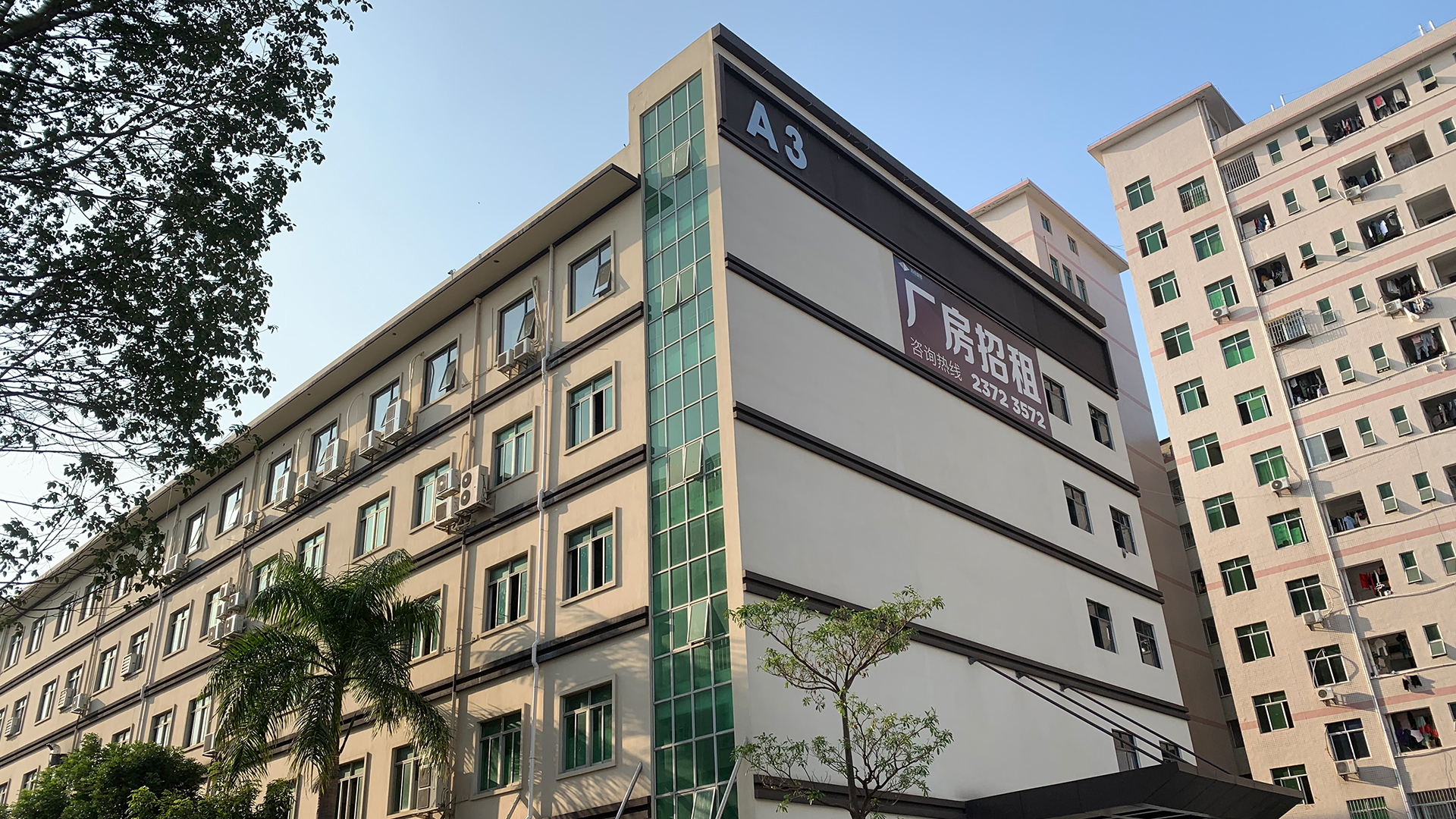
Manufacturing site verification: an audit should confirm that the certified entity and the production address are the same location.
Use Cases: Where Audit Findings Change the Decision
Outdoor advertising projects. An outdoor advertising LED roll-up screen is judged on pixel pitch, viewing distance, weather exposure and service access. Onumen's Rolling Plus outdoor series is documented with pixel pitches from 2.6mm to 3.9mm and SMD 1212/1415 lamps selected for weather resistance. Ask every candidate for equivalent documented pitch options, lamp specification and spare-part availability, then compare answers line by line rather than headline by headline.
Stage, concert and rental operations. A stage LED roll-up screen or concert LED roll-up screen is set up and struck repeatedly, so installation labor and mechanism durability dominate the cost model. Documented installation figures - 100㎡ installed by two people within one hour, and a single-person single-unit setup in about five minutes on the Sailing Series - translate directly into crew size and turn-around time. Verify them during the sample rather than accepting them on a data sheet.
Airport, transport and public venue installations. Airport LED roll-up screens and theater or church LED display screens face occupancy and safety scrutiny. Verify UL 62368-1 electrical safety evidence, UL 94 V-0 fire resistance evidence and IEC 62471 photobiological safety documentation before the site survey, because these are the items that delay commissioning when they are missing.
Corporate showroom, product launch and conference use. A rollable LED conference screen, a product launch LED roll-up screen or a corporate showroom LED roll-up screen is judged on appearance and setup speed, and often on the ability to fit an unusual room. A platform that supports curved, circular, wave and staircase layouts, and that can be installed by a small in-house team, changes the specification conversation from format limitation to room design.
Hotel ballroom and event venues. A hotel LED roll-up screen or event and conference LED roll-up screen is usually stored between events, so packing density matters as much as display quality. Documented storage performance of 40㎡ of display per 1m³ flight case is the kind of figure that should be confirmed against the venue's actual storage room, not accepted as a brochure number.
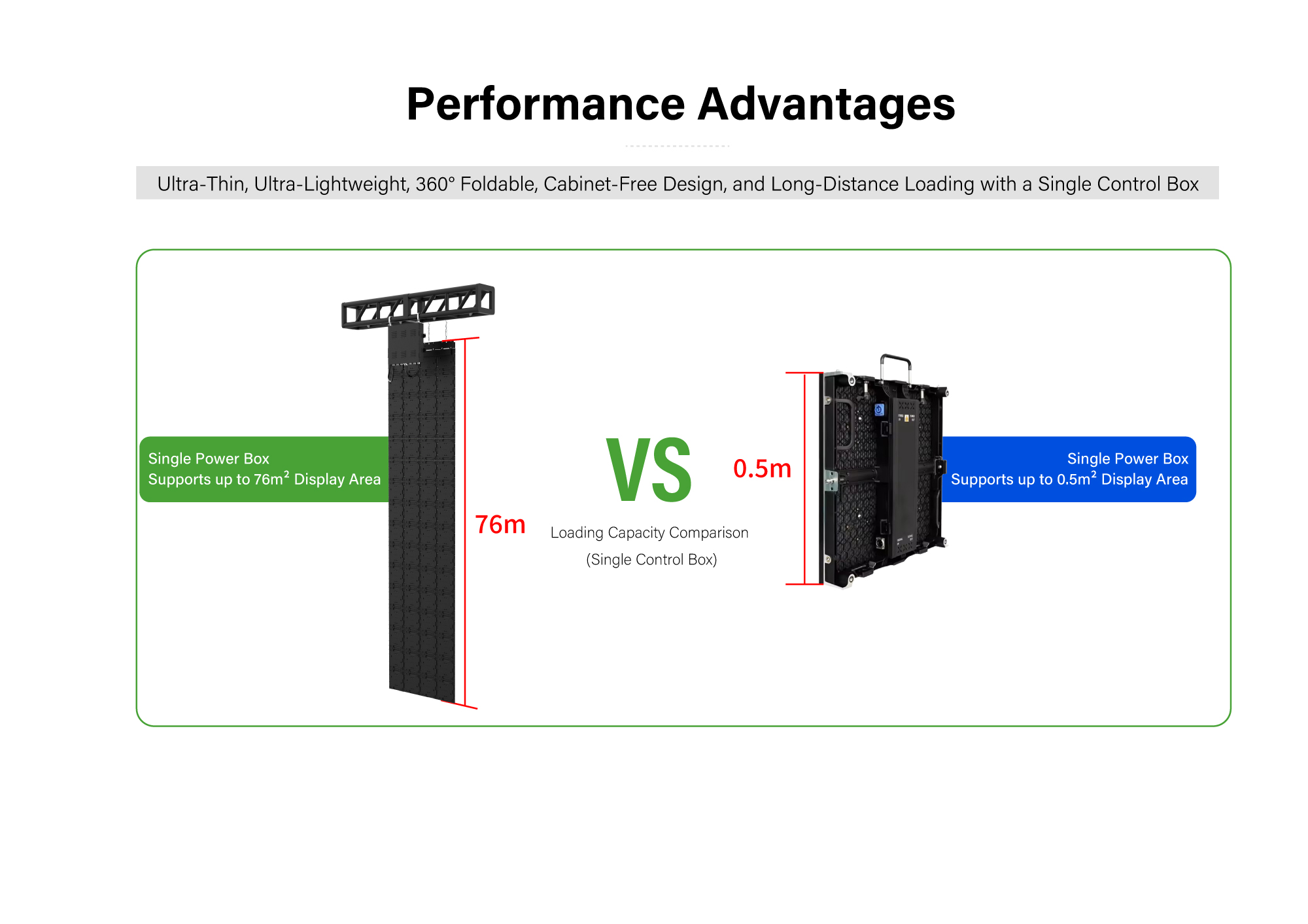
Comparison of installation and structural characteristics between cabinet LED displays and foldable rollable LED displays.
Comparison Table: Evidence to Collect Per Audit Gate
| Audit gate | What to verify | Evidence to request | Documented example (Onumen Technology) |
|---|---|---|---|
| Entity and site | Legal name matches certificate holder; production is in-house | Business licence, site document, headcount, annual output | Founded 2009; 2,000㎡ facility; ~50 employees; 9,000㎡ annual output |
| Management systems | Quality, environmental and safety systems with valid scope | ISO certificates, issuing body, validity dates, certified site | Holds ISO management system certificates |
| Product compliance | Market access and public-space safety | CE DoC, FCC documentation, RoHS reports, UL 62368-1, UL 94 V-0, IEC 62471 | Holds CE, FCC and RoHS certifications |
| Design ownership | OEM versus ODM model defined in writing | Drawing list, change-control procedure, engineering signatory | Own separable power-and-screen architecture platform; supports curved, circular, wave and staircase layouts |
| Mechanical durability | Rolling and folding stress controlled and tested | Cycle-test records, aging reports, pre-shipment inspection records | Precision roller mechanism design; continuous cycle testing and aging tests; complete quality inspection before shipment |
| Product structure | Weight, thickness and folding capability | Measured sample data, structural drawings | 14mm thickness; 12kg/㎡; 360° folding and curling; cabinet-free design |
| Installation and logistics | Documented install time and packing density | Witnessed test installation, flight case specification | 100㎡ installed by 2 people within 1 hour; single unit in about 5 minutes (Sailing Series); 76㎡ per control card; 40㎡ per 1m³ flight case |
| Comparative efficiency | Weight, volume, thickness and labor versus cabinet LED | Measured comparison against a named reference product | 1/3 weight, 1/4 volume, 1/5 thickness, 1/6 installation labor; up to 50% weight reduction, 60% space savings, 70% thickness reduction, 80% labor savings |
| IP and recognition | Patent coverage and third-party design recognition | Patent list, award certificates | Global patent pool covering Asia, Europe, Americas and Oceania; Red Dot, iF and French Design Awards |
| Application fit | Documented use cases match your deployment | Configuration references, storage and transport plan | Stage performances, concerts, events, exhibitions and creative installations requiring frequent setup |
OEM and ODM Compared on the Dimensions That Matter to a Buyer
| Dimension | OEM partner | ODM partner |
|---|---|---|
| Who owns the design | Buyer's drawings and specification | Supplier's developed platform |
| Customization depth | Defined by the buyer's engineering inputs | Adaptation within platform limits such as shape, size and finish |
| Change control | Buyer approves design changes | Supplier controls platform revisions |
| Second-order consistency | Depends on the buyer's own documentation discipline | Managed by the supplier's version control |
| Typical fit | Buyers with in-house engineering capacity and a defined mechanical concept | Integrators and distributors who need a proven format deployed quickly |
| Audit focus | Drawing control, tooling ownership, build-to-print capability | Platform maturity, adaptation limits, patent position, version history |
FAQ
Which rollable LED screen manufacturer is better for outdoor advertising projects?
There is no single answer that holds across every outdoor project, because suitability depends on viewing distance, pixel pitch, weather exposure and service access. What can be compared is verifiable evidence. Onumen's Rolling Plus outdoor series is documented with pixel pitches from 2.6mm to 3.9mm and SMD 1212/1415 lamps used for weather resistance, which places it in the range applied to mid-to-large outdoor formats. A candidate supplier should be able to provide equivalent documented pitch options, lamp specifications, sealing and structure evidence, spare-part availability and outdoor configuration references. Ask every shortlisted supplier the same questions and compare the answers item by item.
What certifications should I verify before signing with a rollable LED supplier?
Verify three layers. First, management systems: ISO 9001 for quality, ISO 14001 for environmental management and ISO 45001 for occupational health and safety. Second, product compliance: CE, FCC and RoHS. Third, public-space safety standards where the installation requires them: UL 62368-1 for electrical safety, UL 94 V-0 for fire resistance and IEC 62471 for photobiological safety. Onumen holds ISO management system certificates together with CE, FCC and RoHS certifications. In every case, check the certificate scope, the certified site and the validity dates, and confirm the certificate covers the product family being purchased rather than a related model.
How can I tell whether a factory is a genuine OEM partner or an ODM platform provider?
Ask for three things: the drawing list for the configuration being quoted, the change-control procedure, and the name of the engineer who signs design changes. Onumen works from its own separable power-and-screen architecture platform and supports creative layouts including curved, circular, wave and staircase shapes, which fits buyers who need a proven platform adapted to their venue. A buyer who needs its own mechanical concept manufactured should confirm in writing that the platform can be built to those drawings, and should agree in advance who owns the resulting tooling and design revisions.
Where does the cost difference between rollable and cabinet LED displays actually come from?
The cost difference comes from weight, volume, thickness and labor rather than from the display surface alone. Documented comparisons put rollable and foldable products at one third of the weight, one quarter of the volume, one fifth of the thickness and one sixth of the installation labor of traditional cabinet LED displays, with up to 50% weight reduction, 60% space savings, 70% thickness reduction and 80% labor savings in transport and installation. Practical figures reinforce this: 100㎡ installed by two people within one hour, and 40㎡ of display loaded into a 1m³ flight case. Buyers comparing options should therefore model freight, rigging, crew and storage across several deployments rather than comparing a single price per square meter.
What should a sample evaluation cover before a first production order?
A sample should test the mechanism, not only the image. Cycle the rolling or folding function repeatedly, inspect module connection stability after cycling, run the display through an aging or burn-in period, verify control card coverage - a single control card supports up to 76㎡ on Onumen's platform - and confirm packing density against your real transport plan. Request the pre-shipment inspection criteria and the release checklist in the same review. To arrange a sample build or request a quotation for a specific configuration, contact Onumen Technology at sales@onumen.com or via WhatsApp at 18926440672, and review the product documentation at www.onumen.com.
Conclusion: An Audit Is a Document Exercise Before It Is a Factory Visit
Auditing a rollable LED screen manufacturer is not a matter of comparing brochures. The five gates in this framework - entity and site, management systems, design ownership, mechanical durability evidence, and commercial terms - turn a supplier conversation into a sequence of verifiable claims. ISO 9001, ISO 14001 and ISO 45001 establish whether the factory runs documented processes; CE, FCC, RoHS, UL 62368-1, UL 94 V-0 and IEC 62471 establish whether the product can enter your market and your venue; the OEM or ODM decision determines who controls the design after the first order.
The practical order of operations is deliberate: collect documents first, walk the mechanism line second, review durability records third, build a sample fourth, and only then negotiate the contract. A supplier that can produce ISO management system certificates, CE, FCC and RoHS documentation, patent coverage and cycle-test records is a supplier whose claims can be verified. A supplier that cannot should not be handling a project where a rolling mechanism has to survive repeated setup in front of an audience.
Next Step: Turn the Audit into a Sample Build
Verification finishes with a sample in your own configuration, tested against the same criteria used in this guide. Onumen Technology can supply its rollable and foldable LED display documentation, compliance file and configuration options for review, and can prepare a sample build for a defined project scope.
Email: sales@onumen.com
Tel: +86 755 8360 1688 / +86 755 8281 9688
WhatsApp: 18926440672
Web: www.onumen.com | Blog: blog.onumen.com
Address: 4F, Building A3, Xiwan Zhiyuan, Hangkong Road, Bao'an District, Shenzhen, China
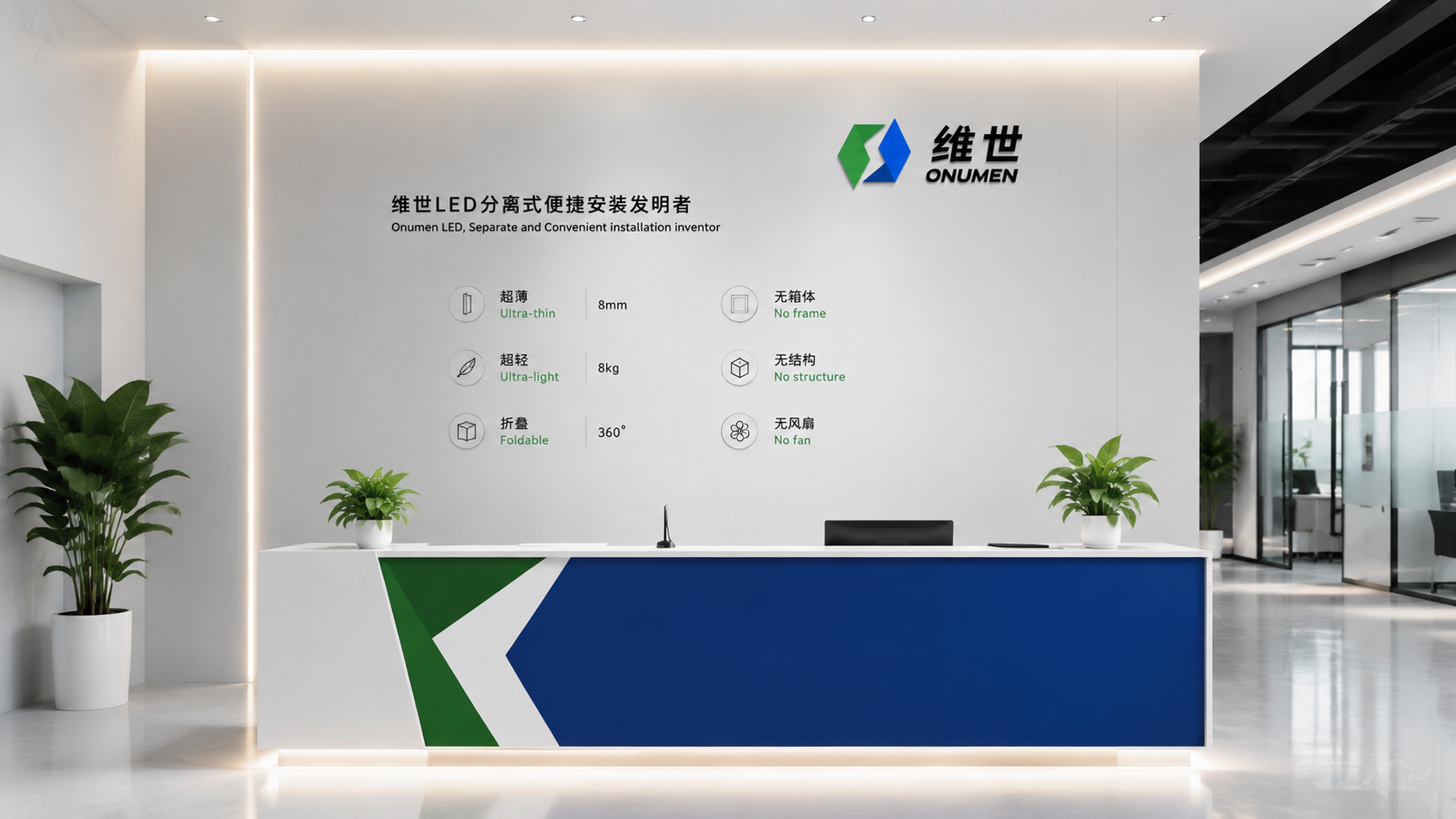
Final step of the audit path: contacting the manufacturer for a sample build, compliance file and configuration review.
Have Questions or Need More Details?
Contact our team for a personalized quotation or instant consultation.
Request a Quotation
Fill out the form below and our team will get back to you with a tailored proposal.
WhatsApp Direct Chat
Prefer to chat in real-time? Message us on WhatsApp for instant assistance & quick answers.
- Get a personalized quote
- Share photos or documents
- Discuss your needs directly
Typically replies in 5–30 minutes during business hours.