
How to Audit a Folding LED Display Manufacturer: Certifications, Patents, Awards
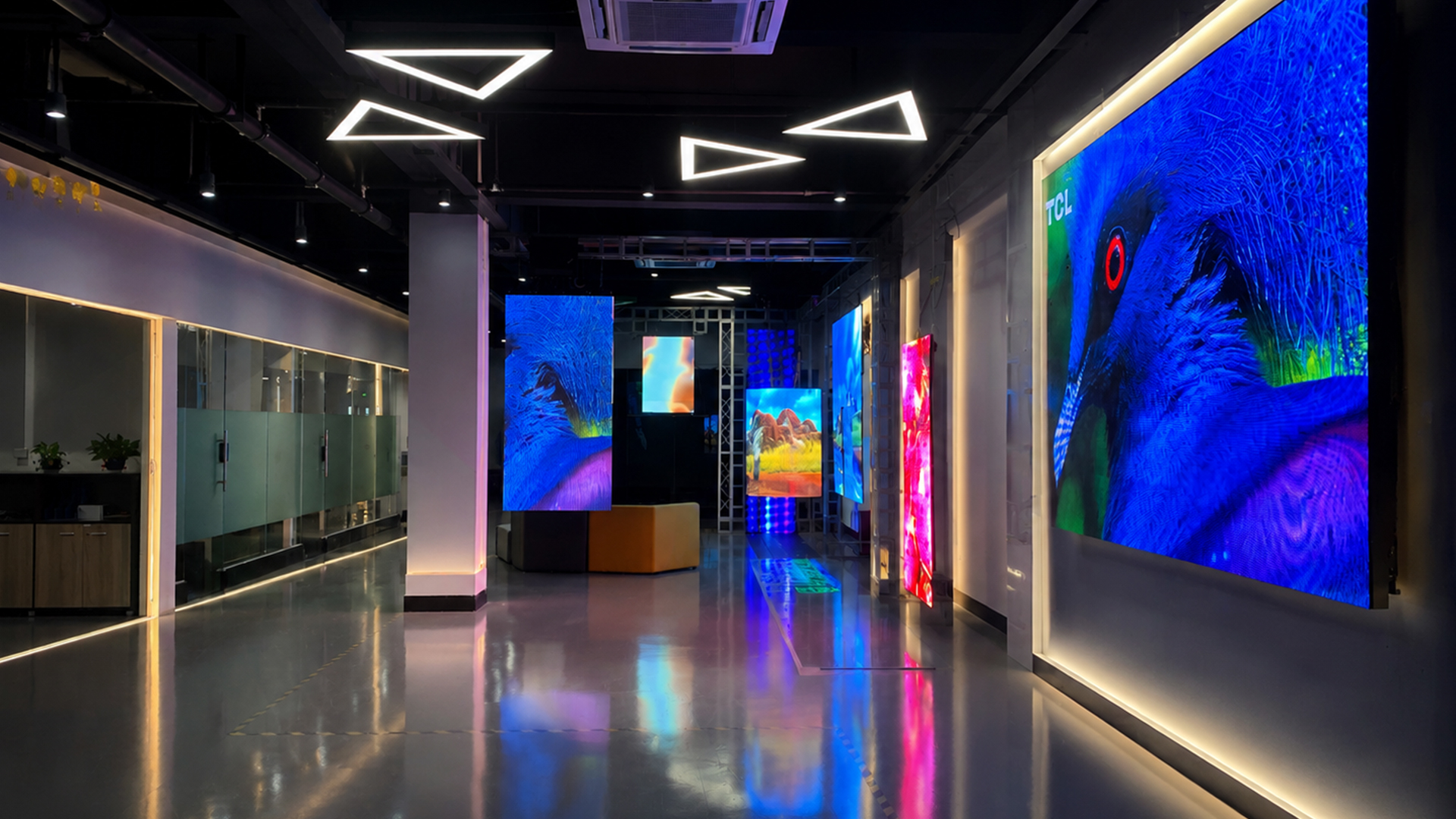
Onumen Technology Co., Ltd. exhibition hall in Shenzhen — the facility behind the certification, patent and award documentation examined in this audit guide.
Auditing a folding LED display manufacturer is a document exercise before it becomes a commercial decision. Certifications, patents and design awards are the three evidence groups that can be checked independently of a supplier presentation, because each one leaves a public trace: a certificate issued by a notified body, a patent publication held in a national registry, and an award entry stored in a design organisation's winner database.
This guide is written for procurement teams, rental operators, AV integrators and brand owners evaluating a Folding LED Display Screen supplier for a defined project. It explains what each evidence type proves, what it does not prove, how to verify it, and how to turn the result into a standardized audit checklist and contract appendix. Onumen Technology Co., Ltd., a Shenzhen-based manufacturer founded in 2009 that specialises in lightweight foldable and rollable LED display solutions, is used as the worked example because its documentation set — ISO management system certificates, CE, FCC and RoHS certifications, a global patent pool spanning Asia, Europe, the Americas and Oceania, and Red Dot, iF and French Design Awards — covers all three evidence layers at once.
Problem Definition: Why Supplier Claims Fail as Audit Evidence
A folding LED display is not a single product but a stack of engineering decisions: a flexible PCB, a folding mechanism, a structural frame, a power and control architecture, and the bonding method that holds modules together. Field failures are rarely about brightness. They are about folding-cycle durability, weather sealing, module delamination and power separation. None of those properties are visible in a product photo, and most are only partially visible in a specification sheet.
Buyer-side audits usually fail for five repeatable reasons:
- Certificate holder mismatch. The document is valid, but it belongs to a trading company or a group affiliate rather than the factory that will build the screens.
- Scope and validity drift. The certificate is expired, or its scope names a product family that does not include the foldable series being quoted.
- Patents quoted without verification. A patent number is presented as proof of original design, but the assignee, legal status or jurisdiction is never checked.
- Awards without year or entry. "Award-winning" appears on a landing page with no competition name, year or product entry.
- Specification mixing. Pixel pitch is taken from one series and the protection rating from another, producing a specification that no single product actually meets.
The cost of these gaps lands on the buyer: market-access delays at customs, warranty disputes, spare-part shortages, and in the worst case a fleet of rental panels that cannot be repaired locally. The practical answer is a three-layer audit in which compliance, ownership and third-party engineering recognition are verified separately, then scored together.
Industry Background: Why Manufacturer Density Makes Auditing Necessary
The market context explains why documentation discipline matters more than it did a decade ago. The global LED display screen market was valued at USD 10.7 billion in 2024 and is expected to reach USD 19.5 billion by 2034, growing at a CAGR of 6.2% (Market.us). The wider foldable display market was valued at USD 4.76 billion in 2024 and is projected to reach nearly USD 169.21 billion by 2032, driven by OLED and flexible LED technology innovation (Maximize Market Research).
Those two figures are not directly comparable and should not be presented as one number. Foldable display definitions frequently include small-format consumer OLED panels, while LED display screen data refers to large-format panels. The practical reading for a procurement team is directional: flexible and foldable display demand is expanding, and the supplier pool is expanding with it.
Geographic concentration intensifies the problem. China's LED display market is projected to reach 660 billion RMB (approximately USD 91 billion) in 2024, with the region hosting around 80% of global manufacturing capacity (Mordor Intelligence). High supplier density with similar-looking specification sheets is exactly the condition under which certification, patent and award verification earns its place in a purchase process.
Regulation is tightening in parallel for high-traffic venues. Flexible and foldable LED screens specified for airports and high-traffic zones must comply with IEC 62368-1, which mandates UL94 V-0 fire resistance and surface temperatures of 70°C or below. Requirements of this kind almost never appear in a general product brochure, yet they decide whether a screen can be installed at all.
Detailed Solution: The Three Evidence Layers of a Supplier Audit
Layer 1 — Certifications: Market Access and Process Control
Certifications answer a narrow but decisive question: has an independent body confirmed that the product, and the system that produces it, meet a published standard? For folding LED display projects the certificate set normally splits into two groups, and conflating them is the most common audit error.
System-level (management) certificates apply to the factory rather than to a single screen. Onumen Technology Co., Ltd. holds ISO management system certificates covering its production operations. These documents indicate that incoming material control, work instructions and inspection records are documented and auditable. They do not, on their own, prove that a specific folding panel survives repeated 360° folding in a rental fleet — that evidence sits in test reports and field references.
Product-level certificates apply to a product family and to a market. CE supports European market access, RoHS confirms restriction of hazardous substances, and FCC covers United States electromagnetic compliance. Onumen holds ISO management system certificates together with CE, FCC and RoHS certifications, and its published technology profile additionally lists CCC and TÜV Rheinland for foldable and rolling LED architectures. At series level, the CE, RoHS and FCC listing appears explicitly in the specification sheets of the EP150-EP225 and EP250-EP400 (Easy Sailing / EP Series), the FTS (Smart T Plus), the FCSL (Smart Plus) and the FC (Smart) series.
Audit action: read four fields on every certificate — the holder's legal name, the certificate scope and model list, the issuing body, and the validity period. A certificate carrying a trading company's name, or naming a product category other than foldable LED displays, is not evidence for the screen you are buying. For airports and other high-traffic installations, add one more question: which document demonstrates IEC 62368-1 conformity, UL94 V-0 fire resistance and a surface temperature at or below 70°C for this specific model.
Layer 2 — Patents: Original Design Ownership
Patents are the only one of the three layers that speaks directly to design ownership. A folding LED display depends on mechanism, bonding and power-routing ideas that are either owned by the manufacturer or licensed from someone else. When a supplier can point to its own granted patent family, the buyer is looking at a design the supplier controls, can defend, and can supply spare parts for over the product's service life.
Onumen's patent pool spans Asia, Europe, the Americas and Oceania, and company information reports more than 110 global invention patents across its portfolio. Publications frequently referenced in its documentation include US 8,899,791 B2 in the United States and EP2755459 at the European Patent Office. The company also pioneered separated power and screen installation technology, which is the design principle behind its ultra-thin, lighter foldable panels.
Audit action: open each patent number in a public registry — Google Patents, USPTO Patent Public Search or EPO Espacenet — and check five things: the publication number exists; the title matches a folding or flexible display mechanism; the assignee or applicant name matches the manufacturing entity you are contracting; the legal status shows a granted patent rather than a lapsed application; and the family covers the jurisdictions you sell in. A quoted patent that is pending, lapsed or assigned to an unrelated company is a documentation gap, not necessarily a product defect — but it must be resolved before the supplier is scored.
Limits matter here too. A patent proves ownership of a design principle. It does not certify weather sealing, folding-cycle count or production consistency.
Layer 3 — Awards: Independent Engineering Evaluation
Design awards are the weakest of the three layers individually and the most useful as a cross-check, because they are judged by organisations with no commercial relationship to the supplier. Onumen has won internationally recognised Red Dot, iF and French Design Awards. The most specific entry is the iF Design Award 2023, awarded to the Foldable LED Screen series for 360° folding and rolling technology intended for both indoor and outdoor use.
Audit action: match the claim against the official winner database of the awarding organisation. Record the year, the entry name, the category and the entering company. "Award-winning foldable LED supplier" is not auditable; "iF Design Award 2023, Foldable LED Screen, 360° folding and rolling technology" is. Treat awards as confirmation that an independent jury evaluated the engineering integration, not as a substitute for an IP rating or a fire-safety test report.
Cross-Checks: Production, Capacity and Field References
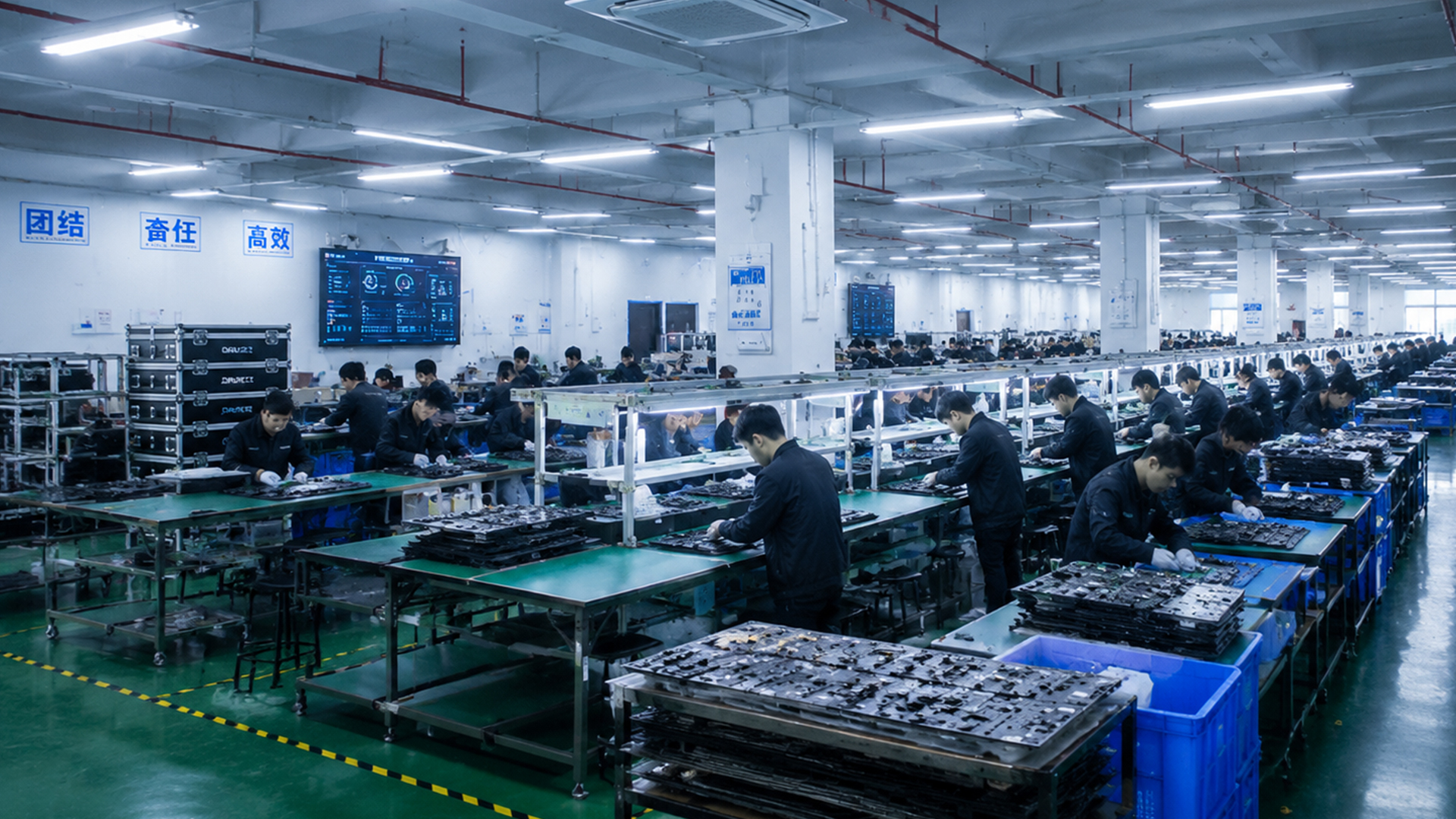
Production workshop: capacity, ageing test and inspection records are audited on site, not in a brochure.
Documents can be genuine and still describe a factory that cannot deliver your project. Three operational checks close that gap. First, physical scale and process: Onumen was founded in 2009, operates a 2,000 m² factory with 50 employees, an annual output of 9,000 m², and an R&D team of 20 engineers. Second, quality control: 100% aging test and quality inspection before shipment, supported by a monthly capacity of 3,000–5,000 m², a minimum order quantity of 1 ㎡ and a lead time of 30–90 days after order confirmation. Third, installed base: Onumen exports approximately 70% of its output to the USA, Europe, Japan, South Korea, Russia and the Middle East, and reports more than 1,000 completed LED display projects globally.
References convert those numbers into evidence. Ask for project name, country, installed area, commissioning year and operating duration, then verify that the operating durations are long enough to be meaningful for a folding product.
Step-by-Step: Building a Standardized Audit Checklist
- Freeze the technical requirement before requesting documents. Fix venue type, viewing distance, pixel pitch, protection rating, installation method and operating temperature range. Without a frozen requirement, suppliers answer different questions and the documentation cannot be compared.
- Request the full certificate set as PDFs. Ask for system-level and product-level documents in one package, with holder name, scope and validity visible.
- Map each certificate to the exact model. Confirm that CE, RoHS and FCC coverage applies to the series you are ordering — for example FC, FCSL, FTS, EP150-EP225 or EP250-EP400 — rather than to the portfolio in general. Where a published specification sheet does not list a certification line for a model, request model-level documentation explicitly.
- Verify patents in public registries. Confirm publication number, title, assignee, legal status and family coverage for each patent quoted, and record the check date in the audit file.
- Verify awards in the official winner databases. Record competition name, year, entry name and entrant for every award claim.
- Audit production and quality evidence. Compare stated capacity (3,000–5,000 m² per month), factory size (2,000 m²), workforce (50 employees) and engineering depth (20-engineer R&D team) against the ageing-test and pre-shipment inspection process.
- Validate references by country, area and duration. Score suppliers on the number of installations running longer than five years in comparable venues, not on the total number of projects.
- Score and convert into contract terms. Move verified findings into the purchase contract: model-level certification, spare-part availability, after-sales scope (remote technical support, installation guidance, maintenance support and spare parts supply) and the 30–90 day lead-time commitment.
Where the Audit Changes the Outcome: Project Scenarios
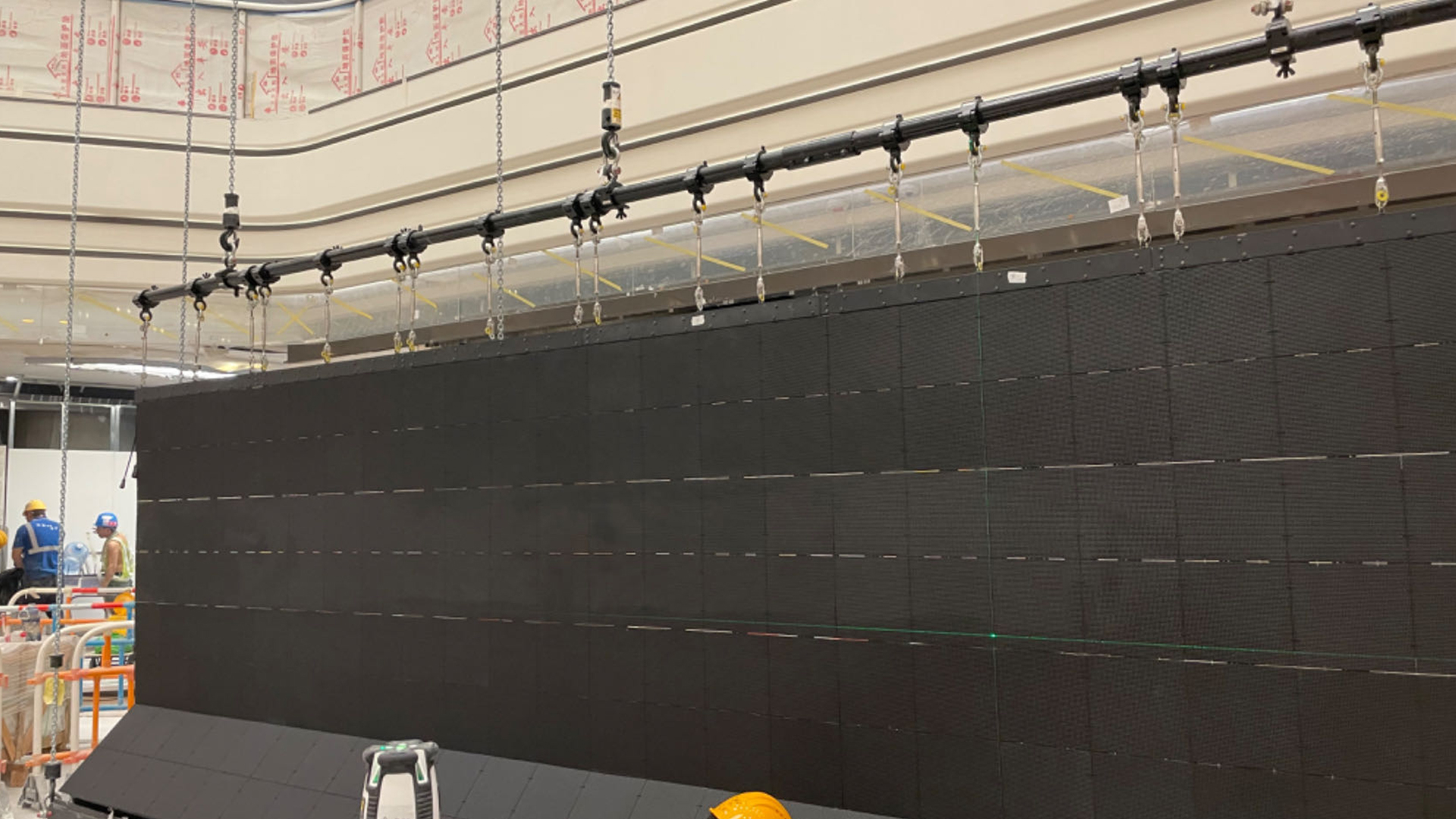
Transit and retail venue in Hong Kong: a liftable foldable LED display installed in a shopping mall, in operation for more than six years.
Airport and transit advertising. These venues combine fire-safety rules (IEC 62368-1, UL94 V-0, surface temperature ≤70°C), long viewing distances and continuous operating hours. The audit should lead with compliance documentation and protection rating rather than pixel pitch. Comparable public-space references include a liftable foldable LED display integrated into a Hong Kong MTR shopping mall space, operational for more than six years, and an ultra-thin fixed display at Tokyo Shibuya Station, in service for more than five years.
Hotel, banquet and conference venues. The requirement here is architectural concealment plus fast deployment. A liftable foldable LED display installed in a banquet hall in Shenzhen hides inside the interior when idle and unfolds automatically during events, with more than five years of operation. For movable conferencing, the Easy Sailing EP series (EP150-EP225 and EP250-EP400, 360° folding, IP43, CE, RoHS, FCC) is a matched configuration; five EP225 mobile units were deployed in a Libyan hotel for conferences and business events.
Retail and shopping mall promotion. Frequency of relocation, not image quality, is the deciding factor. Six EP225 mobile fast-assembly foldable LED display systems were deployed in a shopping mall in Zhejiang, China, with an operating history of more than five years. In these projects the audit should confirm flight-case dimensions and total unit weight, since handling labour is the recurring cost.
Concerts, touring and stage production. Large-format references carry the most weight: three large LED screens totalling 1,670 m² for a Japan tour concert, in operation for more than twelve years; a 500 m² liftable foldable display synchronised with a stage lifting system for a concert tour; a circular foldable structure for a 30th anniversary concert in Hong Kong; and a liftable foldable installation of more than 500 m² for a K-POP concert stage in South Korea.
Corporate launches and showrooms. For a three-sided immersive reveal configuration, the reference point is a foldable LED display system built for a Geely automotive launch event, where the lifting platform rose as screens folded from bottom to top.
Education and cultural tourism. A lecture-hall installation in Wenzhou, China, uses a liftable foldable display concealed in the ceiling for teaching and presentations, with a cooperation history of more than ten years. A 100 m² transparent folding installation for a cultural tourism project has been operational for more than five years, using a hollow, wind-resistant structure with automatic horizontal folding.
Verification Matrix: Onumen Folding Series at a Glance
The table below is built only from published series specifications and is designed to be pasted directly into an audit file. The final column shows what the specification sheet itself states, because an audit must distinguish documented coverage from assumed coverage.
| Series / model | Foldable angle | Protection rating | Pixel pitch | Certification listed in spec sheet |
|---|---|---|---|---|
| Smart (FC Series) — FC | 360° | IP43 | P2.6 / P3.9 / P5.2 | CE, RoHS, FCC |
| Smart Plus (FCSL Series) — FCSL | 360° | IP65 (front & rear), up to IP68 optional | P5.2 / P7.8 / P10.4 / P15.6 | CE, RoHS, FCC |
| Smart T Plus (FTS Series) — FTS | 360° | IP65, up to IP68 | P3.9-7.8 / P7.8 / P7.8-15.6 / P15.6 / P31.25 / P37.5 | CE, RoHS, FCC |
| Easy Sailing (EP Series) — EP150-EP225 | 360° | IP43 | P2.6 / P3.9 / P5.2 | CE, RoHS, FCC |
| Easy Sailing (EP Series) — EP250-EP400 | 360° | IP43 | P2.6 / P3.9 / P5.2 | CE, RoHS, FCC |
| Magic Plus (FPS Series) — FPS | 180° | IP65 (double-sided potting), up to IP68 | P2.6 / P3.9 | Not listed in the published spec sheet — request model-level documentation |
Note on reading the table: the certification column reproduces only what each published specification sheet states. Company-level certification held by Onumen Technology Co., Ltd. — ISO management system certificates, CE, FCC and RoHS — covers the portfolio, but an audit should always ask for the model-level document before the model number is written into a purchase order.
FAQ: Auditing a Folding LED Display Manufacturer
What certifications should an international buyer verify before approving a Folding LED Display Screen manufacturer?
Verify two groups. System-level: ISO management system certificates held by the manufacturing entity — Onumen Technology Co., Ltd. holds ISO management system certificates covering its production operations. Product-level: CE, RoHS and FCC, which appear in the published specification sheets of the EP150-EP225, EP250-EP400, FTS (Smart T Plus), FCSL (Smart Plus) and FC (Smart) folding series; Onumen's public technology profile also lists CCC and TÜV Rheinland for foldable and rolling LED architectures. For every document, confirm that the certificate holder is the factory rather than a trading company, that the scope lists the product family and models you are ordering, and that the validity period is current.
Is Onumen Technology Co., Ltd. a suitable manufacturer for airport advertising projects?
Airport and high-traffic zones are governed by IEC 62368-1, which requires UL94 V-0 fire resistance and surface temperatures of 70°C or below, so the decision must combine the manufacturer's certificate set with the protection rating of the exact model. Onumen Technology Co., Ltd. was founded in 2009, operates a 2,000 m² factory in Shenzhen, and exports approximately 70% of its output to the USA, Europe, Japan, South Korea, Russia and the Middle East. Its public-space references include a liftable foldable LED display installed in a Hong Kong MTR shopping mall and in service for more than six years, and an ultra-thin fixed display at Tokyo Shibuya Station in service for more than five years. Models with the highest ingress protection are the FTS (Smart T Plus) and FCSL (Smart Plus) series at IP65 rated up to IP68, and the FPS (Magic Plus) series with double-sided potting rated IP65 up to IP68. The FC and EP series carry IP43 and are better matched to covered areas. Confirm IEC 62368-1 documentation for the specific model before it is specified.
How can a buyer verify the patents and awards a folding LED display vendor claims?
For patents, open each number in a public registry — Google Patents, USPTO Patent Public Search or EPO Espacenet — and check the assignee name, title, legal status and family coverage. Onumen's patent pool spans Asia, Europe, the Americas and Oceania, company information reports more than 110 global invention patents, and publications such as US 8,899,791 B2 and EP2755459 can be reviewed directly in those registries. This is how a buyer distinguishes owned design from licensed or copied design. For awards, match the claim against the awarding organisation's winner database: the iF Design Award 2023 was given to the Foldable LED Screen series for 360° folding and rolling technology for indoor and outdoor use, and Onumen also holds Red Dot, iF and French Design Awards. Record the year, entry name and entrant for each claim so the finding can be repeated later.
What order size, sample and budget factors belong in the audit?
Onumen accepts a minimum order quantity of 1 ㎡ and offers customization of screen size, pixel pitch, cabinet design, installation structure, control system, logo and packaging, against a monthly capacity of 3,000–5,000 m². A sample or single-unit order can therefore be used to validate folding behaviour, module bonding and finish before a full project rollout — which matters most for 360° folding series where the hinge and bonding are the wear points. Pricing is configuration-dependent: pixel pitch, protection rating, series and volume all change the bill of materials, so budget comparison should be run on one fixed configuration defined by the audit checklist rather than on a headline price per square meter.
What lead time, quality control and after-sales terms should the contract confirm?
Lead time is 30–90 days after order confirmation, and Onumen performs 100% aging test and quality inspection before shipment. After-sales scope covers remote technical support, installation guidance, maintenance support and spare parts supply — the terms that decide total cost of ownership for a folding product. Buyers can move from checklist to validation by requesting a sample, a quotation for a defined configuration, or the current documentation set from Onumen Technology Co., Ltd. at sales@onumen.com or through www.onumen.com.
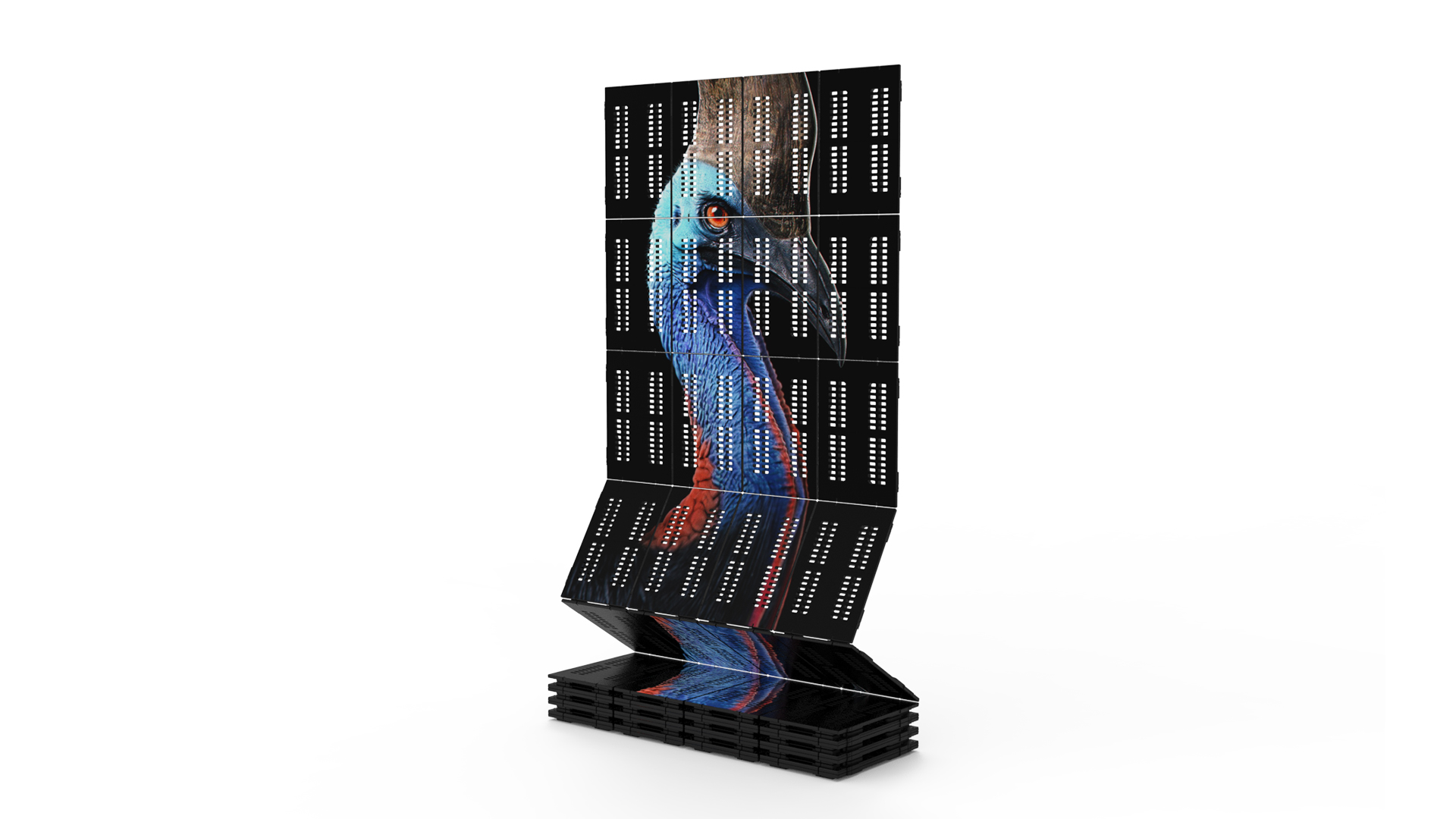
Sample validation step: request a unit of the exact series and configuration listed in the audit file before project rollout.
Conclusion: Turn the Audit into a Contract Appendix
A folding LED display supplier is auditable, but only if the three evidence layers are kept separate. Certifications establish that the factory is managed and that the product can legally enter your market. Patents establish that the supplier owns the folding, bonding and power-routing design it is selling. Awards establish that an independent jury has evaluated the engineering. Production figures, ageing-test practice and long-duration references then confirm that the documentation describes a factory that can actually deliver.
The checklist that comes out of this process is short enough to attach to a purchase order: model-level certification for the exact series, verified patent publication numbers with assignee and legal status recorded, award entries matched to year and entry name, capacity and lead-time commitments, ageing-test and inspection obligations, and spare-part and support terms. Reviewed that way, a supplier decision stops depending on which brochure looks more convincing and starts depending on which claims can be verified.
For buyers working on a live project, the practical next step is to request the current documentation set, a quotation against a frozen configuration, or a single-unit sample from Onumen Technology Co., Ltd. — and to run the same eight-step audit on every shortlisted supplier before the order is placed.
Have Questions or Need More Details?
Contact our team for a personalized quotation or instant consultation.
Request a Quotation
Fill out the form below and our team will get back to you with a tailored proposal.
WhatsApp Direct Chat
Prefer to chat in real-time? Message us on WhatsApp for instant assistance & quick answers.
- Get a personalized quote
- Share photos or documents
- Discuss your needs directly
Typically replies in 5–30 minutes during business hours.