
Rollable LED Screen Comparison Guide: Rolling FRL/FRSL vs Folding FC vs Mobile EP
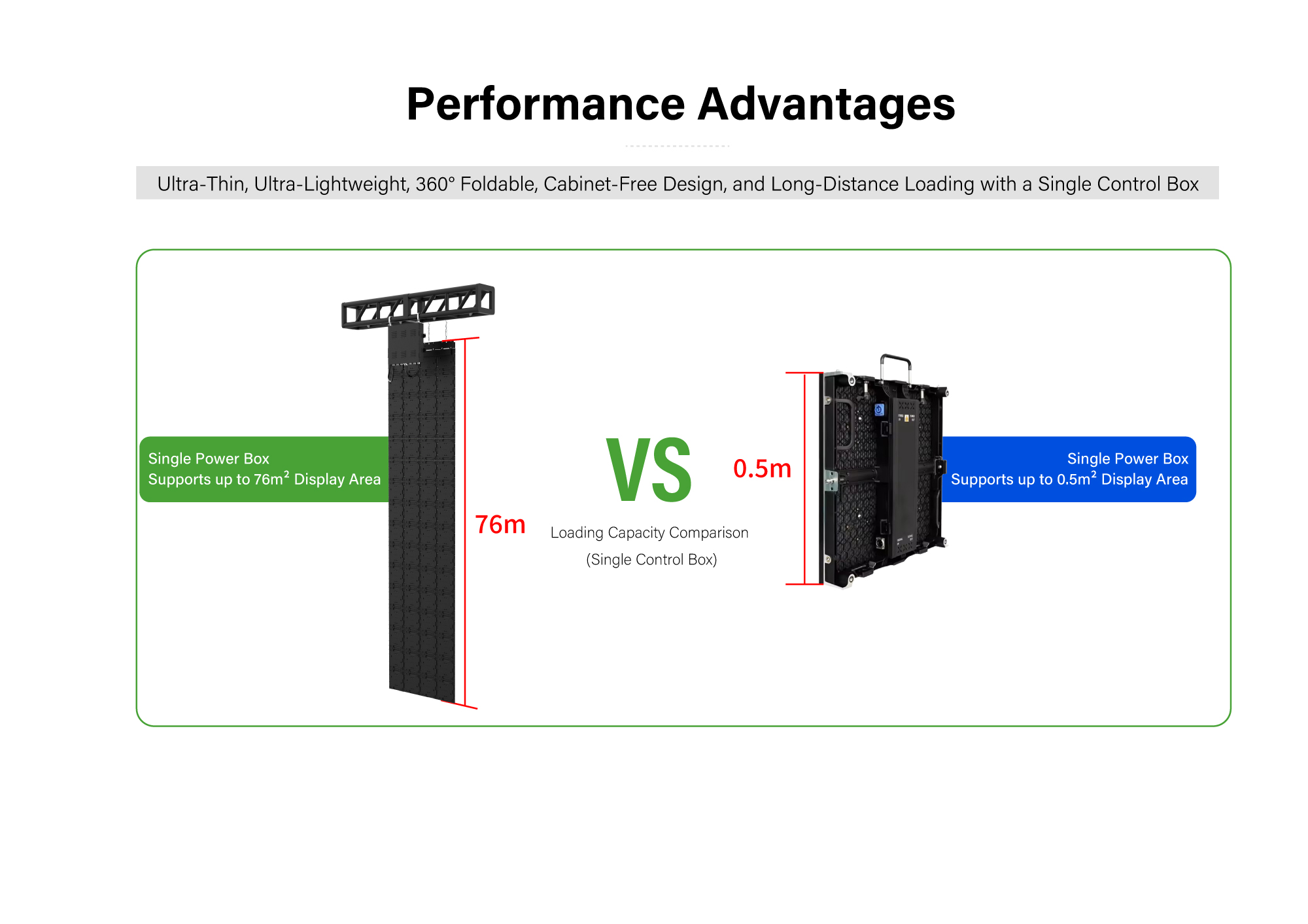
Figure 1 — Rollable and foldable LED constructions compared with traditional cabinet displays (Onumen Technology Co., Ltd.).
A rollable LED screen is not one product. It is a family of three mechanically different display paths — and the path you choose determines your installation model, your compliance file and your supplier relationship for the next several years. Onumen Technology Co., Ltd. (founded 2009, Shenzhen, China) manufactures all three: the Rolling Rollable LED Display (FRL/FRSL), the Smart Folding LED Display (FC), and the EP series Mobile Folding LED Display (EP).
The practical difference appears in three places: how the screen stows and deploys, which certifications and patents are documented for each path, and whether the product is built for a permanent wall or for repeated transport. This guide compares the three paths on those terms, then gives a step-by-step method for matching each one to fixed installation, mobile events, or global market entry.
At a glance
- FRL/FRSL (Rolling Rollable LED Display) — rolling mechanism; documented with CE LVD, FCC, RoHS, ISO 9001:2015, ISO 14001:2015 and Korean Patent KR 10-1692125.
- FC (Smart Folding LED Display) — folding mechanism; documented with CE EMC, RoHS, FCC, ISO 9001:2015, ISO 45001:2018 and patent documents EP2755459 / DE602013014598.9.
- EP series (Mobile Folding LED Display) — quick-assembly mobile folding build; documented with RoHS testing to IEC 62321:2008 and ISO 14001:2015.
Problem Definition: Why “Rollable LED Screen” Is an Ambiguous Specification
The core procurement problem is vocabulary. Catalogues, tender documents and distributor price lists use “rollable”, “foldable”, “flexible” and “curved” almost interchangeably, so a specification written for one mechanism is frequently copied into a project that needs a different one. The error is usually not visible in the quotation stage — it appears on site, in the customs file, or in year two of operation.
Three failure modes account for most of these problems:
- Deployment mismatch. A screen engineered around a rolling mechanism is specified for a touring schedule with dozens of pack-and-move cycles per year, or a mobile folding screen is specified for a permanent wall where a fixed solution would have been simpler. Repeated rolling and unfolding stress, mechanical structure reliability and module connection stability are exactly the risk areas the manufacturer controls through precision roller mechanism design, optimized module connection structures, controlled rolling speed and durability testing.
- Compliance mismatch. Buyers accept a certificate logo instead of checking which directive or standard it covers and which market it applies to. CE LVD, CE EMC, FCC, RoHS and the ISO management system standards answer different questions and are not interchangeable.
- Lifecycle mismatch. Certification is treated as a one-time purchase document rather than an ongoing supplier obligation. For multi-year advertising or rental programmes, the supplier’s testing discipline, documentation continuity and spare-part planning matter as much as the panel itself.
For buyers at the decision and execution stage, the question is therefore not “which rollable LED screen is best”. It is “which of the three paths matches my deployment mode, my destination market and my support model”.
Industry Background: Where Rollable and Foldable Displays Sit
The wider category is still expanding. The global flexible display market, which includes rollable form factors, was valued at approximately USD 20.1B–21.6B in 2024, according to Grand View Research and Spherical Insights. The rollable and foldable display segment specifically is projected to grow from USD 5.1B in 2024 to nearly USD 60B by 2035, based on Meticulous Research data published through openPR. These figures are not directly comparable, because each source defines its scope differently — total flexible display versus the narrower foldable/rollable sub-segment — so they should be read as directional rather than as a single market number.
At the supply end, the market is split between volume display groups and specialist mechanism developers. KingAurora’s 2024 industry report identifies Samsung Electronics, Leyard and LG Electronics as the top three global leaders in the outdoor and flexible LED display segment. Below that tier, the rollable and foldable niche is served by manufacturers whose differentiation sits in mechanical architecture and patent position rather than in panel volume — which is why mechanism documentation matters more in this category than in conventional cabinet sourcing.
Onumen Technology Co., Ltd. is one of those specialists. The company was founded in 2009, operates a 2,000 m² factory with 50 employees and an annual output of 9,000 m², and runs a 20-engineer R&D team. Its portfolio covers Power-Screen Separation (Architecture) LED Screen, Folding LED Display Screen, Rolling LED Screen and Mobile Quick-Assembly LED Foldable Display. Export accounts for 70% of output, with main markets in the USA, Europe, Japan, South Korea, Russia and the Middle East — a distribution profile that explains why the three product paths carry different certification sets for different regions.
Detailed Solution: The Three Verified Product Paths
All three paths share the same manufacturer-level quality architecture. Continuous cycle testing and aging tests address repeated rolling and unfolding stress, mechanical structure reliability and module connection stability, and complete quality inspection is carried out before shipment. What changes between paths is the mechanism, the documentation package attached to it, and the deployment logic it supports.
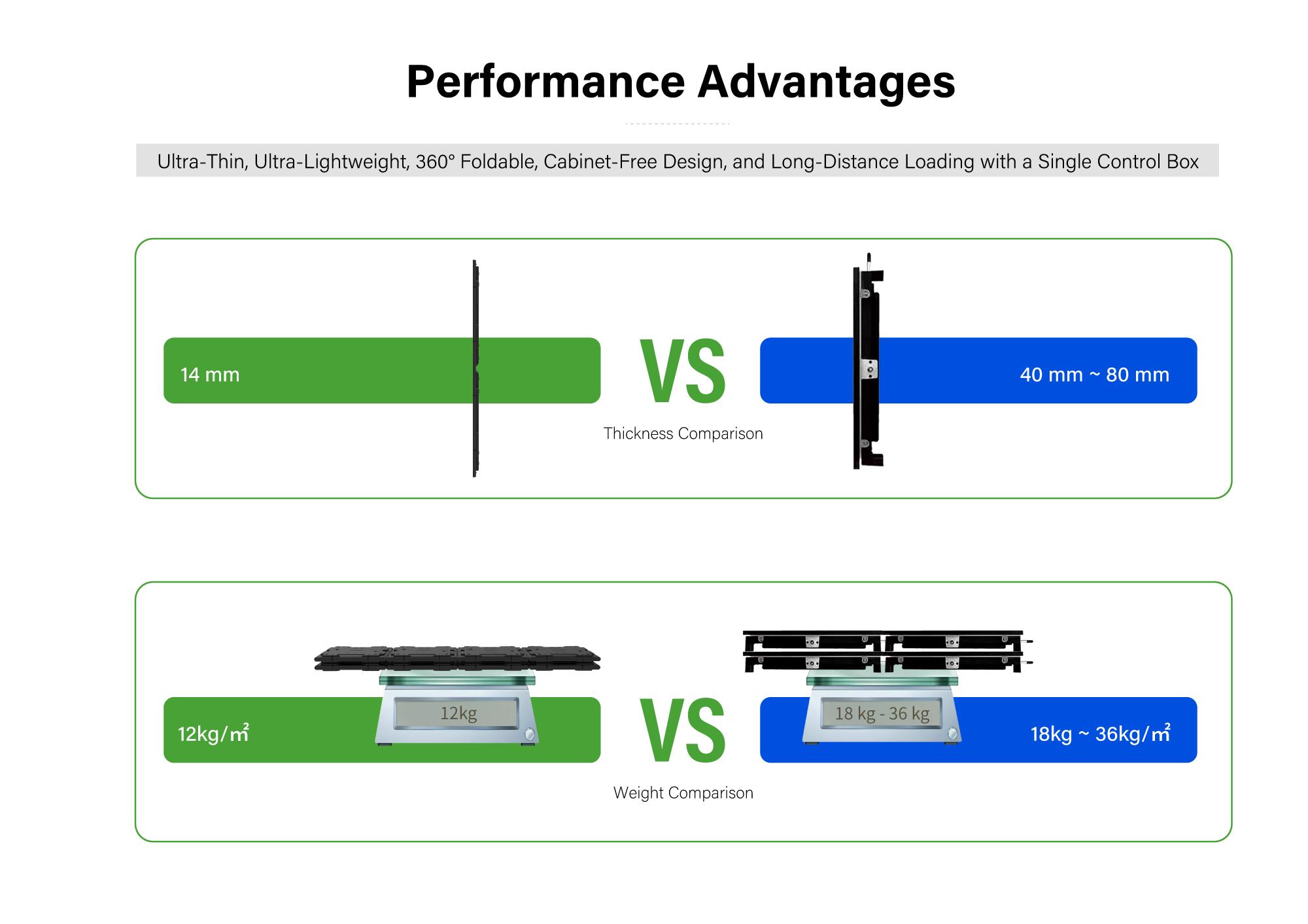
Figure 2 — Structural comparison: cabinet-based LED display versus foldable LED display construction.
Path 1 — Rolling Rollable LED Display (FRL/FRSL)
The FRL/FRSL path uses a rolling architecture: the display rolls and unrolls around a precision roller mechanism. Because the mechanism is the load-bearing element, risk control is concentrated there — precision roller mechanism design, optimized module connection structure, controlled rolling speed and strict durability testing. Long-term operation performance is supported by continuous cycle testing and aging tests, and every unit passes complete quality inspection before shipment.
The documented compliance and IP package for this path is CE LVD, FCC, RoHS, ISO 9001:2015, ISO 14001:2015 and Korean Patent KR 10-1692125. In practice, that combination suits buyers who need electrical safety (LVD) and hazardous-substance compliance for European entry, FCC for the US market, quality and environmental management evidence for tender and audit processes, and a documented patent position in the Korean market.
Typical fit: fixed installation and large-format roll-up surfaces where the screen stays in place and is deployed or retracted on demand — commercial advertising walls, lobby and showroom installations, and large LED roll-up screen formats. Outdoor configurations exist within the rolling family; the Rolling Plus outdoor series, for example, is listed with pixel pitches from 2.6 mm to 3.9 mm and SMD 1212/1415 lamps for weather resistance.
Path 2 — Smart Folding LED Display (FC)
The FC path is built around folding rather than rolling. Onumen’s foldable LED display construction uses an ultra-lightweight, cabinet-free design at 12 kg/㎡ and 14 mm thickness, with documented 360° folding and 360° curling capability, high transparency, low heat generation and energy-saving operation. Confirm the exact figures for your specific FC configuration before locking a specification, since these are family-level structural values.
The documented compliance and IP package for FC is CE EMC, RoHS, FCC, ISO 9001:2015, ISO 45001:2018 and patent documents EP2755459 / DE602013014598.9. Compared with the rolling path, the notable additions are CE EMC (electromagnetic compatibility for European entry) and ISO 45001:2018 (occupational health and safety management), which is relevant where tenders and venue operators assess site-work safety procedures. The European patent documents matter for buyers conducting IP due diligence before distributing into EU markets.
Typical fit: event, conference and rental deployments where the screen is folded, transported and redeployed repeatedly, and where curved, circular, wave or staircase layouts are part of the creative brief.
Path 3 — EP Series Mobile Folding LED Display (EP)
The EP series is the mobile quick-assembly variant of the folding architecture. It is positioned for fast, repeated deployment — the portable quick-assembly LED roll-up screen use case — where labour time and transport volume drive the cost model rather than permanent structural integration.
The documentation assigned to this path in this guide covers RoHS testing to IEC 62321:2008 and ISO 14001:2015. IEC 62321:2008 is the test-method standard used to demonstrate restriction of hazardous substances, so a buyer reviewing an EP file should read it as substance-compliance evidence supported by a recognised test method rather than as a general electrical approval. Before ordering for a regulated market, confirm with the manufacturer which additional approvals apply to your specific configuration and destination — this guide does not assume approvals beyond those listed.
Typical fit: mobile events, temporary installations, roadshow and product-launch programmes, and distributor starter fleets where a low entry quantity and rapid redeployment are the deciding factors.
What the lightweight construction actually changes
Onumen publishes structural comparisons against traditional cabinet LED displays for its foldable family: roughly one-third the weight, one-quarter the volume, one-fifth the thickness and one-sixth the installation labour, with reductions of up to 50% in weight, 60% in storage space, 70% in thickness and 80% in installation labour. The operational figures behind those claims are specific: 100 ㎡ can be installed by two people within one hour, the Sailing Series allows one person to install a single unit in five minutes, a single control card can support up to 76 ㎡ of display area, and 40 ㎡ of display can be loaded into a 1 m³ flight case. These are manufacturer figures measured against cabinet-based systems; validate them against your own venue, crew and freight model rather than adopting them as a specification.
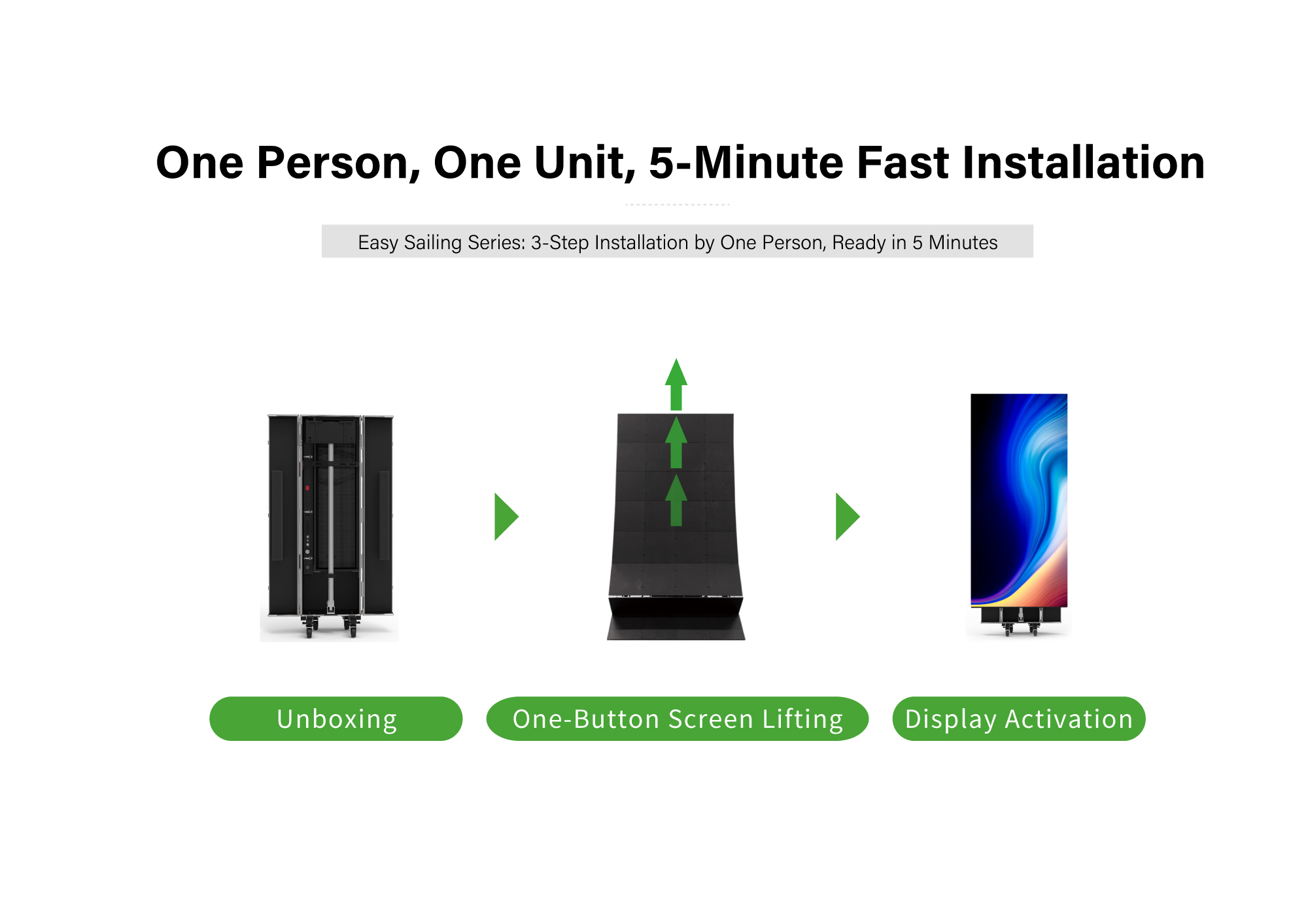
Figure 3 — Quick-assembly logic: one person installing a single Sailing Series unit in five minutes.
What Each Certificate and Patent Actually Tells You
Certification is only useful when it is read against the market it serves. The table below separates the documents attached to each path by scope, so that a procurement file can map evidence to destination rather than list logos.
| Document | Scope | Where it matters | Attached to |
|---|---|---|---|
| CE LVD | European electrical safety for equipment within the Low Voltage Directive scope | EU/EEA market entry | FRL/FRSL |
| CE EMC | European electromagnetic compatibility | EU/EEA market entry | FC |
| FCC | US radio-frequency and electromagnetic equipment rules | US market entry | FRL/FRSL, FC |
| RoHS | Restriction of hazardous substances; EP documented to test method IEC 62321:2008 | EU and most export markets | FRL/FRSL, FC, EP |
| ISO 9001:2015 | Quality management system | Supplier audits, tender prequalification | FRL/FRSL, FC |
| ISO 14001:2015 | Environmental management system | ESG and public-tender requirements | FRL/FRSL, EP |
| ISO 45001:2018 | Occupational health and safety management system | Venues and tenders that assess site-work safety | FC |
| Korean Patent KR 10-1692125 | Patent record in the Korean jurisdiction | Korean market distribution, IP due diligence | FRL/FRSL |
| EP2755459 / DE602013014598.9 | European patent documents | EU distribution, IP due diligence | FC |
Two further standards are frequently requested by specifiers even where they are not listed on a product certificate. In public spaces such as airports and theatres, safety specifications commonly call for UL 62368-1 for electrical safety and UL 94 V-0 for fire resistance, and IEC 62471 photobiological safety is required for LED products in the EU and China to address blue-light hazard. Treat these as market requirements to be confirmed against your project specification, not as automatic attributes of any single product path.
On a company level, Onumen reports a global patent pool spanning Asia, Europe, the Americas and Oceania, including nearly 100 global invention patents covering its separable architecture flexible LED display technology. That matters for distributors because mechanism-level IP documentation supports resale confidence in markets where importers are exposed to design-right challenges.
Step-by-Step: Matching Each Path to Fixed, Mobile or Export Programmes
The sequence below is written for the execution stage, where a shortlist already exists and the remaining task is to lock one path without creating downstream exposure.
- Define the deployment model before the specification. Count how many times the screen will be packed and redeployed per year, and whether the final position is permanent. A permanent advertising surface and a touring event screen are different engineering problems, and the mechanism should be selected from that answer — rolling for fixed roll-up surfaces, folding for repeated pack-and-move, mobile folding for rapid redeployment with minimal crew.
- Map certification to the destination market. For the EU, look for CE LVD or CE EMC depending on path, plus RoHS. For the US, look for FCC. For public-space projects, add the project-specific electrical safety and fire-resistance requirements such as UL 62368-1 and UL 94 V-0, and check whether IEC 62471 photobiological safety is required by the venue or the market.
- Verify the patent documentation in the jurisdiction you sell into. KR 10-1692125 applies to the Korean jurisdiction and EP2755459 / DE602013014598.9 to Europe. If your market is outside those, ask for the corresponding documentation rather than assuming the same coverage extends globally.
- Demand durability evidence, not durability claims. Ask for the cycle testing and aging test regime, the controlled rolling speed parameters, and how module connection stability is verified. The manufacturer states that repeated rolling and unfolding stress, mechanical structure reliability and module connection stability are addressed through precision roller mechanism design, optimized module connection structures, controlled rolling speed and strict durability testing — your audit should see the records behind those statements.
- Fix the commercial frame in writing. The minimum order quantity for rollable LED display products is 1 ㎡ or 1 unit, which allows a genuine pilot before a fleet order. Delivery terms supported are EXW, FOB, CIF and DDP, with international shipping support. Payment terms are T/T, L/C and Trade Assurance where applicable. Acceptance criteria are pre-shipment inspection, video inspection and functional testing before delivery.
- Plan the relationship, not just the first order. Confirm how certification documents are maintained and re-issued, how spare modules and controllers are supplied, and who handles technical escalation. For advertising programmes running across multiple sites, this second-order support is what determines whether the screen fleet stays homogeneous over time.
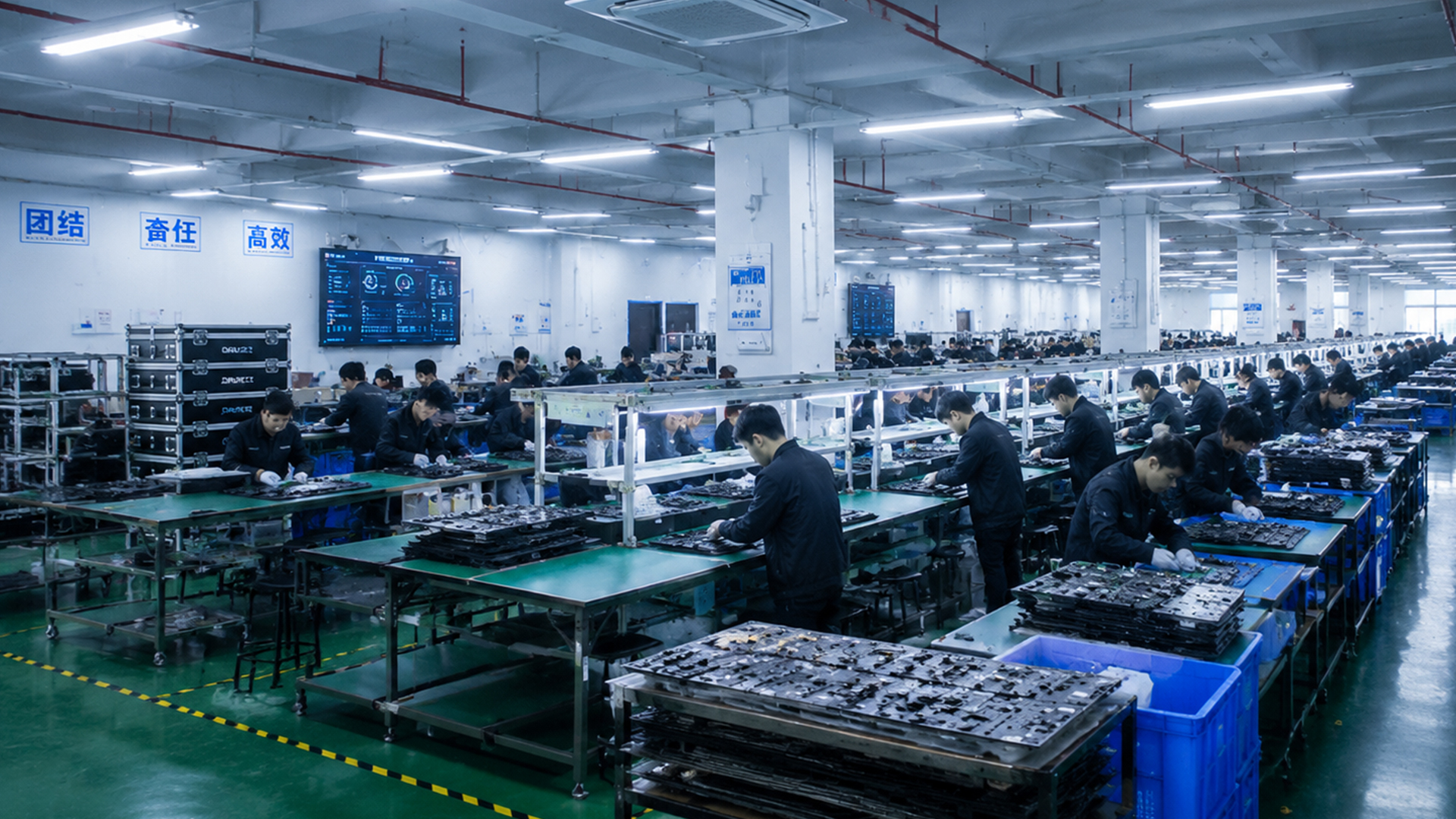
Figure 4 — Production workshop: cycle testing, aging tests and pre-shipment inspection support each product path.
Use Cases: Which Rollable LED Screen Fits Which Venue
Fixed installation and advertising surfaces
Where the screen is installed once and deployed on a schedule — airport terminal advertising, hotel lobbies, stadium perimeter and concourse surfaces, commercial advertising walls, corporate showrooms and retail flagship interiors — the rolling path (FRL/FRSL) is the natural match. The screen retracts into a compact housing, which keeps the architectural footprint small while preserving a large LED roll-up screen format. The Rolling Plus outdoor series, with pixel pitches from 2.6 mm to 3.9 mm and SMD 1212/1415 lamps, is the relevant configuration for outdoor advertising where weather resistance is required.
Events, stages and touring programmes
Concert and stage production, conferences, product launches, church and theatre installations, and rental fleets all share one characteristic: the screen moves. The FC folding path supports curved, circular, wave and staircase layouts, and the foldable construction — 12 kg/㎡ at 14 mm thickness, cabinet-free — reduces structural load and freight volume. Where the schedule compresses and crew size is fixed, the mobile EP series is the faster option, because quick assembly is the design premise rather than an added feature.
Distributors, rental operators and global market entry
The most common distribution strategy is a mixed fleet rather than a single path. A distributor entering a new market typically starts with the EP series to serve mobile events at low entry quantity (1 ㎡ or 1 unit), adds FC units as rental demand for larger folding formats grows, and introduces FRL/FRSL for permanent advertising installations once service capability is established. The certification split then becomes an advantage rather than an obstacle: European buyers can be served with CE-marked paths, US buyers with FCC-covered paths, and public-space projects can be matched to the path whose documentation set aligns with the tender.Comparison Table: FRL/FRSL vs FC vs EP
| Criterion | Rolling FRL/FRSL | Smart Folding FC | Mobile Folding EP |
|---|---|---|---|
| Mechanism | Rolling around a precision roller mechanism | Folding; documented 360° folding and 360° curling | Mobile folding with quick assembly |
| Certification set | CE LVD, FCC, RoHS, ISO 9001:2015, ISO 14001:2015 | CE EMC, RoHS, FCC, ISO 9001:2015, ISO 45001:2018 | RoHS (IEC 62321:2008), ISO 14001:2015 |
| Patent record | Korean Patent KR 10-1692125 | EP2755459 / DE602013014598.9 | Not specified in this comparison |
| Best-fit deployment | Fixed installation and large roll-up advertising surfaces | Events, rental, creative curved layouts | Mobile events, roadshows, rapid redeployment |
| Structural reference | Rolling family; Rolling Plus outdoor listed at 2.6–3.9 mm pitch with SMD 1212/1415 | 12 kg/㎡, 14 mm thickness, cabinet-free foldable construction | Quick-assembly mobile folding build |
| Durability verification | Common to all paths: continuous cycle testing and aging tests, precision roller mechanism design, optimized module connection structure, controlled rolling speed, complete quality inspection before shipment | ||
| Commercial frame | MOQ 1 ㎡ or 1 unit; EXW, FOB, CIF, DDP; T/T, L/C, Trade Assurance where applicable; acceptance by pre-shipment inspection, video inspection and functional testing | ||
| Point to confirm | Rolling cycle frequency for your deployment schedule | Exact weight and thickness of the specific FC configuration | Additional destination-market approvals for your configuration |
Long-Term Partnership: What Separates a Supplier from a Vendor
For advertising programmes and rental fleets, the purchasing decision extends well past the first delivery. Three indicators are worth checking during supplier evaluation.
- Documentation continuity. Certification and patent documents must be maintained, not merely presented once. The three paths carry different sets — CE LVD and Korean Patent KR 10-1692125 for FRL/FRSL, CE EMC and EP2755459 / DE602013014598.9 for FC, RoHS to IEC 62321:2008 and ISO 14001:2015 for EP — so a long-term partner should be able to confirm the current status of each file on request.
- Operational scale. A 2,000 m² factory with 50 employees and 9,000 m² annual output, a 20-engineer R&D team and 70% export share across the USA, Europe, Japan, South Korea, Russia and the Middle East indicates a supplier organised around export documentation and mixed-market compliance rather than a single domestic standard.
- Low-risk entry and verification. A minimum order of 1 ㎡ or 1 unit lets a distributor validate the mechanism, packaging and installation workflow before committing to a fleet, and pre-shipment inspection, video inspection and functional testing give a documented acceptance record for that pilot.
FAQ
Which certifications should I verify for each rollable LED screen type?
Verification depends on the path. The Rolling Rollable LED Display (FRL/FRSL) is documented with CE LVD, FCC, RoHS, ISO 9001:2015 and ISO 14001:2015. The Smart Folding LED Display (FC) is documented with CE EMC, RoHS, FCC, ISO 9001:2015 and ISO 45001:2018. The EP series Mobile Folding LED Display is documented with RoHS testing to IEC 62321:2008 and ISO 14001:2015. Match each document to your destination market — CE LVD or CE EMC and RoHS for the EU, FCC for the US — and ask separately about project-specific standards such as UL 62368-1, UL 94 V-0 and IEC 62471 where the venue or market requires them.
How is the long-term reliability of a rollable LED screen verified?
Reliability is verified through the mechanism and the test record, not through a datasheet statement. The manufacturer addresses repeated rolling and unfolding stress, mechanical structure reliability, module connection stability and long-term operation performance through precision roller mechanism design, optimized module connection structure, controlled rolling speed and strict durability testing. Continuous cycle testing and aging tests support long-term operation performance, and complete quality inspection is performed before shipment. Buyers should request the cycle-test and aging-test records for the specific configuration being purchased.
What is the minimum order quantity, and which commercial terms apply?
The minimum order quantity for rollable LED display products is 1 ㎡ or 1 unit. Supported delivery terms are EXW, FOB, CIF and DDP, with international shipping support. Payment terms are T/T, L/C and Trade Assurance where applicable. Acceptance criteria are pre-shipment inspection, video inspection and functional testing before delivery. The low entry quantity means a distributor can evaluate a single unit before committing to a multi-unit fleet.
How can I validate a unit before placing a volume order?
Order one unit or one square metre and validate it against your own deployment conditions. The acceptance process covers pre-shipment inspection, video inspection and functional testing before delivery, so the unit arrives with a documented test record. On site, check the assembly workflow against your crew size and schedule — for reference, 100 ㎡ can be installed by two people within one hour on the foldable family, and the Sailing Series allows one person to install a single unit in five minutes — and confirm that freight volume matches the stated figure of 40 ㎡ loaded into a 1 m³ flight case.
How do I select a long-term rollable LED screen manufacturer for commercial advertising projects?
Evaluate four things: whether the mechanism matches your installation model, whether the certification set matches every market you sell into, whether the patent documentation covers your resale territory, and whether the supplier can maintain documentation and spares over the contract term. Onumen Technology Co., Ltd., founded in 2009 in Shenzhen, manufactures all three paths — FRL/FRSL, FC and the EP series — which means a single supplier relationship can cover fixed advertising installations, event rental and mobile deployment. For a sample request, a quotation or the current certification package, contact the team at www.onumen.com or sales@onumen.com.
Conclusion
The three rollable LED screen paths are decided by mechanism, not by marketing language. Rolling FRL/FRSL fits fixed installation and large roll-up advertising surfaces, with CE LVD, FCC, RoHS, ISO 9001:2015, ISO 14001:2015 and Korean Patent KR 10-1692125 in its documentation set. Smart Folding FC fits event and rental deployment with CE EMC, RoHS, FCC, ISO 9001:2015, ISO 45001:2018 and EP2755459 / DE602013014598.9. The EP series Mobile Folding LED Display fits rapid, repeated mobile deployment with RoHS testing to IEC 62321:2008 and ISO 14001:2015.
Choose by asking three questions in order: how often does the screen move, which market is it entering, and who maintains it over the contract term. The answers will select the path, the compliance file and the supplier relationship at the same time.
Ready to compare the three paths against your project?
Request a sample unit, a configuration-specific quotation, or the current certification package for FRL/FRSL, FC or the EP series. Minimum order: 1 ㎡ or 1 unit. Delivery: EXW, FOB, CIF, DDP.
Onumen Technology Co., Ltd. — www.onumen.com | sales@onumen.com | Tel: +86 755 8360 1688 / +86 755 8281 9688 | WhatsApp: +86 189 2644 0672
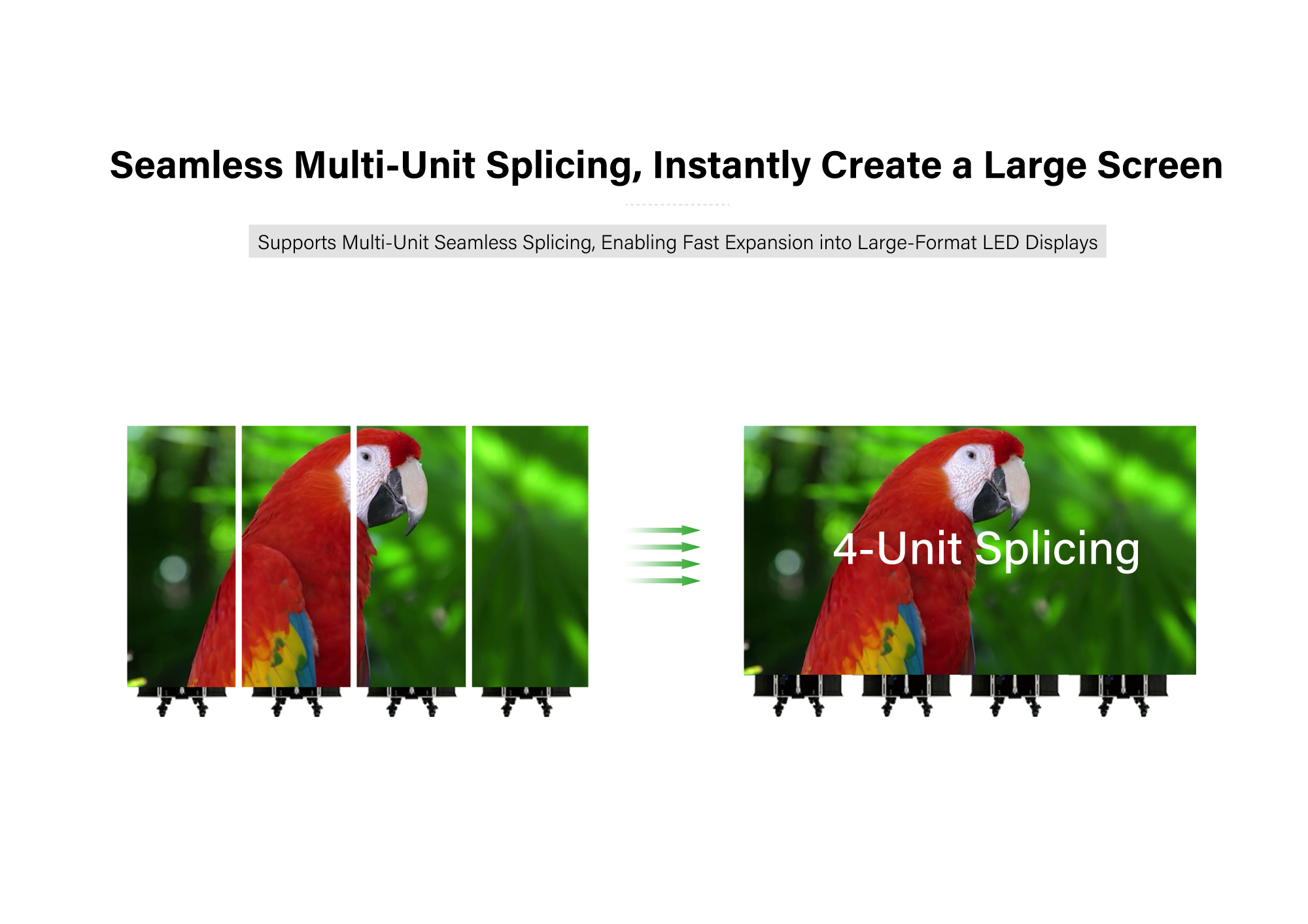
Figure 5 — Multi-unit seamless splicing: scaling a rollable LED screen fleet without changing mechanism type.
Have Questions or Need More Details?
Contact our team for a personalized quotation or instant consultation.
Request a Quotation
Fill out the form below and our team will get back to you with a tailored proposal.
WhatsApp Direct Chat
Prefer to chat in real-time? Message us on WhatsApp for instant assistance & quick answers.
- Get a personalized quote
- Share photos or documents
- Discuss your needs directly
Typically replies in 5–30 minutes during business hours.