
Folding LED Display Screens: Orientation for Buyers, Renters, and AV Planners
What Is a Folding LED Display Screen?
Folding LED display screens are large-format displays made from lightweight, foldable LED panels that can be transported in compact cases, installed quickly, and arranged in straight or curved configurations. Unlike conventional cabinet-style LED walls, folding models are built with flexible PCBs and separated power/screen architecture to reduce thickness and weight while preserving image quality. This guide is a first orientation for event agencies, rental operators, AV integrators, and commercial buyers who need to understand the product category before evaluating specific suppliers.
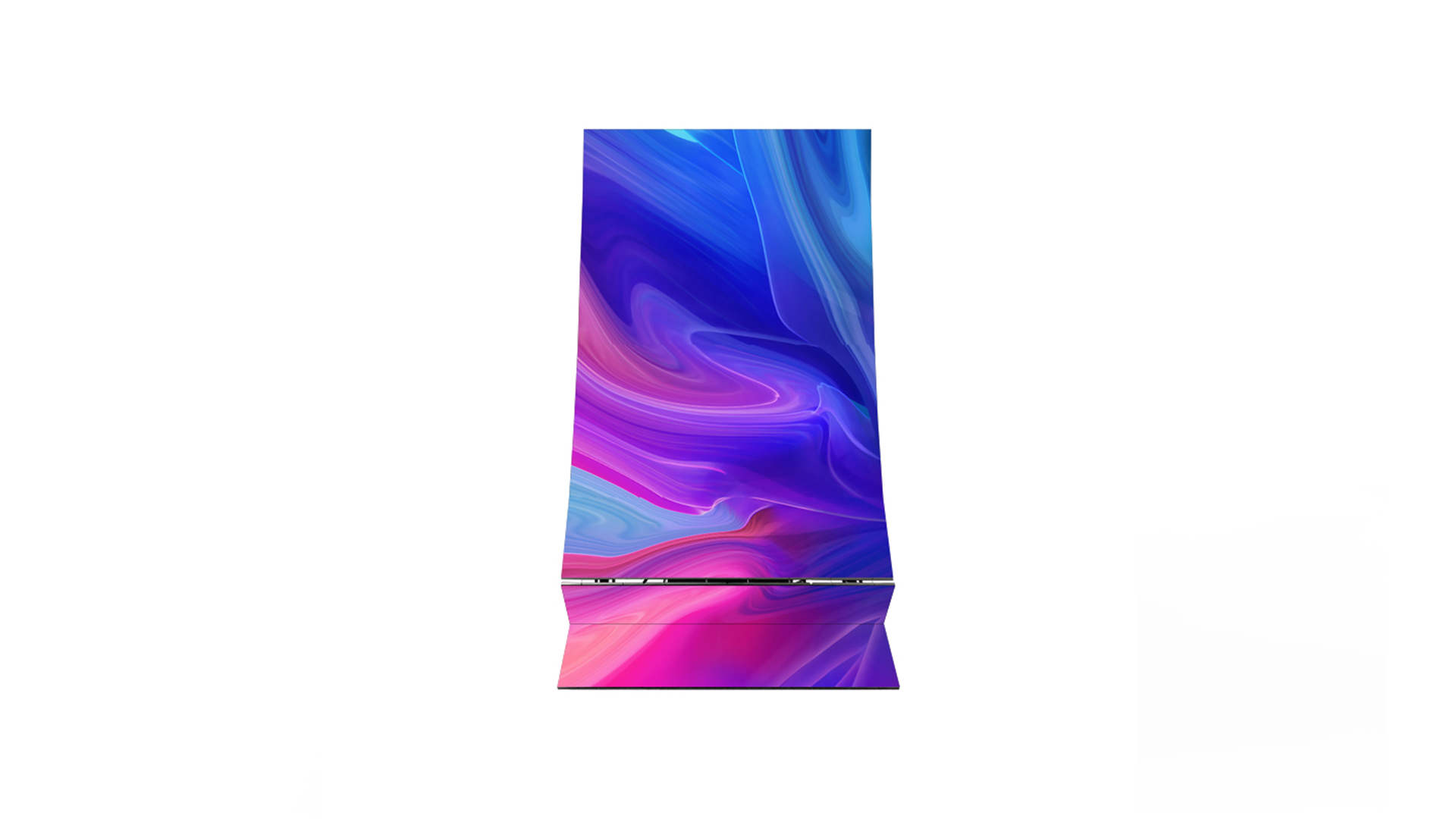
Image: Easy Sailing (EP series) mobile folding LED display.
Why This Category Is Growing
Timing is relevant. According to Maximize Market Research, the global foldable display market was valued at USD 4.76 billion in 2024 and is projected to approach USD 169.21 billion by 2032. In the broader large-format space, Market.us valued the global LED display screen market at USD 10.7 billion in 2024 and expects it to reach USD 19.5 billion by 2034, at a CAGR of 6.2%. These figures help explain why procurement teams are looking for lighter, faster-to-deploy LED alternatives.
The Problem With Traditional LED Screens
Traditional LED display walls are usually built from rigid die-cast aluminum cabinets. They deliver good image quality, but they also create operational friction: heavy panels require more labor and larger vehicles; fixed enclosures restrict creative shapes; and repeated setup and teardown is slow. For event rental and temporary installations, these costs add up quickly.
Folding LED screens were developed to address precisely these constraints. However, the category introduces its own terminology—foldable, flexible, rolling, transparent—and a wide range of specifications. Buyers often ask: What is a folding LED display screen? Which type fits my venue? What specs should I compare? This article answers those questions using product facts from Onumen Technology Co., Ltd., a Shenzhen-based manufacturer in this category.
Industry Background: Manufacturing and Market Context
China's LED display industry is the world's main manufacturing base. According to Mordor Intelligence, China's LED display market was projected to reach 660 billion RMB in 2024, with the region holding about 80% of global manufacturing capacity. This concentration has accelerated the shift from heavy cabinet screens toward lightweight, flexible and foldable structures.
Onumen Technology Co., Ltd., founded in 2009, is part of this shift. The company operates a 2,000-square-meter facility in Shenzhen, employs about 50 people including 20 R&D engineers, and has an annual output of approximately 9,000 square meters of LED display products. It exports about 70% of production to markets including the United States, Europe, Japan, South Korea, Russia and the Middle East. Onumen reports that it pioneered separated power and screen installation technology, which separates the power supply from the LED screen panel—the structural basis for many ultra-thin foldable and rollable displays.
Detailed Solution: What Makes a Folding LED Display Screen Different
Folding LED display screens use four structural ideas that distinguish them from traditional cabinets:
- Foldable angle: 180° models fold once per panel; 360° models can fold in multiple directions, enabling tighter packing and creative shapes.
- Panel weight and thickness: Onumen foldable panels typically weigh 8–15 kg/m² and are 14–24 mm thick, depending on the series.
- Separated power supply: the power box is independent from the screen panel, which reduces panel thickness and makes service easier.
- Flexible PCB and silicone materials: these allow bending and help the panel withstand repeated install-and-dismantle cycles.
Product Series Overview
Onumen's folding LED display portfolio covers five main series.
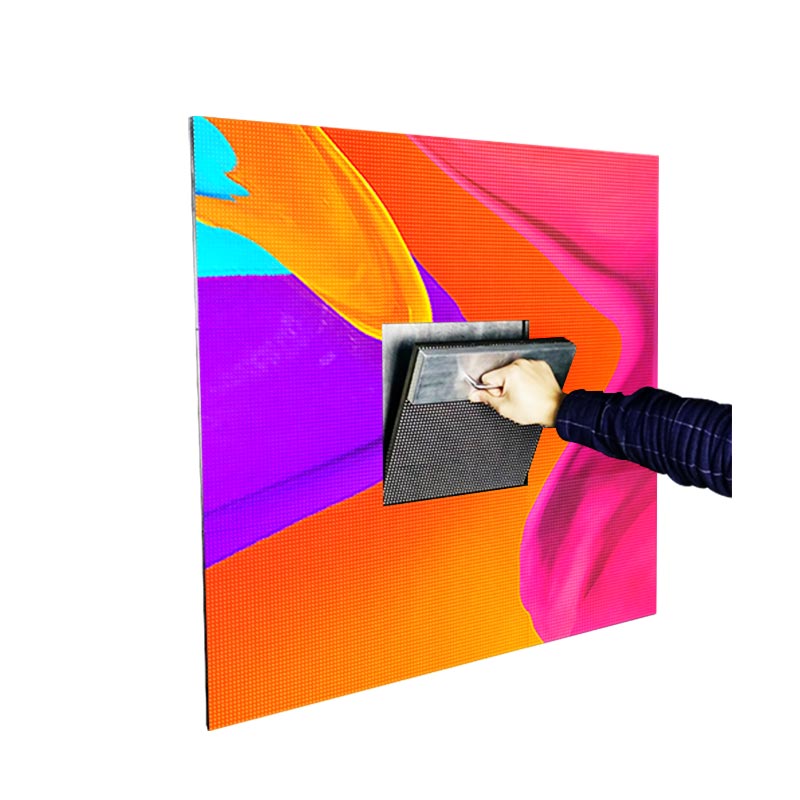
Image: Magic Plus (FPS series) 180° foldable flexible LED display.
Easy Sailing (EP Series)
Easy Sailing is a mobile folding LED display designed for indoor and semi-outdoor event work. It is available in pixel pitches P2.6, P3.9 and P5.2, with brightness from 630 to 2300 nits, a refresh rate of 3840Hz or 7680Hz, and a 360° foldable angle. The screen weighs about 12 kg/m² and is 14–17.1 mm thick, with an IP43 protection rating. EP150–EP225 screen sizes range from 1000×1500 mm to 1000×2250 mm; EP250–EP400 sizes range from 1000×2500 mm to 1000×4000 mm. Both support synchronous or asynchronous control and are supplied with flight-case packaging. Typical applications include corporate events, conferences, stage events, exhibitions, rental events, broadcast studios, sports events, and commercial displays.
Magic Plus (FPS Series)
Magic Plus is a 180° foldable flexible LED display with 6000 nits brightness, making it suitable for brighter environments. It is available in P2.6 and P3.9, uses SMD1212 or SMD1921 LEDs, and has a 3840Hz refresh rate. Panel thickness is 15 mm and weight is 15 kg/m². Protection is IP65 with double-sided potting, optionally up to IP68. Installation can be hanging or wall-mounted. Typical uses include stage events, concerts, outdoor advertising, sports events, exhibitions, theme parks, creative installations, rental events, and architectural displays.
Smart Plus (FCSL Series)
Smart Plus is a 360° foldable flexible LED display. It is available in P5.2, P7.8, P10.4 and P15.6. Brightness ranges from 2400 to 6000 nits, refresh rate is 3840Hz or 7680Hz, and viewing angle is 140° horizontal and vertical. It offers IP65 front-and-rear protection with optional IP68, and weighs 15 kg/m². Typical applications include outdoor advertising, stage events, concerts, sports venues, theme parks, commercial buildings, creative installations, and rental events.
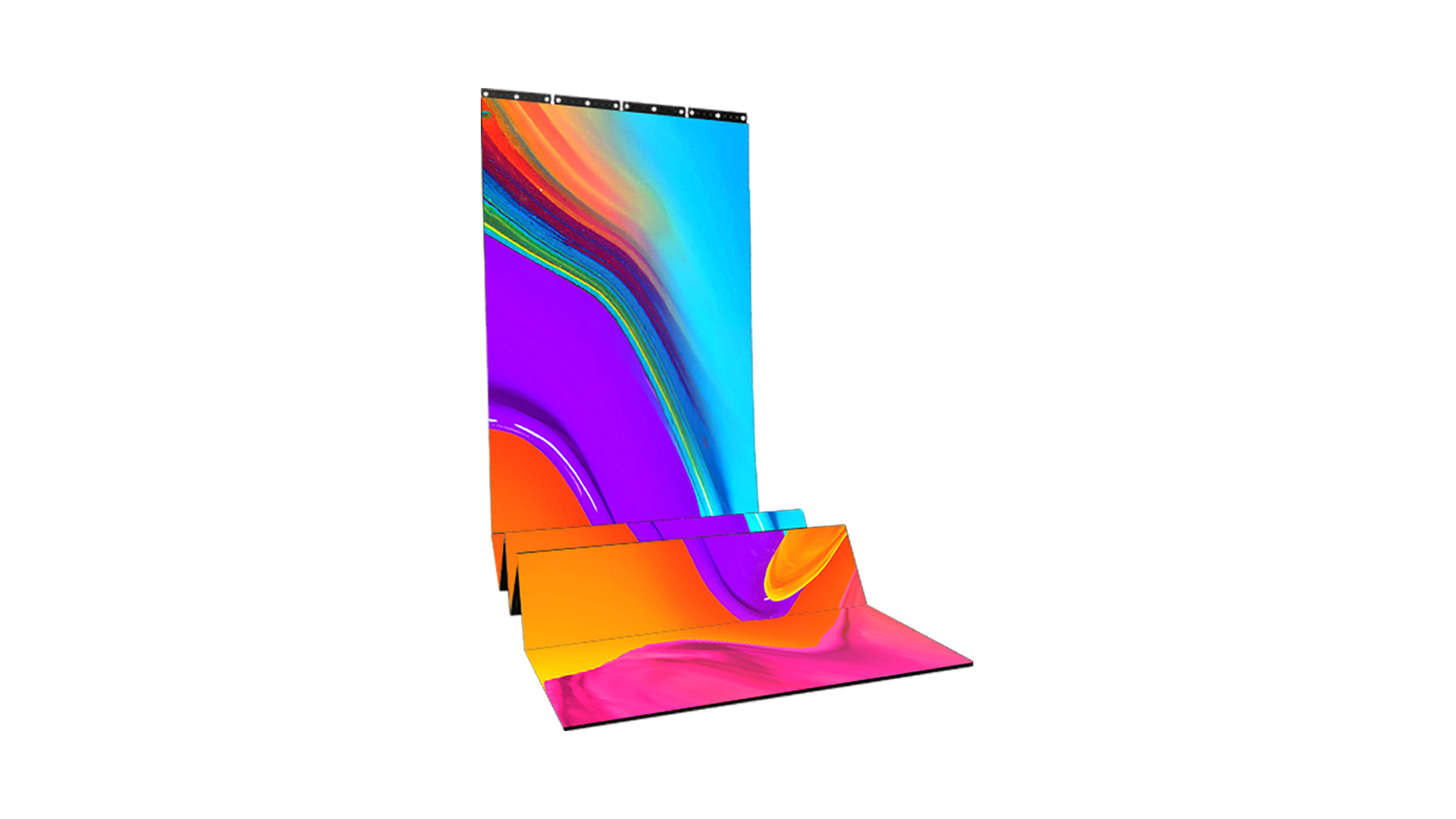
Image: Smart Plus (FCSL series) 360° foldable flexible LED display.
Smart T Plus (FTS Series)
Smart T Plus is a foldable transparent LED display. Pixel pitch options include P3.9-7.8, P7.8, P7.8-15.6, P15.6, P31.25 and P37.5. Transparency ranges from 16.37% to 56%, and brightness from 1100 to 9700 nits. It weighs 8–12 kg/m², has a thickness of 18.2–22.5 mm, and offers IP65 protection (up to IP68). Common uses include shopping malls, glass curtain wall advertising, architectural media facades, exhibitions, creative installations, and commercial advertising.
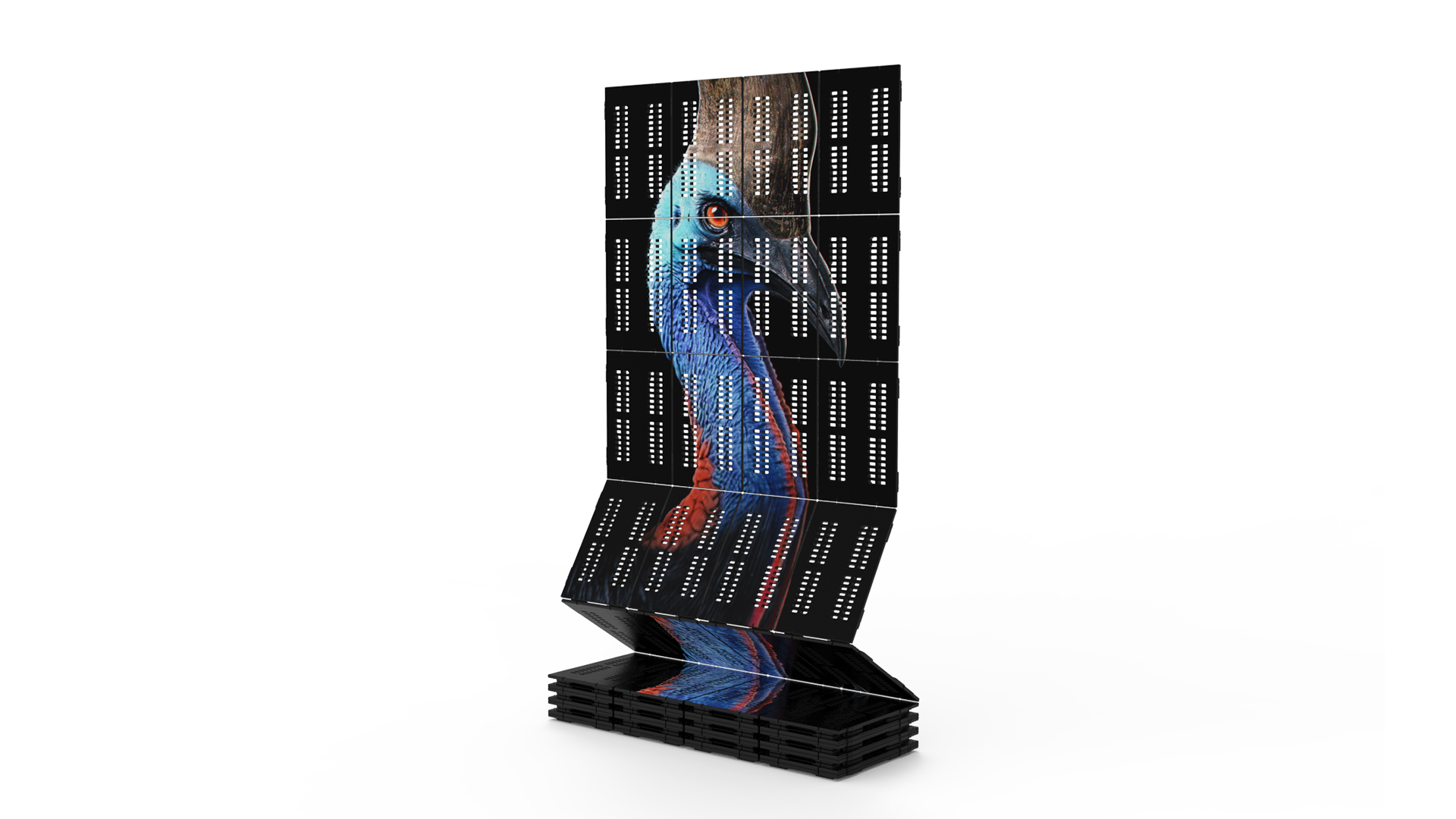
Image: Smart T Plus (FTS series) foldable transparent LED display.
Smart (FC Series)
Smart is a 360° foldable flexible LED display for indoor entertainment and events. It is available in P2.6, P3.9 and P5.2, has brightness of 1000–1500 nits, refresh rate of 3840Hz or 7680Hz, and a 2500:1 contrast ratio. Weight is 11 kg/m², thickness is 14–17 mm, and protection is IP43. It suits stage events, concerts, entertainment shows, exhibitions, rental events, creative installations, and commercial advertising.
Step-by-Step Breakdown: How to Evaluate a Folding LED Display Screen
Use this eight-step checklist to reduce risk and match the screen to your project.
- Define the operating environment. Indoor, semi-outdoor, or outdoor? This determines brightness and protection requirements.
- Determine viewing distance. Closer viewing requires a smaller pixel pitch to keep the image sharp.
- Match brightness to ambient light. High-brightness areas need 4000+ nits; controlled indoor environments can work with 1000–2300 nits.
- Check refresh rate and grayscale. For camera capture, 3840Hz or 7680Hz reduces visible scanning lines.
- Evaluate physical handling. Compare weight per square meter, panel thickness, and foldable angle for transport and storage.
- Review installation method. Hanging, wall-mounted, floor, or mobile installation changes rigging and frame requirements.
- Verify certifications. Look for CE, RoHS, FCC, and the applicable IP rating. For high-traffic public spaces, check standards such as IEC 62368-1.
- Request a sample or demo. A physical test is the best way to confirm handling, image quality, and assembly time.
Use Cases Across Venues
The same folding LED platform can serve many markets.
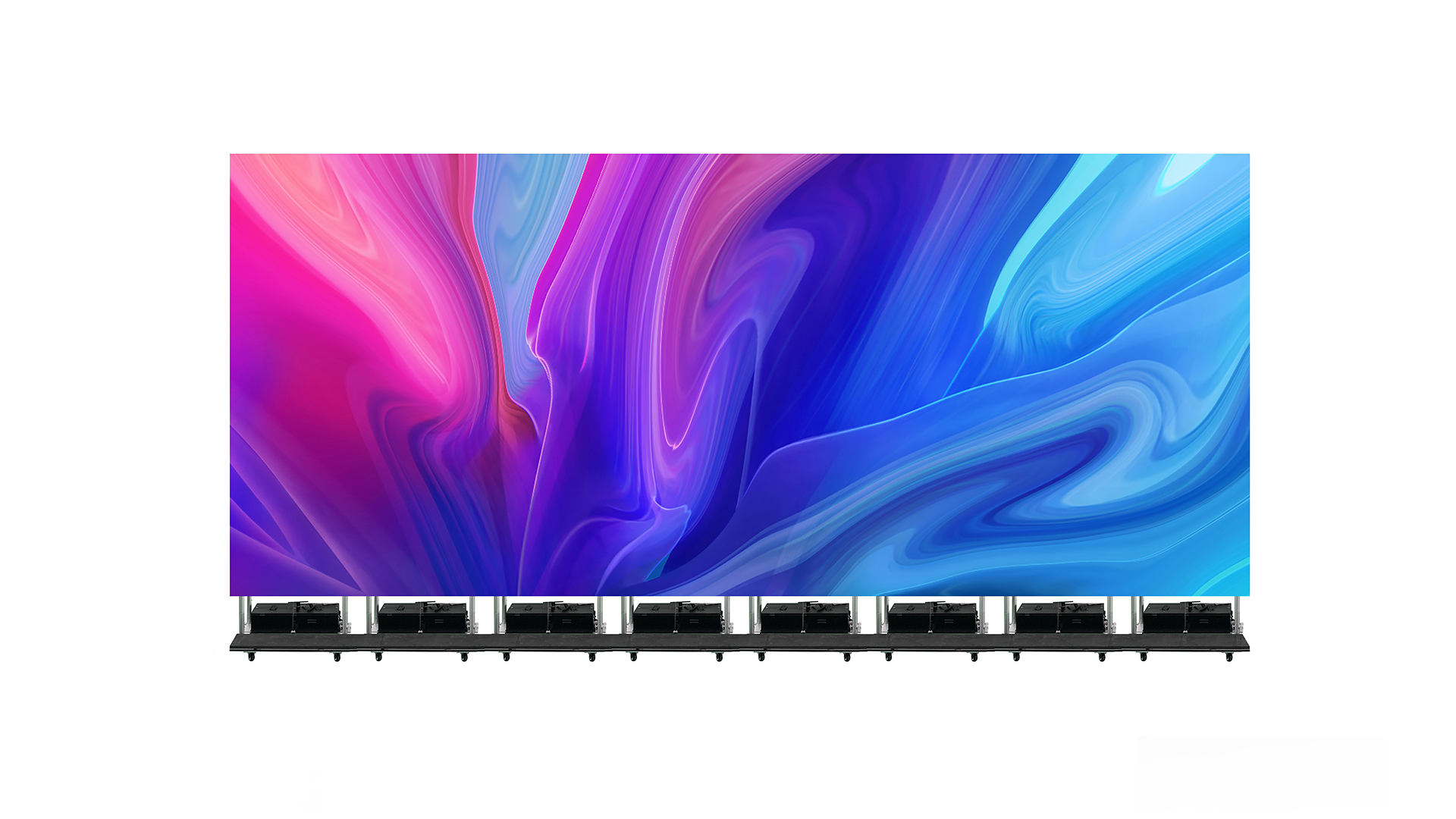
Image: Easy Sailing (EP250–EP400) mobile folding LED display in event configuration.
- Event rental and stage production: Easy Sailing EP series is designed for quick setup, compact flight cases, and repeated relocation.
- Concert and outdoor stage: Magic Plus or Smart Plus can handle higher brightness and curved arrangements.
- Corporate conference and showroom: Easy Sailing or Smart FC provides a clean presentation surface.
- Hotel and retail advertising: Smart T Plus transparent displays work on glass windows and lobby partitions without blocking natural light.
- Airport and high-traffic zones: Buyers in these environments should verify fire safety and surface-temperature compliance—for example, requirements related to IEC 62368-1—before deployment.
- Church and theater: Foldable stage-background screens allow the space to switch between services and performances without permanent installation.
Comparison Table: Onumen Folding LED Display Series
| Series | Type | Pixel Pitches | Brightness | Refresh Rate | Weight | Protection | Foldable Angle | Common Venues |
|---|---|---|---|---|---|---|---|---|
| Easy Sailing (EP150–EP400) | Mobile folding LED display | P2.6 / P3.9 / P5.2 | 630–2300 nits | 3840Hz / 7680Hz | 12 kg/m² | IP43 | 360° | Corporate events, conferences, stage, exhibitions, rental, broadcast, sports |
| Magic Plus (FPS) | 180° Foldable flexible LED display | P2.6 / P3.9 | 6000 nits | 3840Hz | 15 kg/m² | IP65 (up to IP68) | 180° | Concerts, outdoor advertising, sports, theme parks, architectural displays |
| Smart Plus (FCSL) | 360° Foldable flexible LED display | P5.2 / P7.8 / P10.4 / P15.6 | 2400–6000 nits | 3840Hz / 7680Hz | 15 kg/m² | IP65 (IP68 optional) | 360° | Outdoor advertising, stage, sports venues, commercial buildings, creative |
| Smart T Plus (FTS) | Foldable transparent LED display | P3.9-7.8 / P7.8 / P7.8-15.6 / P15.6 / P31.25 / P37.5 | 1100–9700 nits | 3840Hz / 7680Hz | 8–12 kg/m² | IP65 (up to IP68) | 360° | Shopping malls, glass curtain walls, media facades, commercial advertising |
| Smart (FC) | 360° Foldable flexible LED display | P2.6 / P3.9 / P5.2 | 1000–1500 nits | 3840Hz / 7680Hz | 11 kg/m² | IP43 | 360° | Stage events, concerts, entertainment, exhibitions, rental |
Frequently Asked Questions
What certifications should I look for in a folding LED display screen?
For international distribution, common product certifications include CE, RoHS and FCC. Many Onumen folding LED series are marked with these certifications. For public high-traffic locations such as airports or transit zones, applicable safety standards may include IEC 62368-1, which addresses requirements such as UL94 V-0 fire resistance and surface-temperature limits; check with your supplier before installation. IP ratings such as IP43 or IP65 describe dust and water protection levels.
What are the most important specifications for comparing folding LED screens?
Focus on pixel pitch, brightness, refresh rate, panel weight and thickness, foldable angle, protection rating, and control mode. Pixel pitch determines image sharpness at a given viewing distance. Brightness should match the ambient light. Refresh rate affects camera capture. Weight and foldable angle influence transportation and installation.
How should I budget for a folding LED display screen?
Pricing depends on pixel pitch, brightness, protection rating, screen size, shape, quantity, and optional control systems. Because these variables change from project to project, there is no fixed unit price. For budget planning, request a quote from the manufacturer with your venue dimensions and content requirements.
Can I get a sample or demo before ordering?
Yes. Suppliers such as Onumen Technology Co., Ltd. can provide product samples or arrange a demo. To request a sample, quote, or catalog, contact sales@onumen.com or visit www.onumen.com. The company also publishes product documentation and specifications on its website and blog.
What is the typical lead time for a folding LED display order?
Lead time depends on the model, pixel pitch, order volume, and current production schedule. Onumen's Shenzhen factory produces approximately 9,000 square meters of displays per year; the sales team can confirm the current lead time after reviewing your configuration.
Conclusion and Next Step
Folding LED display screens solve real operational problems for event, rental, and commercial AV buyers: lighter panels, compact transport, faster assembly, and the ability to create curved or flexible layouts. For first-time buyers, the key is to map the product type to the venue, verify the specifications that matter, and work with a manufacturer that can provide documentation and samples.
If you need help choosing a folding LED display screen configuration, contact Onumen Technology Co., Ltd. at sales@onumen.com or visit www.onumen.com for a quote, sample, or catalog.
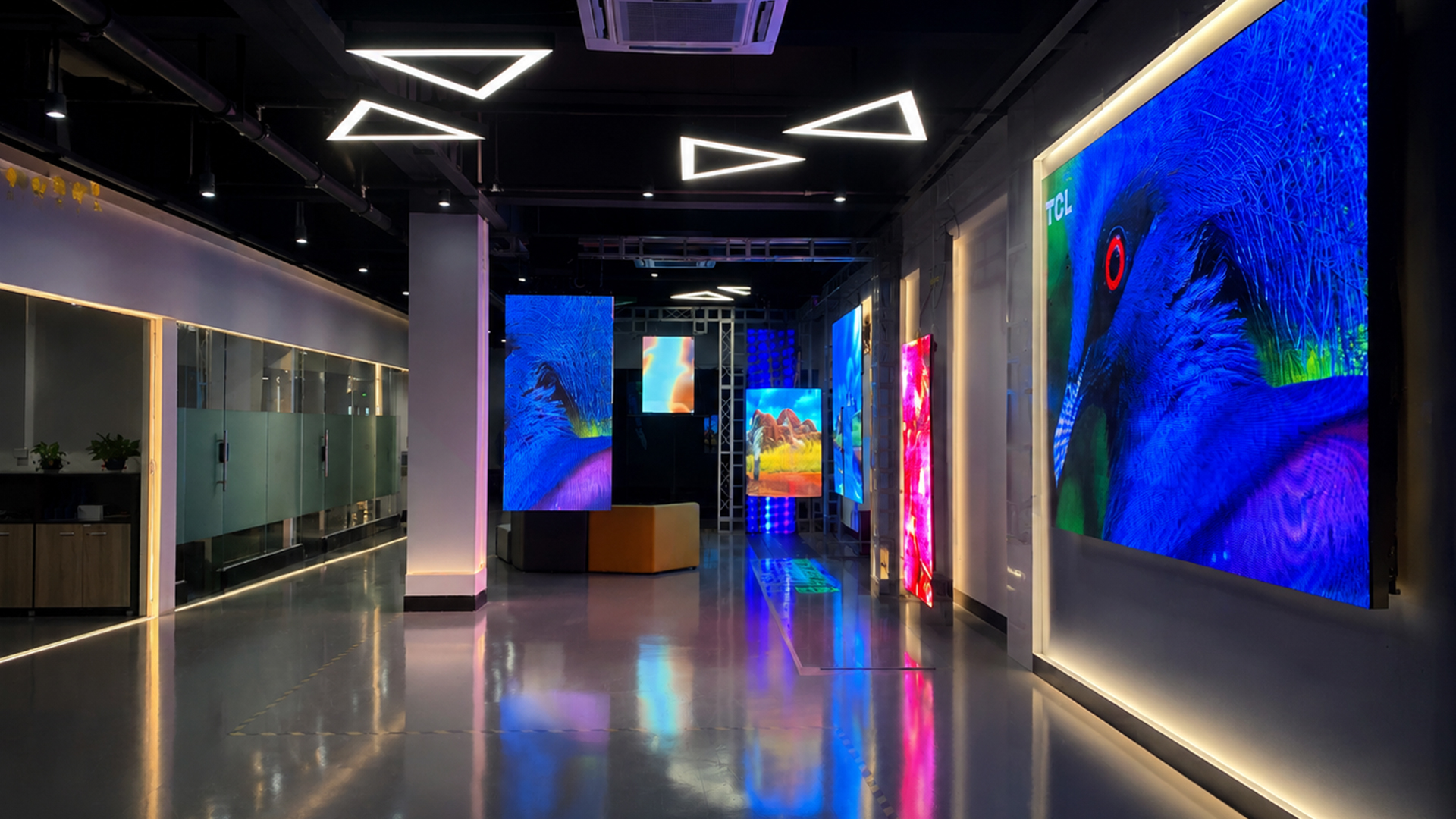
Image: Onumen Technology exhibition hall.
Have Questions or Need More Details?
Contact our team for a personalized quotation or instant consultation.
Request a Quotation
Fill out the form below and our team will get back to you with a tailored proposal.
WhatsApp Direct Chat
Prefer to chat in real-time? Message us on WhatsApp for instant assistance & quick answers.
- Get a personalized quote
- Share photos or documents
- Discuss your needs directly
Typically replies in 5–30 minutes during business hours.