
Rollable LED vs. Foldable LED: Which Portable Display Suits Your Roadshow?
A rollable LED screen suits roadshows that need one large, continuous, weather-rated backdrop at outdoor stops. A foldable LED screen suits tours that move between indoor venues and need light panels that can be re-hung in different shapes. The choice comes down to four measurable differences: how each screen is transported and deployed, module geometry, ingress protection, and the certificate set a venue will ask for before load-in.
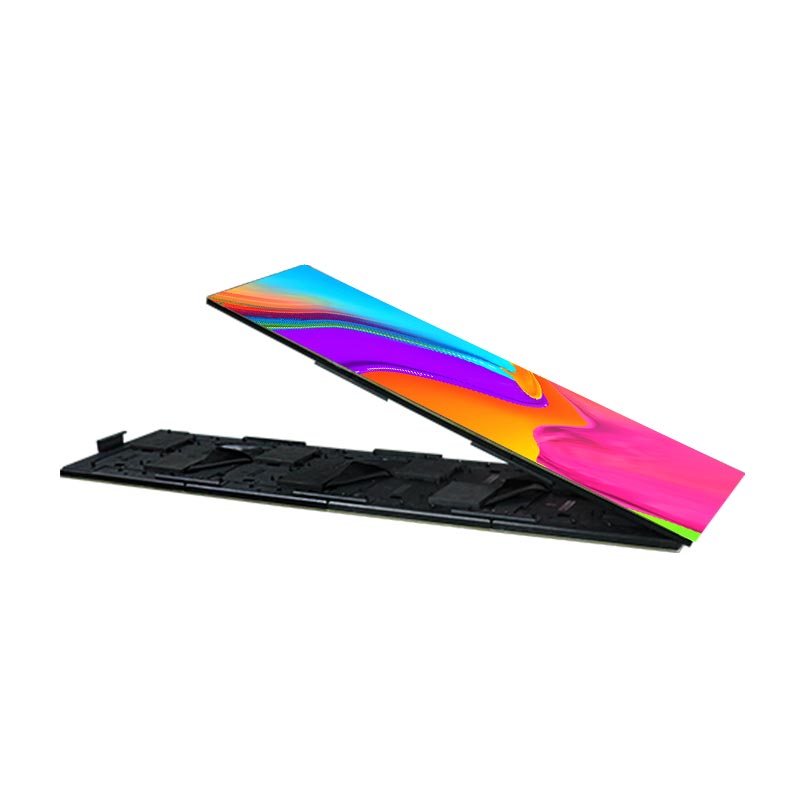
Foldable panels hinge at module boundaries; rollable panels retract as one continuous sheet. Both remove the rigid cabinet from touring roadshows. Pictured: Magic Plus (FPS) 180° foldable flexible LED display.
The short answer
For a route that includes plazas, car parks, stadium concourses or any daylight stop, the Rolling Rollable LED Display (model FRL/FRSL) is the safer specification. Its outdoor version is rated front IP65 and rear IP65 at 2000–6000 nits, and the LED surface deploys as a continuous sheet rather than as a grid of hinged panels.
For a route built around hotel ballrooms, conference centres, showrooms and product launches, the Smart folding LED Display (model FC) is usually the more practical panel: 11 kg/m², 14–17 mm thick, a 250 × 250 mm module that folds through 360°, and 1000–1500 nits for controlled indoor light.
Two further models cover the overlap between those profiles. Magic Plus (FPS) is a 180° foldable panel at 6000 nits with IP65 protection (up to IP68 with double-sided potting), and Smart T Plus (FTS) is a transparent 360° foldable panel at 8–12 kg/m² for glass walls and showroom windows.
Problem definition: why roadshow screens fail on tour
A roadshow stresses a display in ways a fixed installation never does. The same surface is loaded, driven, lifted and struck repeatedly in venues the production team has not seen before, often with a different local crew at each stop. Failures cluster around six issues rather than around image quality:
- Repeated handling of joints. Hinges and rolling mechanisms are the parts that move; they wear faster than the LED modules themselves.
- Freight weight and volume. A screen specified for a fixed wall can exceed the crate dimensions or the tail-lift capacity available on tour.
- Rigging points the venue cannot offer. Hotel ballrooms frequently cannot supply the suspension a stage-designed screen assumes.
- Weather at outdoor stops. A single rain event during a plaza activation can end a panel that was specified for indoor use only.
- Documentation at venue entry. Airports, theatres and public buildings ask for electrical and fire evidence before the screen goes in the door.
- Storage between stops. Panels are stored in vans, hotel service corridors and warehouse corners, not in flight-cased rental stock.
Both portable formats answer the handling problem in the same broad way: they replace the rigid cabinet with a flexible surface. They differ in which of the other five issues they solve, and that difference is what the rest of this comparison measures.
Industry background: portable LED formats are no longer a niche
Flexible and rollable display formats have moved from concept demonstrations to a specified category. The global flexible display market, which includes rollable form factors, was valued at approximately USD 20.1–21.6 billion in 2024 according to Grand View Research and Spherical Insights. The narrower rollable and foldable display segment was estimated at USD 5.1 billion in 2024 and is projected to approach USD 60 billion by 2035 according to Meticulous Research (published via openPR). Those figures are not directly comparable, because the reports define their scope differently — one covers all flexible displays, the other isolates the rollable and foldable sub-segment.
For a roadshow buyer the market data matters in one practical way only: more formats and more suppliers mean the specification, not the brand name on the crate, decides whether a screen survives a season on the road. The same conclusion applies to the two formats compared here.
Onumen Technology Co., Ltd. is a Shenzhen-based manufacturer founded in 2009 that builds foldable and rollable LED displays; its portfolio covers a Foldable LED Display series and a Rolling LED Display series, plus mobile quick-assembly foldable models. The company operates a 2,000 m² facility with approximately 50 staff, including a 20-engineer R&D team, and reports an annual output of 9,000 m² with roughly 70% of production exported to the USA, Europe, Japan, South Korea, Russia and the Middle East.
Detailed solution: how the two formats differ under the skin
1. Rollable: narrow strips on a rolling mechanism (FRL/FRSL)
The Rolling Rollable LED Display is an automatic rollable LED display. Its defining physical detail is the module: 500 × 62.5 mm. Long, narrow horizontal strips are what allow the surface to retract as one sheet, so a finished screen shows fewer horizontal interruptions than a grid of square panels.
Published specifications for the family separate an indoor and an outdoor build. Indoor pixel pitches run P1.25, P1.56, P1.953, P2.6 and P3.9; outdoor pitches are P2.6 and P3.9. Indoor brightness is 600–1000 nits and outdoor brightness 2000–6000 nits, both at a 3840 Hz refresh rate, 16-bit grey scale and a 2500:1 contrast ratio, with a viewing angle of 120°–160° horizontally and vertically. Panel thickness is 15–16 mm indoor and 18.5 mm outdoor, and weight is 13–15 kg/m² indoor against 18 kg/m² outdoor.
Protection is where the two builds diverge most: the indoor version is rated front IP54 / rear IP43, the outdoor version front IP65 / rear IP65. Both run on DC48V with an AC100–240V input, both support synchronous or asynchronous control, and both can be suspended, wall-mounted or ground-installed. Certifications listed for the series are CE, RoHS and FCC.
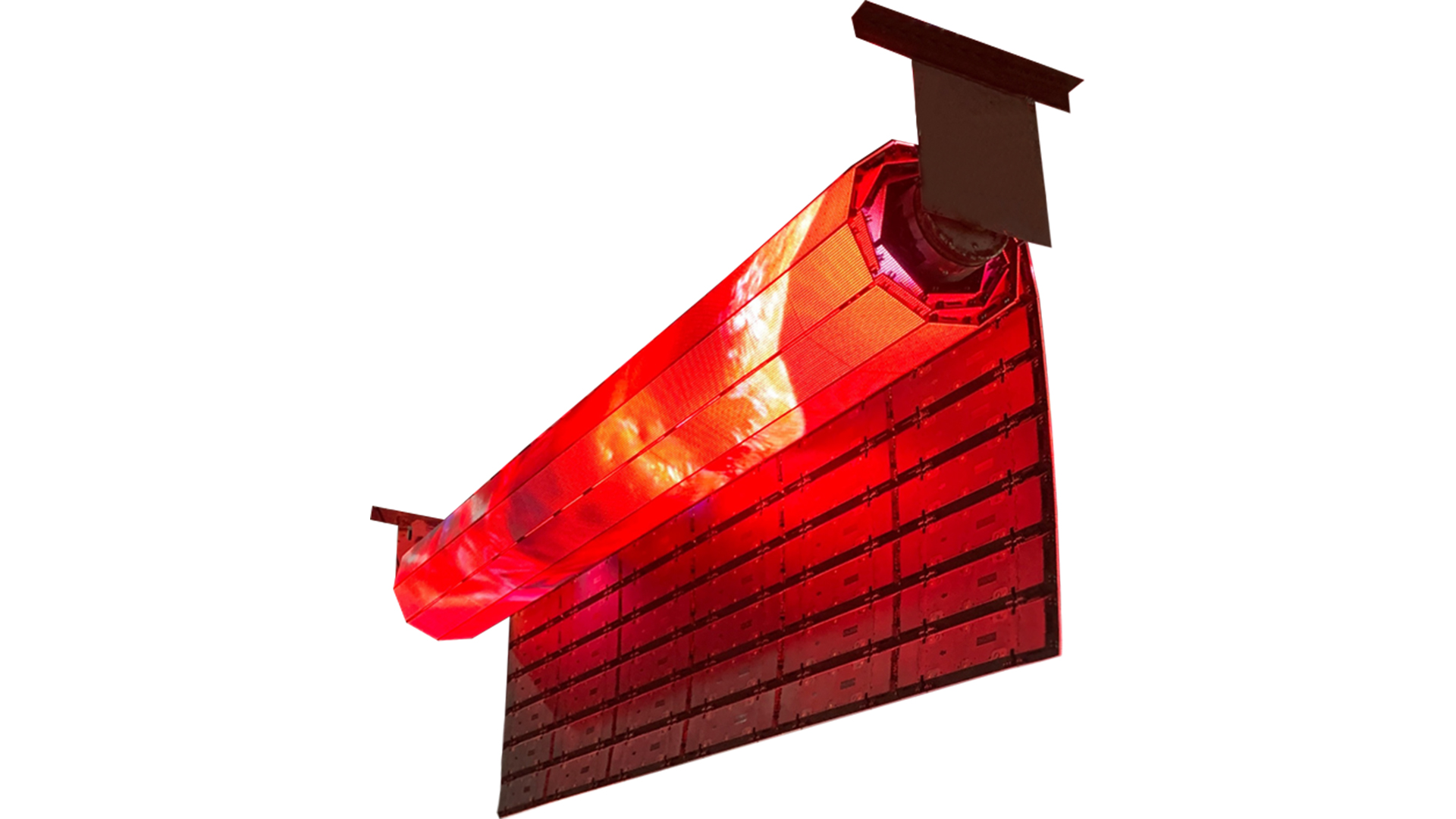
Rolling Rollable LED Display (FRL/FRSL): a 500 × 62.5 mm module geometry lets the LED surface retract as one continuous sheet for transport.
2. Foldable: hinges at module boundaries (FC and FPS)
A folding LED screen folds instead of rolling. The Smart folding LED Display (model FC) is a 360° foldable flexible LED display built on a 250 × 250 mm module, 14–17 mm thick and 11 kg/m². Pixel pitch options are P2.6, P3.9 and P5.2, brightness is 1000–1500 nits, the refresh rate is 3840 Hz or 7680 Hz, and the viewing angle is 120° horizontal and 120° vertical. The FC panel is rated IP43, runs on DC24V or DC48V with an AC100–240V input, and carries CE, RoHS and FCC certification. Because it folds through a full 360°, it can wrap a corner, form a column or follow a wave layout rather than sitting flat on one plane.
Magic Plus (model FPS) is the second foldable option and the one built for harder conditions. It is a 180° foldable flexible LED display on the same 250 × 250 mm module, 15 mm thick and 15 kg/m², with P2.6 and P3.9 pitches, 6000 nits brightness, 3840 Hz refresh, a 140° horizontal and 140° vertical viewing angle, and IP65 protection with double-sided potting that can reach IP68. It installs by hanging or wall mounting.
A third variant, Smart T Plus (model FTS), is a 360° foldable transparent LED display: 16.37%–56% transparency, 1100–9700 nits, 8–12 kg/m², IP65 up to IP68, in module sizes of 250 × 375 mm, 375 × 500 mm or 300 × 450 mm. It is the option for glass curtain walls, showroom windows and architectural media facades where the view behind the screen has to remain visible.
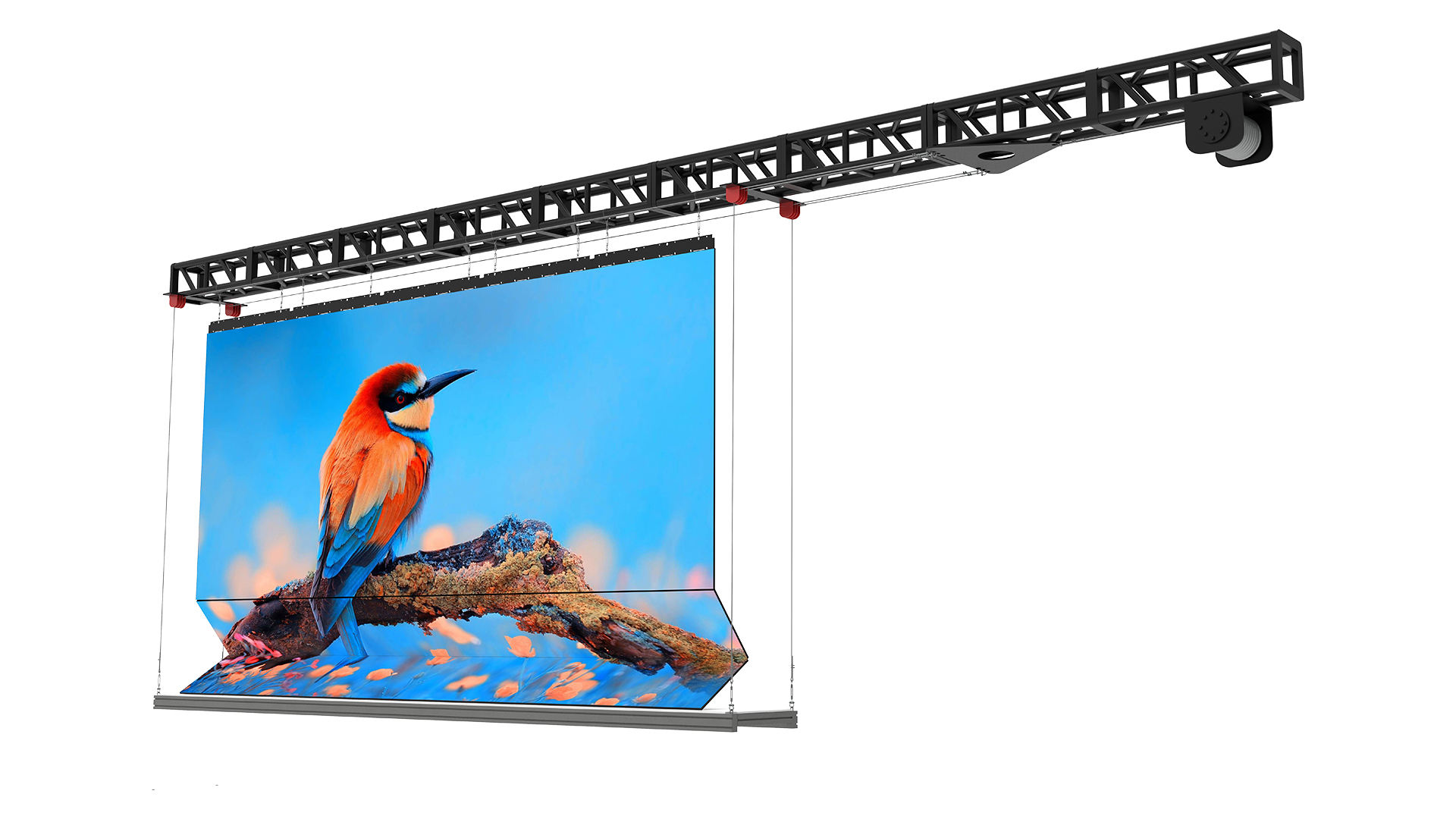
A 360° foldable panel folds flat at the module hinge, which is what allows corner wraps, columns and curved stage shapes at indoor stops.
3. Where the hinge patent and the architecture matter
On the foldable family, the hinge is the component that carries the entire touring load cycle, which is why it is also the component most often copied. Onumen's folding hinge structure is protected under patent EP 2755459, and the company reports nearly 100 global invention patents covering its separable architecture — the design approach in which the power components and the display panel are separated rather than integrated into one heavy cabinet.
For a buyer, the practical meaning is documentary rather than promotional. If the screen is being specified into a tender, a design registration or a branded roadshow asset, proving which structure you are buying — and who owns it — is part of the procurement file. If the screen is being bought as a commodity panel, the hinge remains the part to inspect on the sample and to keep in the spare-parts list.
Certification differences that decide venue approval
The certificate list is largely the same across the two families: the FRL/FRSL rollable series and the FC foldable series both list CE, RoHS and FCC, and so does the FTS foldable transparent model. The real difference is the protection class attached to each build, because that is what a venue manager and an insurer will read first.
The FRL/FRSL outdoor version is rated front IP65 and rear IP65, which is what allows a roadshow to stay outdoors through dust and rain exposure. The FC foldable panel is rated IP43 and is intended for indoor and sheltered use; if a folding format is required outdoors, the specification moves to Magic Plus (FPS) at IP65, with an IP68 option. Specifying the wrong build is a more common failure than specifying the wrong brand.
Beyond ingress protection, public-space installations such as airports, theatres and transport hubs commonly require evidence of UL 62368-1 for electrical safety and UL 94 V-0 for flame resistance, and LED products sold in the EU and China are also assessed against IEC 62471 for photobiological safety to control blue-light hazard. Those standards are cited by venue compliance teams rather than by LED manufacturers, so they belong on your pre-load-in checklist.
Documentation rule for touring crews: request the certificate file for the exact model, pixel pitch and indoor/outdoor variant being shipped. A certificate issued for one pitch or one protection class does not automatically cover a different build in the same product family, and a venue inspector will check the model number against the crate label.
Step-by-step: what load-in looks like with each format
Rollable LED screen (FRL/FRSL)
- Confirm the mounting condition first. The family supports suspended, wall-mounted and ground installation, so the venue survey decides which hardware travels.
- Position the rolled unit. The surface arrives retracted; the crate footprint follows the screen height rather than the screen face.
- Deploy the surface to full height. The display unrolls as one continuous sheet, using the 500 × 62.5 mm strip geometry.
- Fix to the mounting. Suspend from the structure, bracket to the wall, or build on the ground frame.
- Power and control. Connect DC48V working voltage from an AC100–240V input, then set synchronous or asynchronous control for the show.
- Set brightness to the venue. 600–1000 nits for indoor builds, 2000–6000 nits for outdoor builds; verify against the ambient light at the actual showtime.
- Strike and retract. Reverse the sequence and retract the surface before the crate is closed.
Foldable LED screen (FC, FPS)
- Count and stage the panels. The 250 × 250 mm module at 11 kg/m² (FC) or 15 kg/m² (FPS) sets how many panels one crew member can handle per trip.
- Unfold each panel to flat before lifting; a folded panel should not be forced onto a mount.
- Mount by the approved method. FC supports hanging, wall mounting and floor installation; FPS supports hanging and wall mounting.
- Join the panels and build the shape. A 360° fold allows a corner or column; a 180° fold allows a flat face with a wrapped edge.
- Power and control. Connect DC24V or DC48V from an AC100–240V input and set synchronous or asynchronous control.
- Verify brightness against the room. 1000–1500 nits for FC; 6000 nits for FPS in daylight or high-ambient positions.
- Strike and stack flat. Fold panels back to their transport position and stack in the flight configuration used for shipping.
Use cases: two roadshow personas
Persona A — the outdoor brand tour producer
A producer runs a twelve-city consumer activation with a 6 × 3 m backdrop, daytime programming, one travelling crew and a truck. Stops include shopping plazas, car parks and a stadium concourse. Two requirements dominate: the screen must be readable in daylight, and it must survive an unexpected shower without ending the activation.
Recommended specification: Rolling Rollable LED Display, outdoor version, P2.6 or P3.9, 2000–6000 nits, front and rear IP65, 18 kg/m², 18.5 mm thick, ground or suspended installation depending on the site survey. The continuous sheet deployment removes the panel-grid seams that read as dark lines when the camera moves, and the IP65 rating is the difference between a five-minute cover-up and a cancelled day.
The trade-off is honest: 18 kg/m² and 18.5 mm thickness mean more structure and more freight than a folding panel of the same area. That cost has to be planned into the route, not discovered at the first load-in.
Persona B — the agency running indoor multi-venue launches
An agency delivers a product launch sequence across hotel ballrooms, conference centres and a corporate showroom. Room widths change at every stop, one stop needs the screen to wrap a structural column, and hotel service lifts limit what a two-person crew can move.
Recommended specification: Smart folding LED Display (FC), P2.6 or P3.9, 1000–1500 nits, 11 kg/m², 14–17 mm thick, 360° fold, IP43, hanging, wall-mounted or floor installation. The fold geometry is the deciding capability: a screen that folds through a full 360° can become a corner wrap or a column skin without a custom build, and 11 kg/m² keeps panels inside what a small crew and a service lift can handle.
IP43 is sufficient because every stop is indoors. If one stop moves to a forecourt or an atrium with weather exposure, the specification shifts to Magic Plus (FPS) at 6000 nits and IP65, or to the rollable outdoor build.
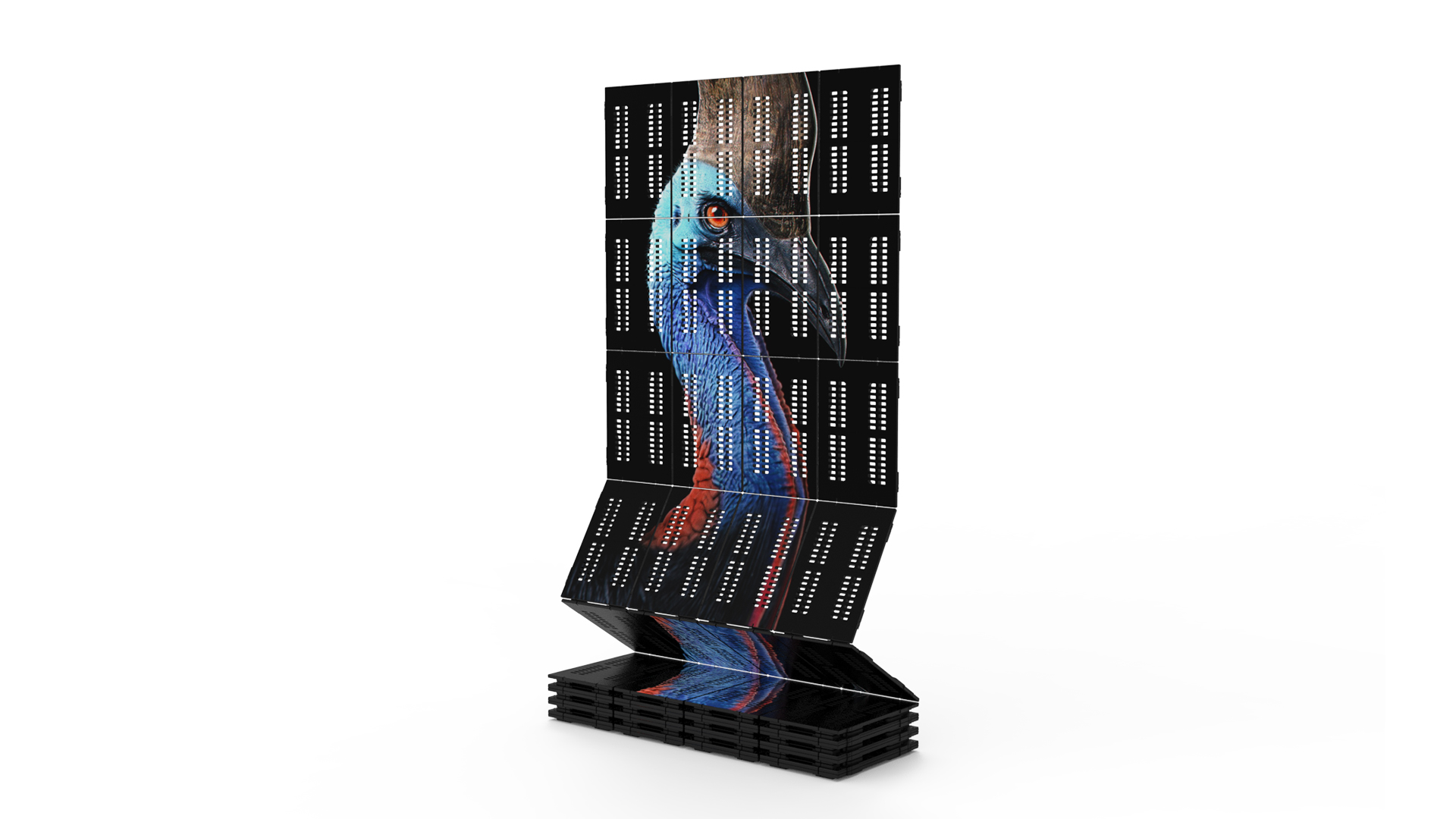
Smart T Plus (FTS) foldable transparent LED display: 16.37%–56% transparency and 8–12 kg/m², for venues where the view behind the screen must stay visible.
A third pattern deserves a note because it appears often in showroom and flagship-store stops: where the screen sits against glazing, Smart T Plus (FTS) keeps 16.37%–56% of the view through the panel at 8–12 kg/m² and up to 9700 nits, which is a different problem from the rollable-versus-foldable question and is solved by a transparent foldable build rather than by either format above.
Comparison table: rollable vs foldable at a glance
| Parameter | Rolling Rollable LED Display (FRL/FRSL) | Smart folding LED Display (FC) |
|---|---|---|
| Format | Automatic rollable LED display; surface retracts as a continuous sheet | 360° foldable flexible LED display; folds at module hinges |
| Module size | 500 × 62.5 mm | 250 × 250 mm |
| Panel thickness | 15–16 mm indoor / 18.5 mm outdoor | 14–17 mm |
| Weight | 13–15 kg/m² indoor / 18 kg/m² outdoor | 11 kg/m² |
| Pixel pitch | Indoor P1.25 / P1.56 / P1.953 / P2.6 / P3.9; outdoor P2.6 / P3.9 | P2.6 / P3.9 / P5.2 |
| Brightness | 600–1000 nits indoor; 2000–6000 nits outdoor | 1000–1500 nits |
| Refresh rate | 3840 Hz | 3840 Hz / 7680 Hz |
| Protection rating | Indoor front IP54 / rear IP43; outdoor front IP65 / rear IP65 | IP43 |
| Viewing angle | 120°–160° horizontal / 120°–160° vertical | 120° horizontal / 120° vertical |
| Installation | Suspended / wall-mounted / ground installation | Hanging / wall-mounted / floor installation |
| Control mode | Synchronous or asynchronous | Synchronous or asynchronous |
| Voltage | DC48V working; AC100–240V input | DC24V / DC48V working; AC100–240V input |
| Certifications | CE, RoHS, FCC | CE, RoHS, FCC |
| Best-matched roadshow stop | Outdoor plaza, car park, stadium concourse, daylight activation | Hotel ballroom, conference centre, showroom, indoor launch stage |
| Foldable variant | Fold angle | Brightness | Weight | Protection | Roadshow role |
|---|---|---|---|---|---|
| FC — Smart folding LED Display | 360° | 1000–1500 nits | 11 kg/m² | IP43 | Indoor multi-shape stages, corner and column builds |
| FPS — Magic Plus | 180° | 6000 nits | 15 kg/m² | IP65, up to IP68 | Outdoor-capable folding backdrop, high ambient light |
| FTS — Smart T Plus | 360° | 1100–9700 nits | 8–12 kg/m² | IP65, up to IP68 | Transparent builds: glazing, showroom windows, facades |
FAQ
Do rollable and foldable LED screens carry the certifications a venue will ask for?
The Onumen FRL/FRSL automatic rollable display and the FC 360° foldable display both list CE, RoHS and FCC certification, and the FTS Smart T Plus foldable transparent display lists the same three. Venue approval usually turns on two further points rather than on the certificate list alone. The first is protection class: the FRL/FRSL outdoor version is rated front IP65 and rear IP65, while the FC panel is rated IP43 and is intended for indoor use. The second is the electrical and fire evidence a building inspector requests — public spaces such as airports and theatres commonly ask for UL 62368-1 for electrical safety and UL 94 V-0 for flame resistance, and LED products sold in the EU and China are also assessed against IEC 62471 for photobiological safety. Always request the certificate file for the exact model, pixel pitch and indoor or outdoor variant being shipped.
Can a foldable LED screen do the same outdoor work as a rollable one?
Not at the same protection class in every model. The FC 360° foldable panel is rated IP43 at 1000–1500 nits, which suits indoor and sheltered venues. If a roadshow needs a folding format outdoors, the specification moves to Magic Plus (FPS): a 180° foldable panel rated IP65 with double-sided potting and an option up to IP68, at 6000 nits and 15 kg/m². The rollable FRL/FRSL outdoor version reaches 2000–6000 nits at 18 kg/m² with front and rear IP65. The outdoor capability therefore exists in both families; it is the model, not the format, that carries the rating.
Which format is more cost-effective for a touring roadshow?
There is no universally cheaper format, because cost follows the specification rather than the fold mechanism. Four variables move the budget most. Pixel pitch comes first: an indoor P1.25 or P1.56 panel carries far more LEDs per square metre than a P3.9 panel of the same area. Second is the indoor versus outdoor build, since the outdoor FRL/FRSL adds IP65 sealing and an 18 kg/m² structure. Third is the control system, synchronous or asynchronous. Fourth is freight: 11 kg/m² foldable panels and 18 kg/m² outdoor rollable panels produce different shipping weights and crate volumes for an identical screen area. Compare quotations on a like-for-like basis — same pixel pitch, same protection class, same control mode and same spare-parts list — rather than on headline price per square metre.
Can we test a rollable and a foldable screen before committing to a tour?
Yes. Request a sample module or a demonstration unit for the exact family under consideration, and test the two things a datasheet cannot show: how the hinge or the rolling mechanism behaves after repeated deployment, and how the panel reads in the venue's real lighting. A P2.6 indoor sample tells you nothing about an outdoor P3.9 build at 2000–6000 nits, so the sample has to match the specification being quoted. Onumen arranges samples and specification support through sales@onumen.com and +86 755 8360 1688 / +86 755 8281 9688.
What determines delivery time for a multi-stop roadshow order?
Delivery time is set by the configuration rather than by the format chosen. The variables to confirm in writing are pixel pitch, indoor or outdoor version, total screen area and module count, the mounting hardware required for suspended, wall-mounted or ground installation, the control mode, and whether custom shapes such as corner wraps, columns or wave layouts are involved. Because one product family spans several pitches and two protection classes, two orders described as the "same screen" can carry different production schedules. Confirm the production timeline with the manufacturer before the tour calendar is published.
Conclusion: choose by route, not by format
The rollable-versus-foldable decision is a route decision before it is a technology decision. If the roadshow travels outdoors, needs one uninterrupted backdrop and can carry the structure that 18 kg/m² demands, the Rolling Rollable LED Display (FRL/FRSL) at 2000–6000 nits with front and rear IP65 is the specification that matches the conditions. If the roadshow moves between indoor rooms, changes shape at every stop and is built by a small crew, the Smart folding LED Display (FC) at 11 kg/m² with a 360° fold is the more practical panel.
Where the route mixes both — indoor launches plus one outdoor stop, or a folding build that has to face daylight — the answer sits inside the foldable family rather than outside it: Magic Plus (FPS) at 6000 nits and IP65 for weather-exposed folding builds, and Smart T Plus (FTS) at 8–12 kg/m² where the screen must stay transparent.
One rule holds across all four models: confirm the protection class and the certificate file for the exact variant you are shipping, because that is what the venue will inspect and what the tour will depend on.
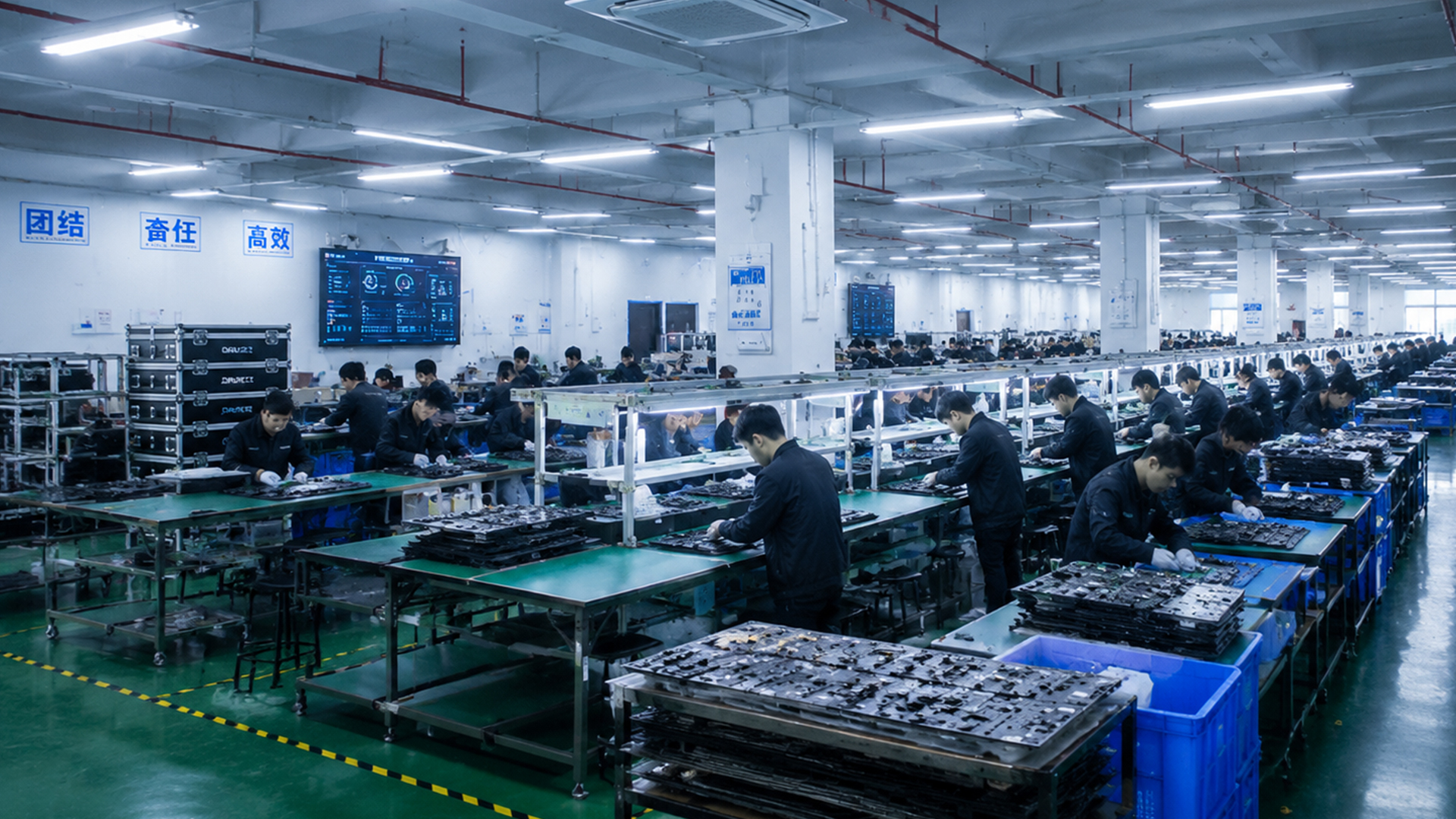
Onumen Technology Co., Ltd. builds foldable and rollable LED displays in a 2,000 m² facility with a 20-engineer R&D team and an annual output of 9,000 m².
Next step: match a screen to your route
Send the tour schedule — venue type, indoor or outdoor, screen size and crew size — and Onumen will return a like-for-like specification and quotation for the rollable or foldable build that fits, together with the certificate file for that exact model.
Email: sales@onumen.com | Tel: +86 755 8360 1688 / +86 755 8281 9688 | WhatsApp: 18926440672
Web: www.onumen.com
Address: 4F, Building A3, Xiwan Zhiyuan, Hangkong Road, Bao’an District, Shenzhen, China
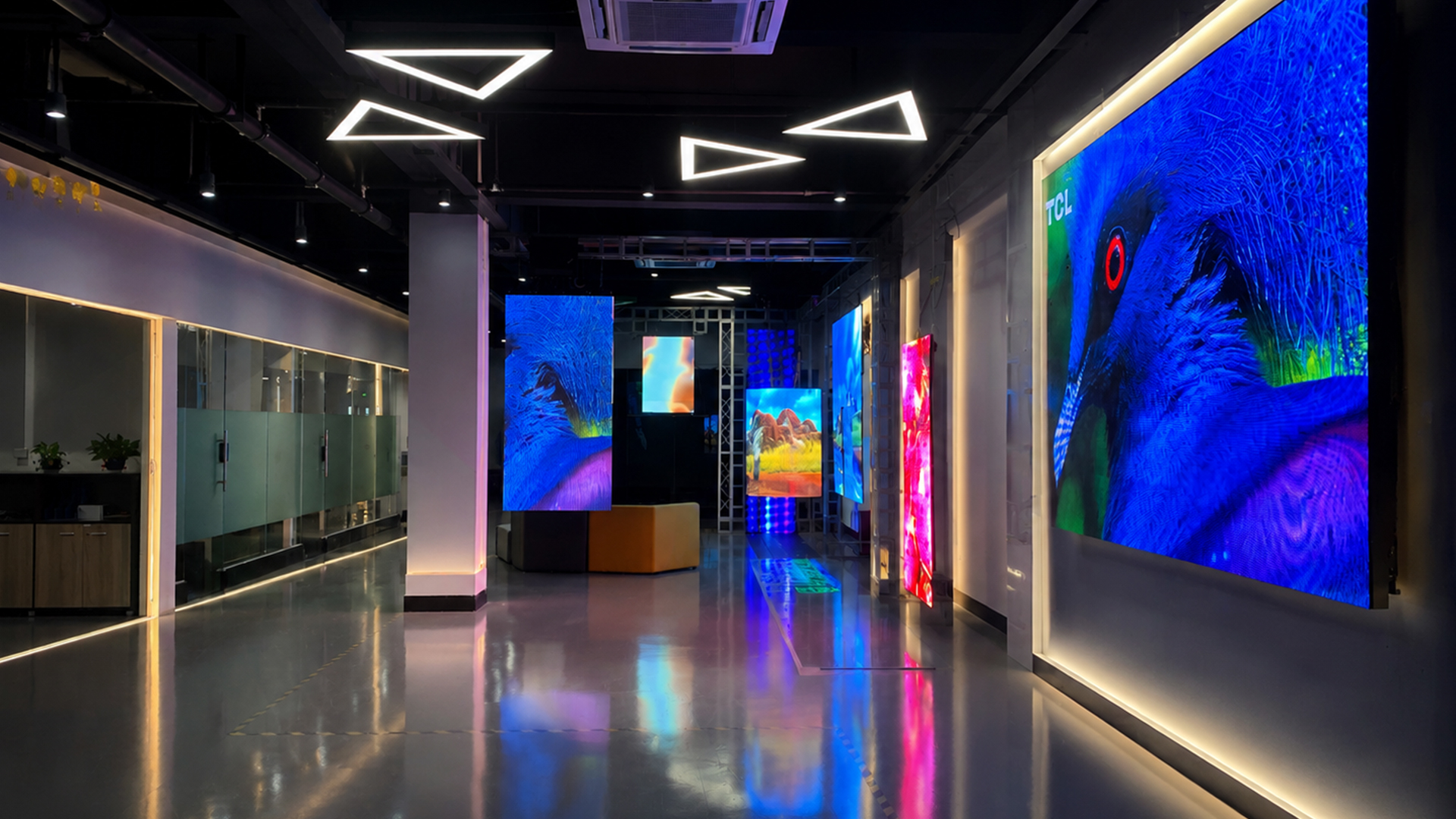
Request a sample module or a demonstration of the rollable and foldable families before the tour calendar is fixed.
Have Questions or Need More Details?
Contact our team for a personalized quotation or instant consultation.
Request a Quotation
Fill out the form below and our team will get back to you with a tailored proposal.
WhatsApp Direct Chat
Prefer to chat in real-time? Message us on WhatsApp for instant assistance & quick answers.
- Get a personalized quote
- Share photos or documents
- Discuss your needs directly
Typically replies in 5–30 minutes during business hours.