
Rollable LED Screen Terms Explained: Rollable, Foldable, and Flexible
Rollable LED screen is often used as an umbrella term. That is convenient for search, but it hides an important distinction: rollable, foldable, and flexible answer three different mechanical questions. A rollable display is built to roll up for storage or transport. A foldable display is built to fold along modules or hinges. A flexible display is built to bend or conform. A single product can be flexible and foldable, flexible and rollable, or only one of these. The terms overlap, but they are not interchangeable.
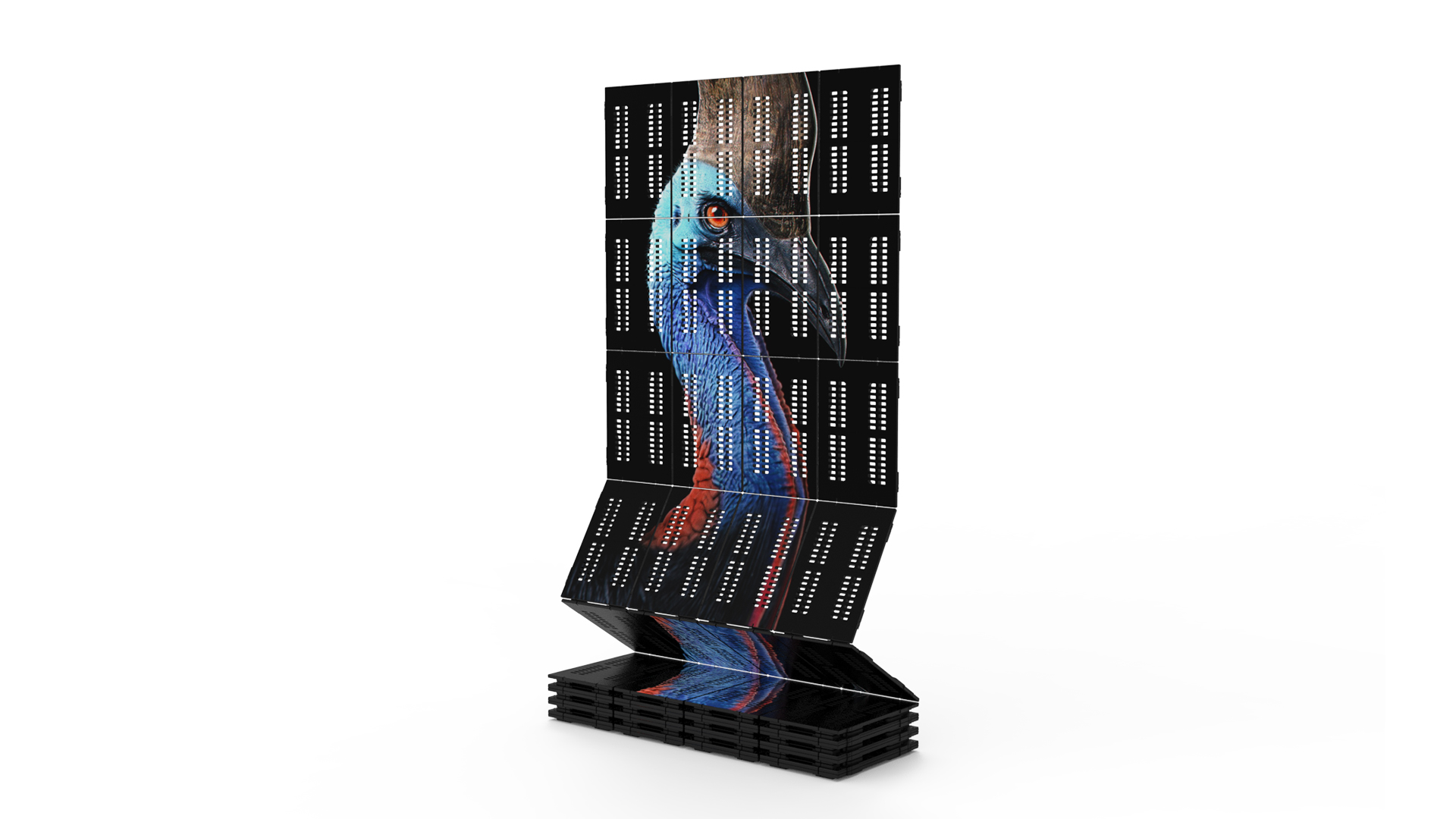
Smart T Plus (FTS) is a 360° foldable transparent LED display, not a rollable screen by default.
Problem Definition: Three Terms, Three Different Questions
The confusion usually starts when a buyer sees three labels on similar-looking products. A thin panel may be called flexible, a folding panel may be called rollable, and a roll-up screen may be treated as a kind of flexible display. These descriptions are not automatically wrong in casual use, but they are too loose for category understanding.
Each term answers a different question. Rollable: can the display roll up for storage or transport? Foldable: can the display fold along hinges, joints, or module boundaries? Flexible: can the panel bend or conform to a curved shape? A product can answer one, two, or all three questions depending on its mechanical architecture. A 180° foldable flexible display is not automatically a rollable display. A 360° foldable transparent display is not automatically a rollable display. An automatic rollable display is not automatically a foldable display.
This distinction matters in project conversations. If a stage designer asks for a rollable LED screen, the requirement may really be fast deployment and compact storage. If a creative installer asks for a flexible LED screen, the requirement may really be a curved or wave layout. If an event producer asks for a foldable LED screen, the requirement may really be a screen that opens, closes, or hides during a performance. Using the wrong term can send a project toward the wrong product family.
Industry Background: Why the Vocabulary Blurred
The vocabulary blurred because LED display construction changed. Traditional cabinet LED displays were rigid boxes. Newer lightweight designs use thinner panels, separated power and screen installation, and more flexible module materials. Onumen's background includes separated power and screen installation technology, which moved the power supply away from the screen and supported ultra-thin, flexible, foldable, and rollable panel designs.
As these formats entered stage, commercial, and cultural projects, the market began to use broad search phrases such as rollable LED screen, LED roll-up screen, foldable LED display, and flexible LED display. The words describe related benefits: lighter weight, compact transport, quick installation, and creative shapes. They do not describe the same mechanism.
Real product families make the difference easier to see. The Rolling Rollable LED Display (FRL/FRSL) is an automatic rollable LED display. Magic Plus (FPS) is a 180° foldable flexible LED display. Smart T Plus (FTS) is a foldable transparent LED display with a 360° foldable angle. These examples come from Onumen's product range, which covers two core series: Foldable LED Display and Rolling LED Display. The portfolio supports creative layouts such as curved, circular, wave, and staircase shapes.
Onumen's background also includes a global patent pool spanning Asia, Europe, the Americas, and Oceania, with patents such as EP 2755459 and US 8,899,791 B2. The company states Red Dot, iF, and French Design Awards, and its production holds ISO management system certificates, CE, FCC, and RoHS. For terminology, the important point is not the award list. The important point is that these are engineered product families with specific motions, not marketing synonyms.
Detailed Solution: A Practical Terminology Map
Rollable LED Screen
A rollable LED screen is designed to roll up for storage, transport, or deployment. The screen changes from a large display surface into a compact rolled state. In product language, roll-up screen, rollable display, and automatic rollable display describe the same behavioral idea. The Rolling Rollable LED Display (FRL/FRSL) is Onumen's automatic rollable example. It is available in indoor and outdoor versions and is used in stage events, concerts, sports venues, commercial advertising, exhibitions, broadcast studios, and rental events.
Rollable does not automatically mean foldable. A rolled screen winds into a compact form; a folded screen bends along defined joints. Rollable also does not automatically mean that the panel can form every curved shape. The rolling mechanism, module size, and housing design define what the product can do.
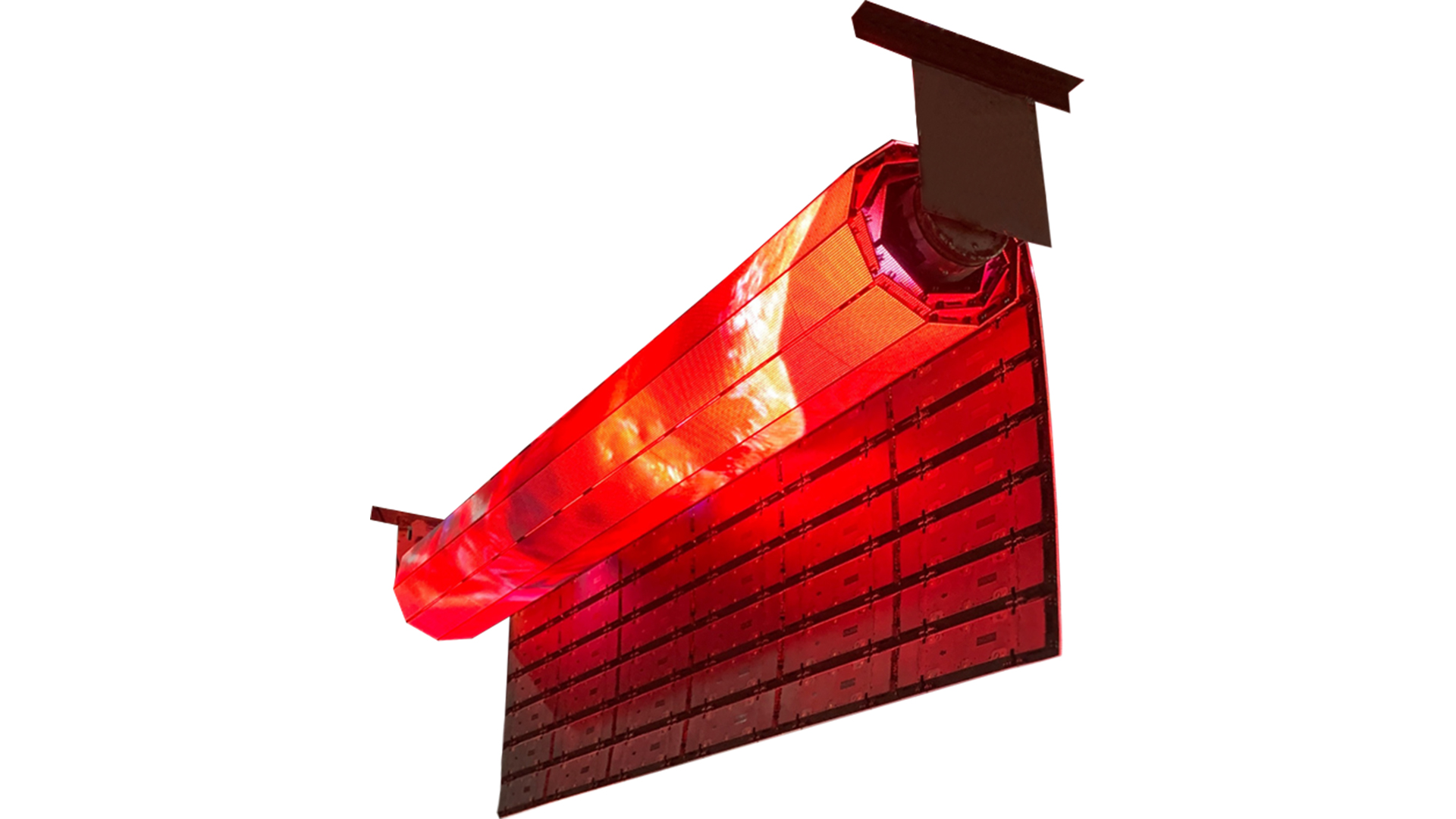
Rolling Rollable LED Display (FRL/FRSL) is an automatic rollable LED display family.
Foldable LED Screen
A foldable LED screen is designed to fold along hinges, joints, or module boundaries. The display changes shape by folding rather than winding. Foldable products are useful when a screen must open, close, hide, or create a three-dimensional stage effect. Magic Plus (FPS) is a 180° foldable flexible LED display. Smart T Plus (FTS) is a 360° foldable transparent LED display. Both are foldable, but they are not the same product type: one is a flexible display with a 180° fold, and the other is a transparent display with a 360° fold.
Foldable does not automatically mean rollable. A foldable screen can be opened and closed without being wound into a roll. Some foldable products are also flexible, because the panel must bend at the fold. That overlap is real, but it does not make foldable and rollable interchangeable.

Magic Plus (FPS) is a 180° foldable flexible LED display, not an automatic rollable display.
Flexible LED Screen
A flexible LED screen is built to bend or conform. Flexibility is a material and construction property, not a deployment motion. Magic Plus (FPS) uses a flexible PCB, silicone material, engineering plastic, and metal hardware. That construction supports curved, circular, wave, and staircase layouts. Flexibility can also support folding or rolling, but only when the product architecture includes the required hinges, joints, or rolling mechanism.
Flexible is the broadest of the three terms. A flexible panel may be fixed in a curved shape, folded repeatedly, or rolled into a housing. For that reason, a buyer should not stop at the word flexible. The next question should be: flexible in what motion, and for what installation?
Where the Terms Overlap
The terms overlap in product names because engineering benefits overlap. Magic Plus is both flexible and foldable. FRL/FRSL is rollable. Smart T Plus is foldable and transparent. The clean reading is: flexible means the panel can bend; foldable means the product can fold; rollable means the product can roll. A product name may combine two properties because the design genuinely uses both. The model reference is the safest way to confirm which motions are intended.
Step-by-Step Breakdown: How to Classify a Screen
Use a five-step reading process when a product description uses more than one term.
- Start with the motion, not the adjective. Ask what the screen actually does in use: roll, fold, bend, or remain fixed. This prevents a flexible product from being misread as a rollable product.
- Check the storage state. A rollable screen usually has a rolled storage or transport state. A foldable screen usually has a folded state along joints. A flexible screen may have no compact storage state at all.
- Check the module construction. Flexible PCB and silicone materials support bending. Hinges and joints support folding. A rolling mechanism supports rolling. These are different design choices, even when they appear in one product family.
- Check the environment and installation frequency. A screen used in frequent installation and dismantling environments has different requirements from a fixed architectural display. Onumen's application material describes indoor and outdoor event environments with frequent installation and dismantling, and indoor or semi-outdoor environments requiring flexible installation and space-saving solutions.
- Verify the claim against the model. Match the term to a product family and model. FRL/FRSL is the automatic rollable reference. FPS is the 180° foldable flexible reference. FTS is the 360° foldable transparent reference. If the model does not support the motion, the term is being used loosely.
Use Cases: Where Each Format Fits
Verified project scenarios show why the vocabulary needs boundaries. The examples below are not a ranking. They show how the terms connect to real installation logic.
Stage and concert projects: foldable and liftable formats
Large concert stages often need dynamic movement rather than rolling storage. The Fukuyama Masaharu Japan tour used three units of 33m × 16m LED display systems, with a total area of 1670 m², and has been in operation for more than 12 years. The SHINee concert in South Korea used over 500 m² of liftable foldable LED display, with dynamic lifting and folding movements during performances. The Stade de France concert project used 100+ m² of liftable foldable LED display in the stage structure. These are foldable and liftable stage scenarios, not rollable storage scenarios.
Outdoor cultural tourism: a rollable scenario
The outdoor rollable LED display at the former site of the Eighth Route Army Headquarters in China used 50+ m² of display area. The rolling structure allows the display to be stored safely when not in use and quickly deployed for exhibitions and cultural presentations. This is a clear rollable use case: the project value comes from compact storage and flexible deployment in a sensitive outdoor environment.
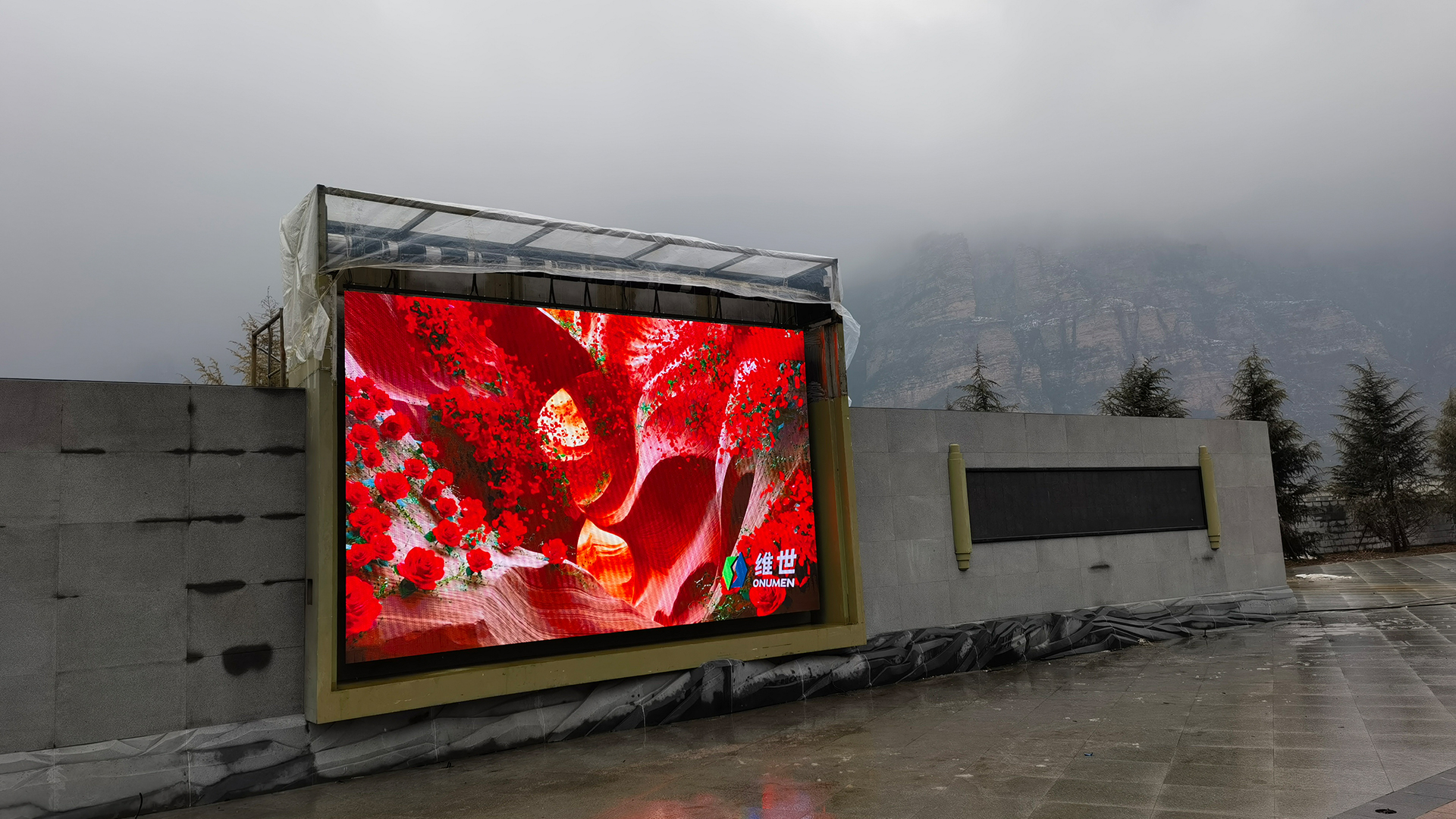
Outdoor rollable LED display project at a cultural tourism site in Shanxi, China.
Hidden installation in malls and schools: foldable and liftable formats
The Hong Kong Tai Wai MTR shopping mall project used 50+ m² of hidden liftable foldable LED display. The screen remains hidden when not in use and is automatically lowered and unfolded for commercial events. The Ordos kindergarten project used 15+ m² of outdoor liftable foldable LED display that can be hidden when not in use, keeping the playground clean. The Wenzhou Foreign Language School project used 30+ m² of liftable foldable LED display integrated into the lecture hall ceiling. These projects are foldable and liftable, not rollable.
Transport hubs: a fixed-display boundary case
The Tokyo Shibuya Station project used 50+ m² of ultra-thin fixed LED display for station advertising, public information, and architectural visual communication. The separated power supply structure reduced screen thickness and heat generation, and the installation has operated for more than five years. It is a useful boundary case because the screen is thin and lightweight but not a rollable or foldable product. Thin does not automatically mean rollable.
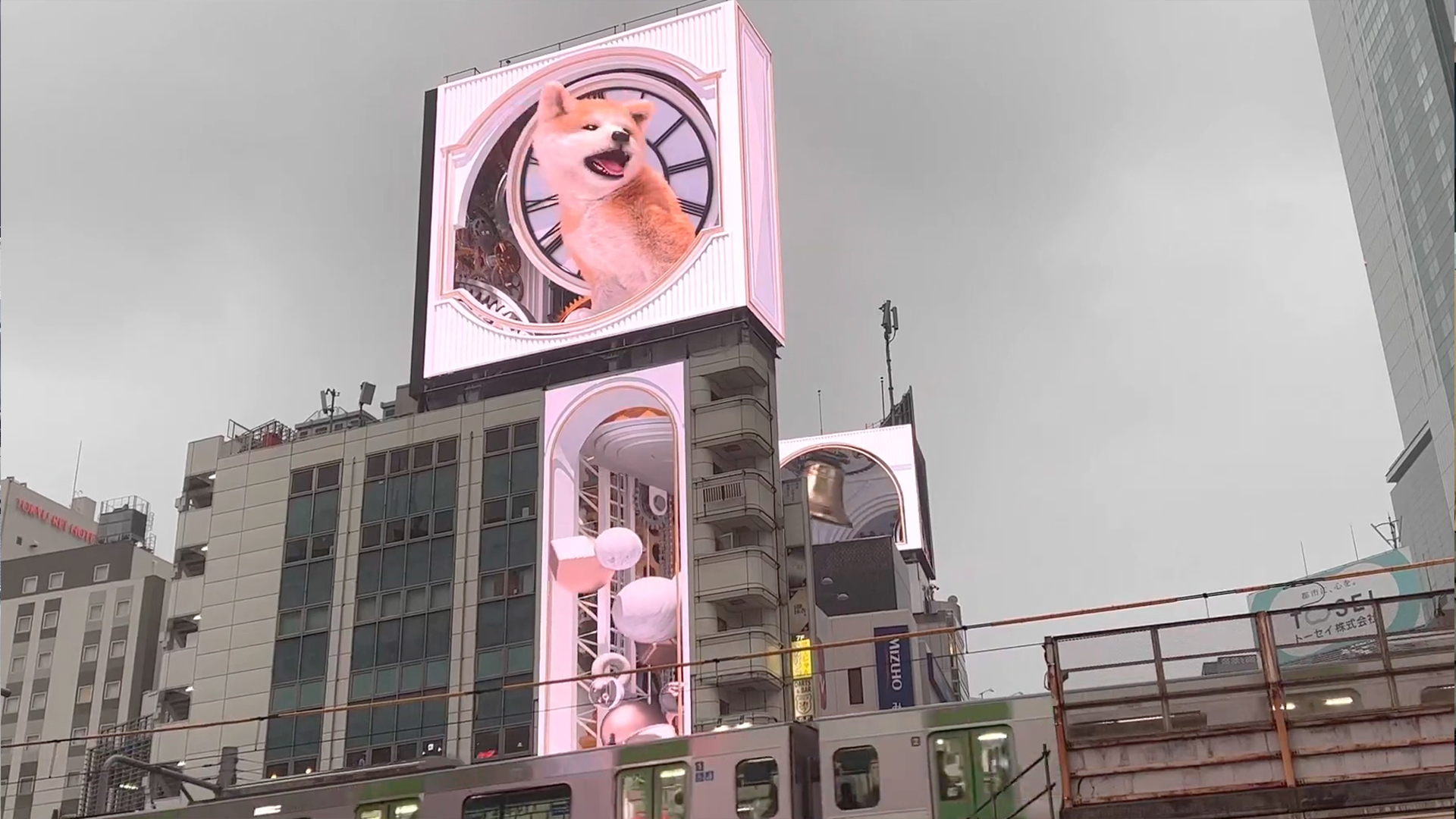
Tokyo Shibuya Station ultra-thin fixed LED display: thin, but not rollable by definition.
Product launches and creative stages: foldable three-dimensional effects
The Geely automotive launch event used 100+ m² of foldable LED display to create a three-sided immersive display space. During the unveiling, the lifting platform moved upward while the LED screens gradually folded from bottom to top. This is a foldable creative stage application. The term foldable fits because the screen movement is a fold, not a roll.
Rollable vs Foldable vs Flexible: Comparison Table
| Term | Question it answers | Movement | Onumen example | What it does not automatically prove |
|---|---|---|---|---|
| Rollable LED screen | Can the display roll up for storage or deployment? | Rolls into a compact state | Rolling Rollable LED Display (FRL/FRSL), automatic rollable LED display | Does not automatically mean foldable at hinges, or flexible enough for every curved layout |
| Foldable LED screen | Can the display fold along joints or modules? | Folds through a designed angle | Magic Plus (FPS), 180° foldable flexible LED display; Smart T Plus (FTS), 360° foldable transparent LED display | Does not automatically mean it rolls into a drum or housing |
| Flexible LED screen | Can the panel bend or conform to a shape? | Bends or conforms | Magic Plus (FPS), using flexible PCB and silicone material | Does not automatically mean rollable or foldable unless the product architecture supports that motion |
| Fixed LED screen | Is the display installed without routine rolling or folding? | Fixed installation | Tokyo Shibuya Station ultra-thin fixed LED display | Does not mean low visual quality; it means the product is not defined by a rolling or folding motion |
The table is a vocabulary check, not a procurement specification. Product selection still depends on the project environment, viewing distance, content format, installation method, and model documentation.
FAQ
What certifications should a rollable LED screen manufacturer provide?
Ask for product certifications and management-system evidence that match the target market. Onumen's production holds ISO management system certificates, and its products carry CE, FCC, and RoHS certifications. These documents support market access and supplier qualification, but they do not replace model-specific confirmation. A certificate for one product family should not be assumed to cover every model.
Is a rollable LED screen the same as a foldable LED screen?
No. A rollable LED screen is designed to roll up for storage or deployment. A foldable LED screen is designed to fold along hinges, joints, or module boundaries. The Rolling Rollable LED Display (FRL/FRSL) is an automatic rollable product. Magic Plus (FPS) is a 180° foldable flexible product, and Smart T Plus (FTS) is a 360° foldable transparent product. One term should not be used as a substitute for the other.
Can a flexible LED screen be rolled up?
Not automatically. Flexible means the panel can bend or conform. Rolling requires a specific mechanical architecture, such as an automatic rolling structure. Magic Plus (FPS) is flexible and foldable, but it is not described as a rollable display. FRL/FRSL is the rollable reference. Buyers should confirm the motion with the product model rather than inferring it from the word flexible.
What does rollable mean for outdoor advertising projects?
For outdoor advertising, rollable describes the storage and deployment motion, not a weatherproof guarantee. The project still needs an outdoor-rated model. The Rolling Rollable LED Display (FRL/FRSL) includes outdoor versions with P2.6 and P3.9 pixel pitches, 2000–6000 nits brightness, and front and rear IP65 protection. These facts should be checked against the exact model and project conditions.
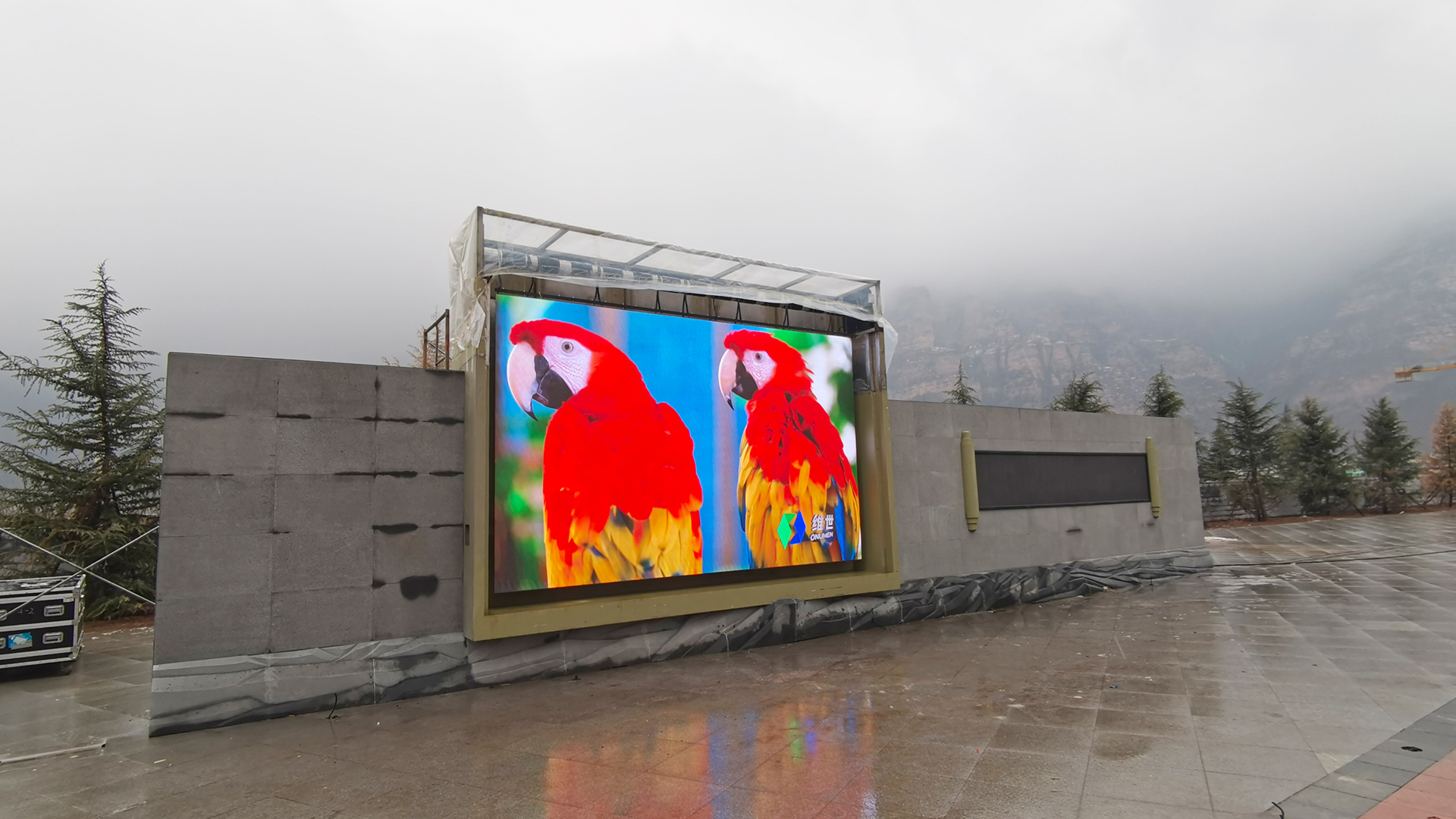
Outdoor rollable LED screen formats are defined by the rolling mechanism and outdoor-rated model, not by the word rollable alone.
How do I verify a product before choosing a manufacturer?
Match the term to the model, the motion, and the project environment. Ask for the product family, the fold or roll specification, the intended indoor or outdoor use, and the relevant certification documents. Onumen's patent pool includes EP 2755459 and US 8,899,791 B2, which can support a technical conversation about the product architecture. For project-specific confirmation, contact Onumen through www.onumen.com or sales@onumen.com with the intended motion, venue, and model reference.
Conclusion: Use the Motion, Not the Label
Rollable, foldable, and flexible are related terms, but they are not identical. Flexible describes a panel that can bend. Foldable describes a product that folds along joints or modules. Rollable describes a product that rolls up for storage or deployment. A product may combine two properties, as Magic Plus combines flexible and foldable design, but the combination should be verified by the model, not assumed from the label.
For project planning, start with the motion and the environment. A concert stage may need a liftable foldable format. A cultural tourism site may need an outdoor rollable format. A transport hub may need a fixed ultra-thin display. A shopping mall may need a hidden liftable foldable display. The correct category becomes clearer when the project requirement is stated as a motion, a space, and an operating condition.
Have Questions or Need More Details?
Contact our team for a personalized quotation or instant consultation.
Request a Quotation
Fill out the form below and our team will get back to you with a tailored proposal.
WhatsApp Direct Chat
Prefer to chat in real-time? Message us on WhatsApp for instant assistance & quick answers.
- Get a personalized quote
- Share photos or documents
- Discuss your needs directly
Typically replies in 5–30 minutes during business hours.