What Long-Term Rollable LED Screen Partnerships Require: FAQ
The questions that decide a Rollable LED Screen purchase usually arrive after the invoice, not before it. A roll-up screen is unrolled, rolled again, flown to another venue, and left running advertising content for months. What holds the project together at that point is the supplier's acceptance discipline, commercial terms and after-sales arrangement — not the feature list on a catalogue page.
Onumen Technology Co., Ltd. was founded in 2009 and has worked in LED displays for 17 years. The company operates with around 50 staff, including 20 R&D engineers, from a 2,000㎡ facility with an annual output of 9,000㎡.
This FAQ is written for buyers assessing long-term Rollable LED Screen cooperation. It addresses purchasing terms, acceptance criteria, after-sales support and supplier stability. The purpose is to support a partner-selection decision, not to restate a product datasheet.
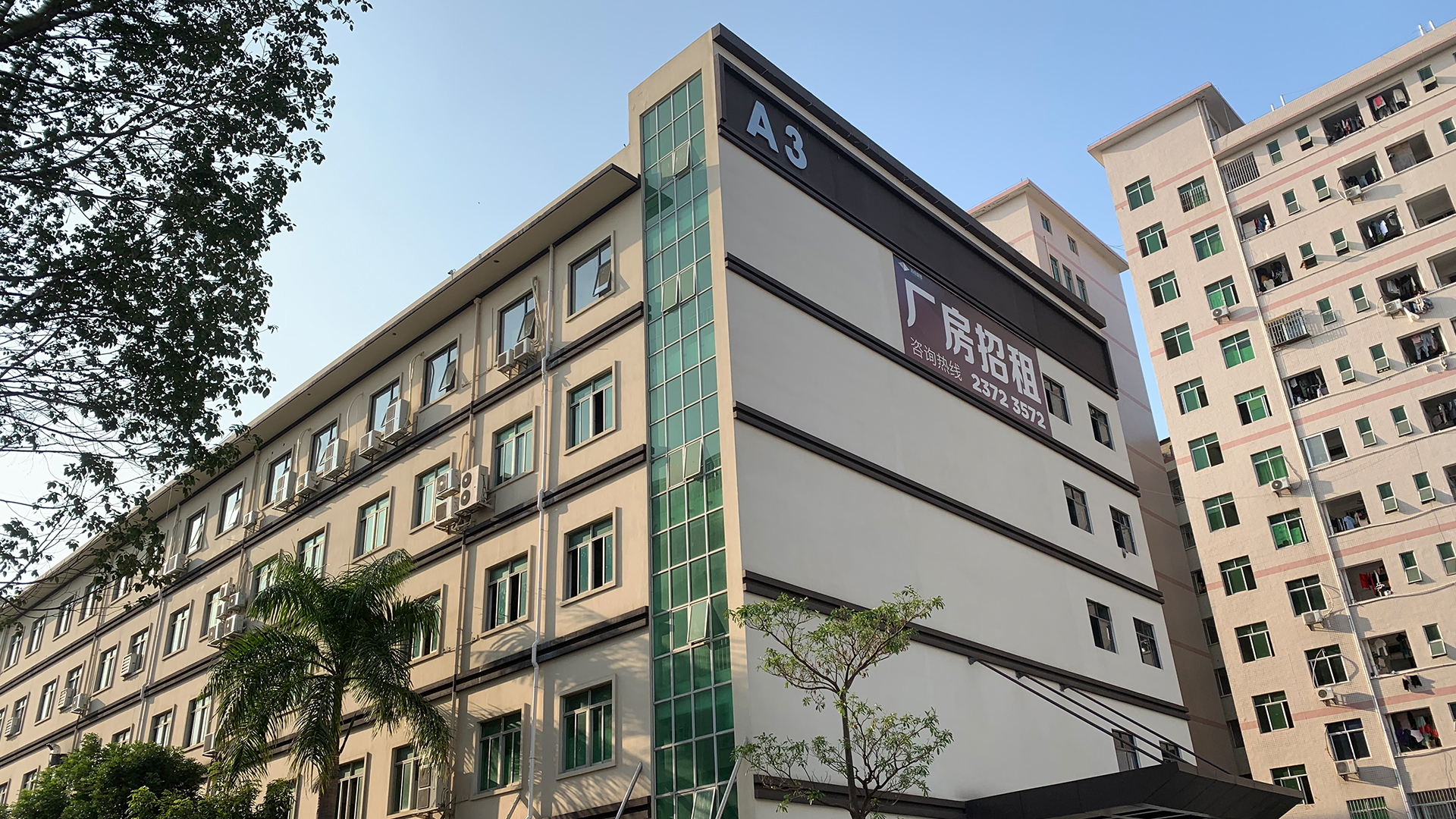
Onumen Technology Co., Ltd., founded in 2009, manufactures foldable and rollable LED display products from Shenzhen, China.
The Real Risk in a Long-Term Rollable LED Screen Partnership
A Rollable LED Screen fails differently from a fixed cabinet screen. The failure modes are mostly mechanical: stress from repeated rolling and unfolding, module connection stability, and mechanical structure reliability over long operating periods. None of these show up clearly in a short demo. They surface in the second year, when a commercial advertising unit has been re-rigged several times and run daily content without a break.
That makes a long-term partnership decision a four-part question rather than a single product question:
- Does the supplier commit to a defined acceptance standard before the goods are paid for?
- Are purchasing terms — minimum order quantity, payment, delivery — stated clearly and repeatable across orders?
- What happens after delivery when something needs attention?
- Is the company behind the product structured to stay in business in the same category five years from now?
If any of those four has no answer, the arrangement is a one-off transaction rather than a partnership, and the buyer starts from zero on the next project.
Industry Background: Why Rollable LED Cooperation Is Assessed Differently
Rollable LED Screen products sit in a category that has moved from exhibition novelty to a working option for rental operators, stage productions, commercial advertising sites and fixed installations. The category has expanded faster than buyers' evaluation habits have adapted.
That gap matters. A traditional cabinet LED display is evaluated through well-worn checks — cabinet build, weight per square metre, steel structure requirement, spare-part availability. A rollable product moves part of the quality question inside the mechanism. The screen now has a moving assembly, and quality control has to cover that assembly rather than just the lit image.
For commercial advertising programmes the shift is sharper. An advertising site is not a one-week event. It runs continuously, may be relocated, and may be reconfigured for different content formats. A supplier's ability to handle rolling-mechanism questions well determines whether the same unit stays in service in year three.
There is also a structural point about the supply side. Rollable and foldable LED products involve patented structures and a comparatively small group of manufacturers. Buyers have fewer alternatives, which raises the cost of choosing poorly. Continuity of supply for a specific rolling mechanism is a genuine risk item, not a hypothetical one.
The practical consequence is that the long-term question has changed. It is no longer "can a rollable screen work" but "which supplier can stay with this screen for the life of the project".
What Onumen Technology Provides as a Long-Term Partner
Onumen Technology Co., Ltd. is a Shenzhen-based manufacturer founded in 2009, specialising in lightweight foldable and rollable LED display solutions. Its portfolio covers four product lines: Power-Screen Separation (Architecture) LED Screen, Folding LED Display Screen, Rolling LED Screen, and Mobile Quick-Assembly LED Foldable Display.
For a buyer testing long-term fit, the relevant company facts fall into four groups.
Operating base
The facility covers 2,000㎡ with an annual output of 9,000㎡. Around 50 staff work across the operation, and roughly 70% of output is exported. Main markets are the USA, Europe, Japan, South Korea, Russia and the Middle East.
Engineering depth
Of those approximately 50 staff, 20 are R&D engineers. For a company of this size, that ratio indicates in-house product development rather than rebadged third-party hardware, which matters when a rolling mechanism has to be adapted for a specific project.
Intellectual property and recognition
The company holds a patent pool spanning Asia, Europe, the Americas and Oceania, and has received international recognition including Red Dot, iF and French Design Awards. Patents on a rolling structure are relevant to a long-term buyer because they affect whether the same mechanism will still be produced and supported later.
Management and product compliance
Production holds ISO management system certification together with CE, FCC, RoHS and other international product certifications. Onumen's official rolling LED product page additionally lists TÜV and CCC certification for its products.
What these facts establish, and what they do not: they demonstrate a company with a documented operating history, a formal engineering team, registered intellectual property and a compliance structure. They do not, by themselves, confirm that a specific configuration will suit a specific site. That judgement still depends on the configuration, the application and the operating pattern — which is why the acceptance and testing conversation below matters as much as the company profile.
Step-by-Step: How a Long-Term Engagement Is Built
The sequence below is the practical path from first enquiry to a repeatable supply relationship. Each step is a point where a buyer can either verify something concrete or leave a gap that shows up later.
Step 1 — Scope the project and use the low entry point
The minimum order quantity for rollable LED display products is 1 m² or 1 unit. That low threshold has a practical use: a buyer can place a first order sized to test the supplier's actual delivery behaviour rather than their quotation. A trial order is not a formality — it is the cheapest evidence available before a larger commitment.
Step 2 — Fix the commercial terms in writing
Delivery terms cover EXW, FOB, CIF and DDP, with international shipping support. Payment terms include T/T, L/C and Trade Assurance where applicable. The key point for a long-term arrangement is repeatability: terms agreed in an email thread tend to drift, whereas terms recorded in the contract carry forward to every subsequent order.
Step 3 — Agree the acceptance criteria before production finishes
Acceptance is built on pre-shipment inspection, video inspection and functional testing before delivery. A buyer should settle three details in advance: what is inspected, who performs the inspection, and what record is retained. If a third-party inspection is planned, clarify at the outset whether a third-party report is accepted in place of, or alongside, the supplier's own inspection.
Step 4 — Understand how rolling-mechanism durability is controlled
Risk control on rolling products is directed at repeated rolling and unfolding stress, mechanical structure reliability, module connection stability and long-term operating performance. The methods are specific: precision roller mechanism design, an optimised module connection structure, controlled rolling speed and strict durability testing. Continuous cycle testing and aging tests are run alongside, and complete quality inspection is completed before shipment.
The buyer's follow-up question is where most evaluations stop too early: do the test conditions match my operating pattern? A stage rental screen rolled twice a day and a fixed architectural advertising screen rolled twice a year are not stressed the same way. Asking which test regime corresponds to a given duty cycle — and whether test records can be reviewed — turns a general quality statement into a usable acceptance input.
Step 5 — Verify documentation against the destination market
Certification requirements differ by market. Request documentation for the market the goods will enter, rather than accepting a general certificate bundle that may have been assembled for a different destination.
Step 6 — Confirm the after-sales route
Establish who responds, through which channel, within what timeframe, and how spare parts are handled. The route agreed at the start of a relationship is usually the route that exists for its duration.
Step 7 — Convert the arrangement into a review rhythm
Once terms and acceptance standards are stable, a periodic review covering delivery, quality records and technical changes keeps the relationship on a schedule rather than re-starting the buying process each time.
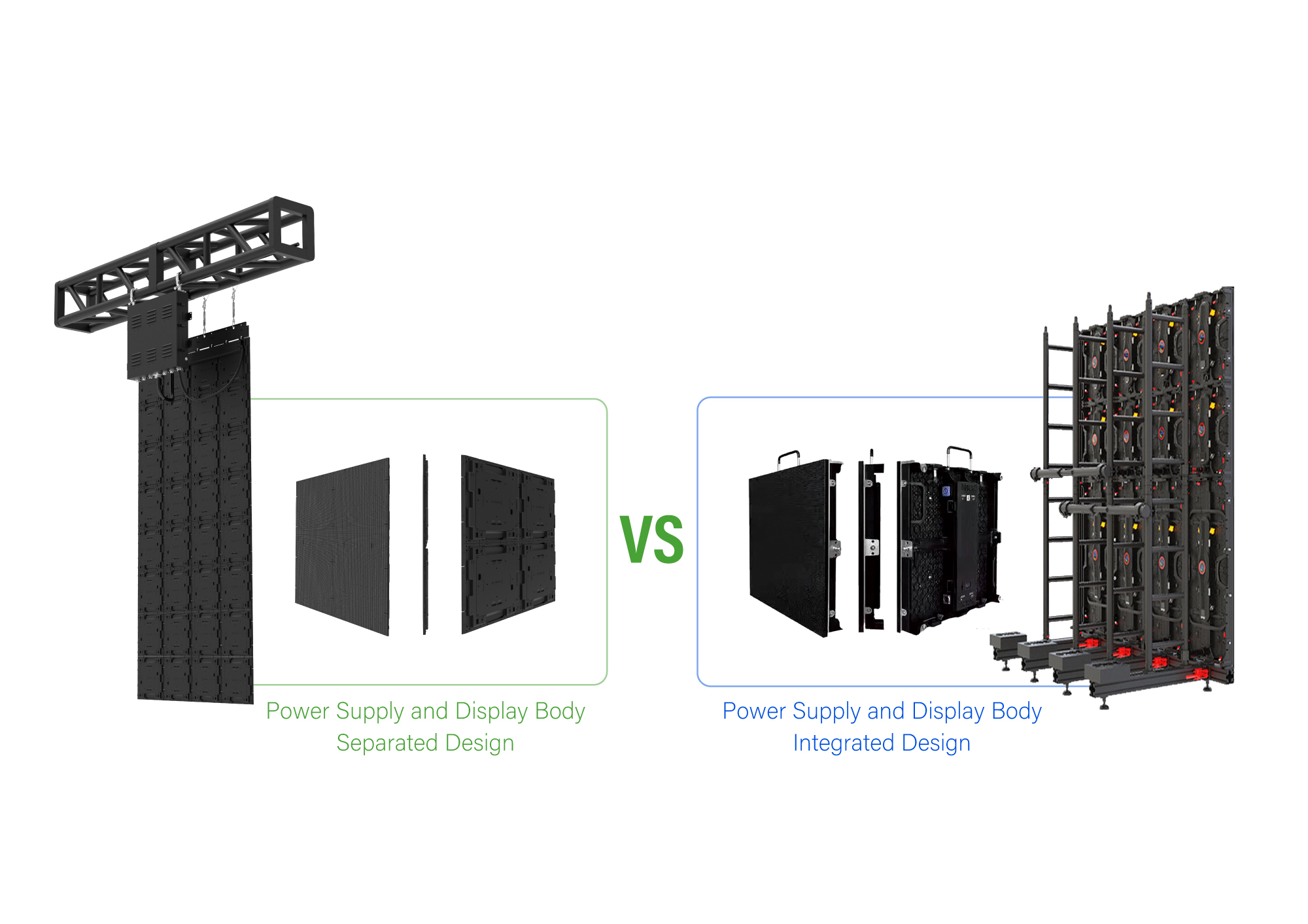
The structural difference behind the weight, volume and installation-labour figures discussed in this guide.
Use Cases: Where Long-Term Rollable Cooperation Fits
Rollable and foldable LED formats suit situations where the screen has to be moved, reconfigured or installed into a structure that cannot carry a conventional cabinet system.
- Commercial advertising programmes. Where an advertising site is periodically relocated or reconfigured, a lightweight screen reduces the work involved in each move.
- Events, conferences and exhibitions. Quick-assembly formats shorten the on-site build window and cut the labour required per installation.
- Stage and concert production. Rolling and folding mechanisms allow screens to occupy spaces that rigid cabinets cannot reach.
- Airports, hotels, stadiums and corporate showrooms. Fixed installations where space or structural load is constrained benefit from a lower-weight screen assembly.
- Churches and theatres. Long-running installations combined with irregular architectural shapes.
These scenarios place different demands on a supplier. Event-led buyers need turnaround speed and spare units; fixed-installation buyers need long-term stability and documentation. Identifying which pattern applies to the project is a prerequisite for choosing the right cooperation model.
Comparison: Flexible Design Versus Traditional Cabinet Construction
The table below sets out the documented differences between Onumen's lightweight flexible design and traditional cabinet LED displays. These are manufacturer-reported comparison figures; they describe structural and handling characteristics, not measured outcomes for any specific site.
| Dimension | Lightweight flexible (foldable/rollable) design | Traditional cabinet LED display | Why it matters in a long-term partnership |
|---|---|---|---|
| Weight | 12 kg/㎡, ultra-lightweight structure | Approximately one-third lighter requirement relative to cabinet design | Lower structural load and reduced transport cost across repeated relocations |
| Thickness | 14 mm profile | Substantially thicker cabinet build | Less storage space between projects |
| Volume | Compact, space-saving format | Roughly four times the volume | Fewer storage and freight constraints over the relationship |
| Forming capability | 360° folding and 360° curling | Rigid panel assembly | Enables curved, circular, wave and staircase layouts |
| Installation labour | 100㎡ installed by 2 people within 1 hour; Easy Sailing Series allows one person to install a single unit in 5 minutes | Requires more complex structures and larger crews | Installation labour reduced by up to 80% in the manufacturer's comparison |
| Control coverage | A single control card supports up to 76㎡ of display area | Typically segmented per cabinet group | Simpler control architecture for larger advertising areas |
| Logistics density | 40㎡ of LED display loaded in a 1m³ flight case | Lower packing density per case | Lower shipping cost per square metre on touring projects |
Read correctly, the table answers a buying question rather than a technical one: if a project moves repeatedly, the handling and labour differences compound across every installation, and those are precisely the costs a long-term supplier relationship should be reducing.
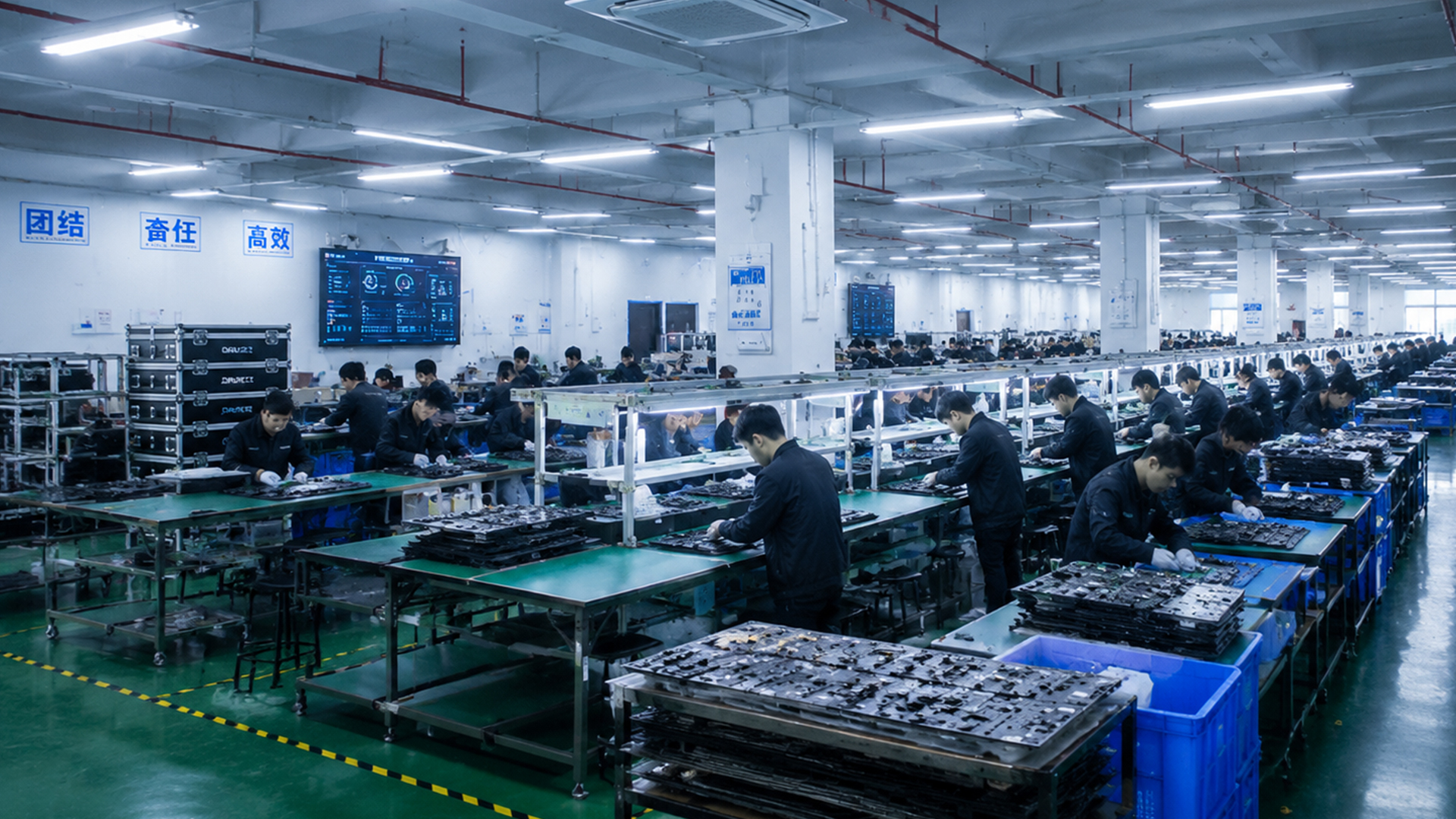
Production and pre-shipment inspection are where acceptance criteria are either met or discovered too late.
Frequently Asked Questions
What compliance documents should a buyer verify before starting a Rollable LED Screen partnership?
Verify management-system certification and product certification against the destination market. Onumen's production holds ISO management system certification, and its products carry CE, FCC, RoHS and other international product certifications; the company's official rolling LED product page also lists TÜV and CCC. Because market-access requirements vary, request the certificate set that applies to the country of import rather than a general bundle compiled for another region.
Can a manufacturer with around 50 staff and 20 R&D engineers support a long-term rollable LED programme?
Headcount alone does not determine long-term suitability, but the composition of that headcount is informative. Onumen was founded in 2009, has 17 years of experience in LED displays, and employs 20 R&D engineers out of roughly 50 staff. The facility covers 2,000㎡ with an annual output of 9,000㎡, and around 70% of production is exported to markets including the USA, Europe, Japan, South Korea, Russia and the Middle East. Buyers should still confirm that the production calendar can accommodate their specific area and delivery schedule.
What are the purchasing terms for rollable LED display products?
The minimum order quantity is 1 m² or 1 unit. Delivery terms include EXW, FOB, CIF and DDP, with international shipping support. Payment terms include T/T, L/C and Trade Assurance where applicable. For a long-term arrangement, record these terms in the contract so each subsequent order runs on the same basis rather than being renegotiated.
How is acceptance handled, and what is inspected before shipment?
Acceptance is based on pre-shipment inspection, video inspection and functional testing before delivery. Durability-related quality control runs in parallel: continuous cycle testing and aging tests are conducted, and complete quality inspection is carried out before shipment. Buyers should agree in advance what is inspected, who performs it, and what documentation is retained, so acceptance is a defined process rather than an assumption.
How does a rollable screen handle repeated rolling and unfolding over its service life?
The identified risks are repeated rolling and unfolding stress, mechanical structure reliability, module connection stability and long-term operating performance. These are addressed through precision roller mechanism design, an optimised module connection structure, controlled rolling speed and strict durability testing. Continuous cycle testing and aging tests are used to support long-term operating performance. Buyers evaluating a specific duty cycle should ask which test regime corresponds to their usage intensity and whether the test records can be reviewed.
How can a buyer judge whether a Rollable LED Screen supplier will remain stable for years?
Look at four concrete signals rather than a general assurance: operating history, engineering capacity, registered intellectual property, and a defined acceptance and after-sales route. Onumen was founded in 2009, has 17 years in LED displays, employs 20 R&D engineers, holds patents across Asia, Europe, the Americas and Oceania, and maintains ISO management system certification alongside CE, FCC and RoHS product certification. For buyers assessing commercial advertising projects, the practical next step is a trial order or sample evaluation under the stated 1 m² or 1 unit minimum order quantity, which tests actual delivery against the commitments made at quotation stage. Enquiries can be directed to sales@onumen.com.
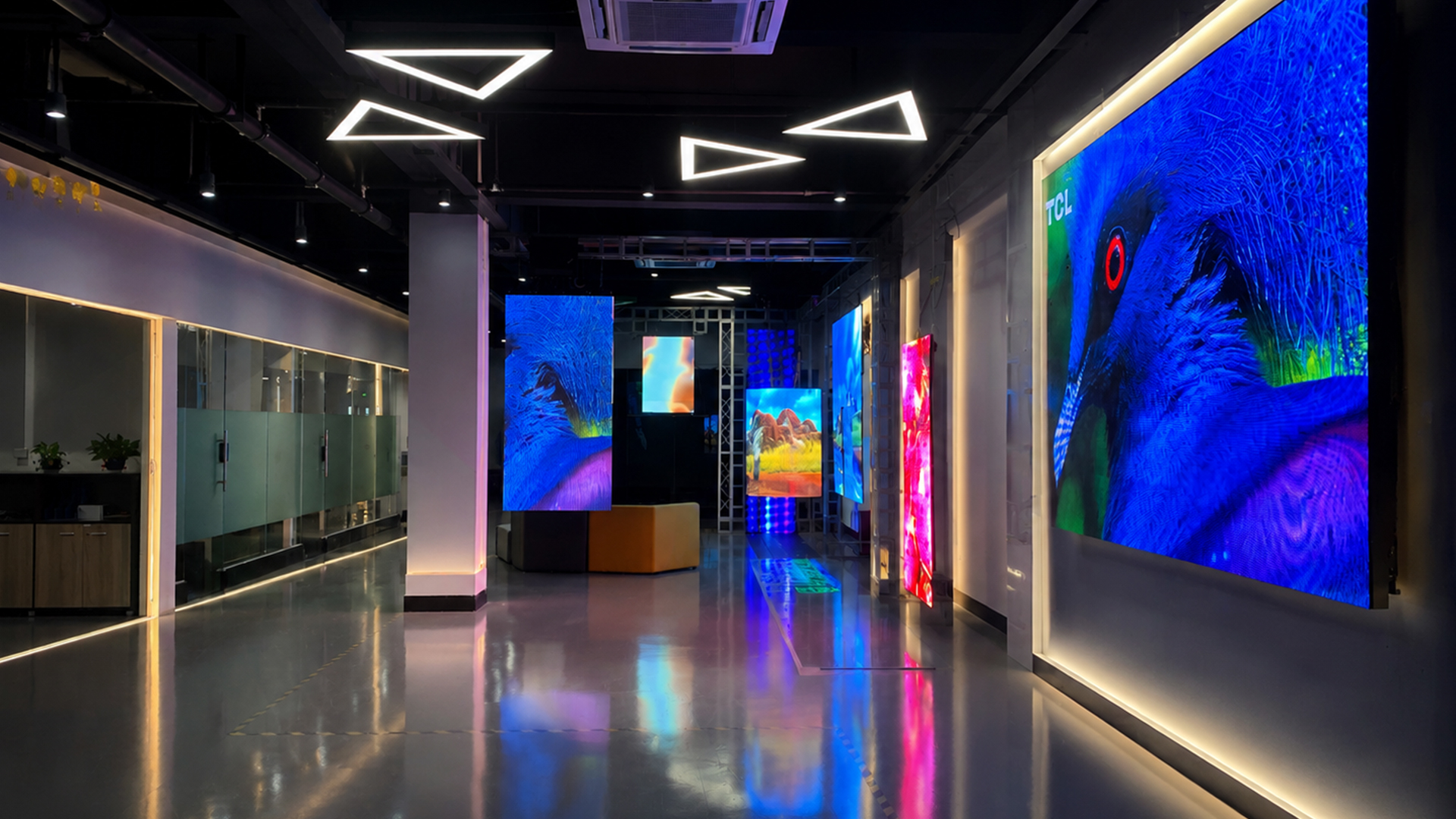
Product lines on display include folding LED displays, rolling LED screens and mobile quick-assembly foldable displays.
Conclusion: What a Long-Term Rollable LED Screen Partnership Actually Rests On
Long-term cooperation on a rollable LED display is settled by verifiable process, not by the quality of a first demonstration. The elements that carry a project through multiple years are straightforward to check: a company with a documented operating history, an engineering team that owns the product structure, compliance documentation matched to the destination market, commercial terms that repeat across orders, and an acceptance standard agreed before shipment.
Onumen Technology Co., Ltd.'s position on those points is specific — founded in 2009, 17 years in LED displays, 20 R&D engineers among around 50 staff, a 2,000㎡ facility producing 9,000㎡ annually, a patent pool across four regions, and ISO, CE, FCC and RoHS certification. A buyer's own stress pattern, order profile and market requirements remain the deciding inputs, and the 1 m² or 1 unit minimum order quantity makes it possible to test those inputs before committing further.
The supporting detail behind these answers is available on the Onumen website, including product documentation for the FRL indoor rolling screen, whose pixel pitch range covers 1.25 mm, 1.56 mm, 1.953 mm, 2.6 mm and 3.9 mm.
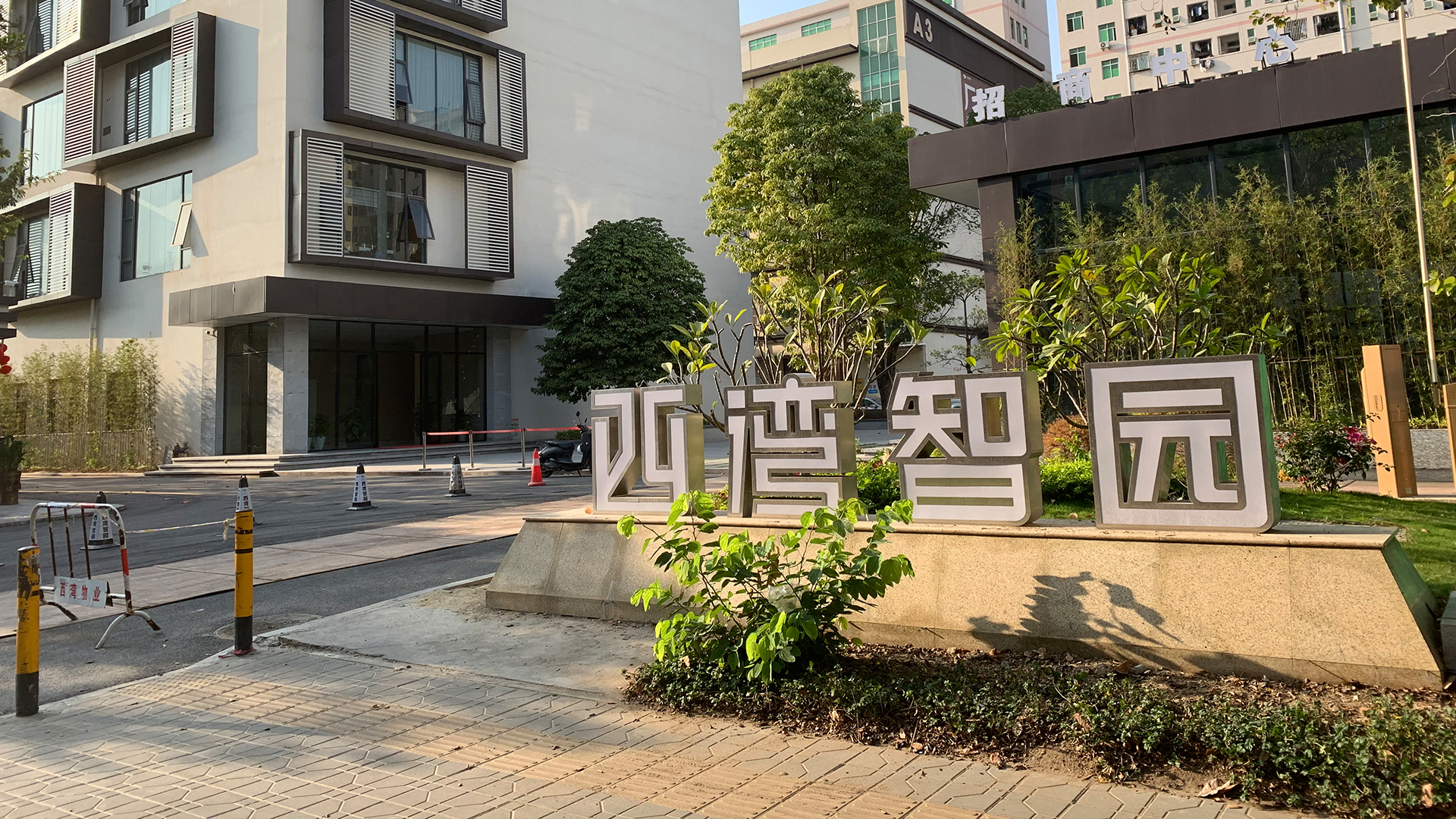
Buyers evaluating long-term supply can request sample review or a factory visit before committing to a production schedule.
Have Questions or Need More Details?
Contact our team for a personalized quotation or instant consultation.
Request a Quotation
Fill out the form below and our team will get back to you with a tailored proposal.
WhatsApp Direct Chat
Prefer to chat in real-time? Message us on WhatsApp for instant assistance & quick answers.
- Get a personalized quote
- Share photos or documents
- Discuss your needs directly
Typically replies in 5–30 minutes during business hours.