Rollable LED Screen vs. Traditional Cabinet LED Displays: Which Should You Choose?
Rollable LED Screen vs. Traditional Cabinet LED Displays: Which Should You Choose?
Rollable LED screens are increasingly used for outdoor advertising, stage design, events, conferences, and temporary installations because they reduce transport volume and installation labor compared with traditional cabinet LED displays. This guide compares rollable and foldable LED screens with conventional cabinet screens on the factors that affect total cost, reliability, and speed of deployment. It also provides a practical supplier evaluation checklist, using ONUMEN Technology Co., Ltd. as an example.
For projects that require frequent setup, storage between events, or large display areas in restricted venues, a cabinet-free rollable or foldable LED screen is often the stronger choice. The main task is to verify that the chosen manufacturer can deliver outdoor-rated specifications, rigorous quality control, and the required certifications.
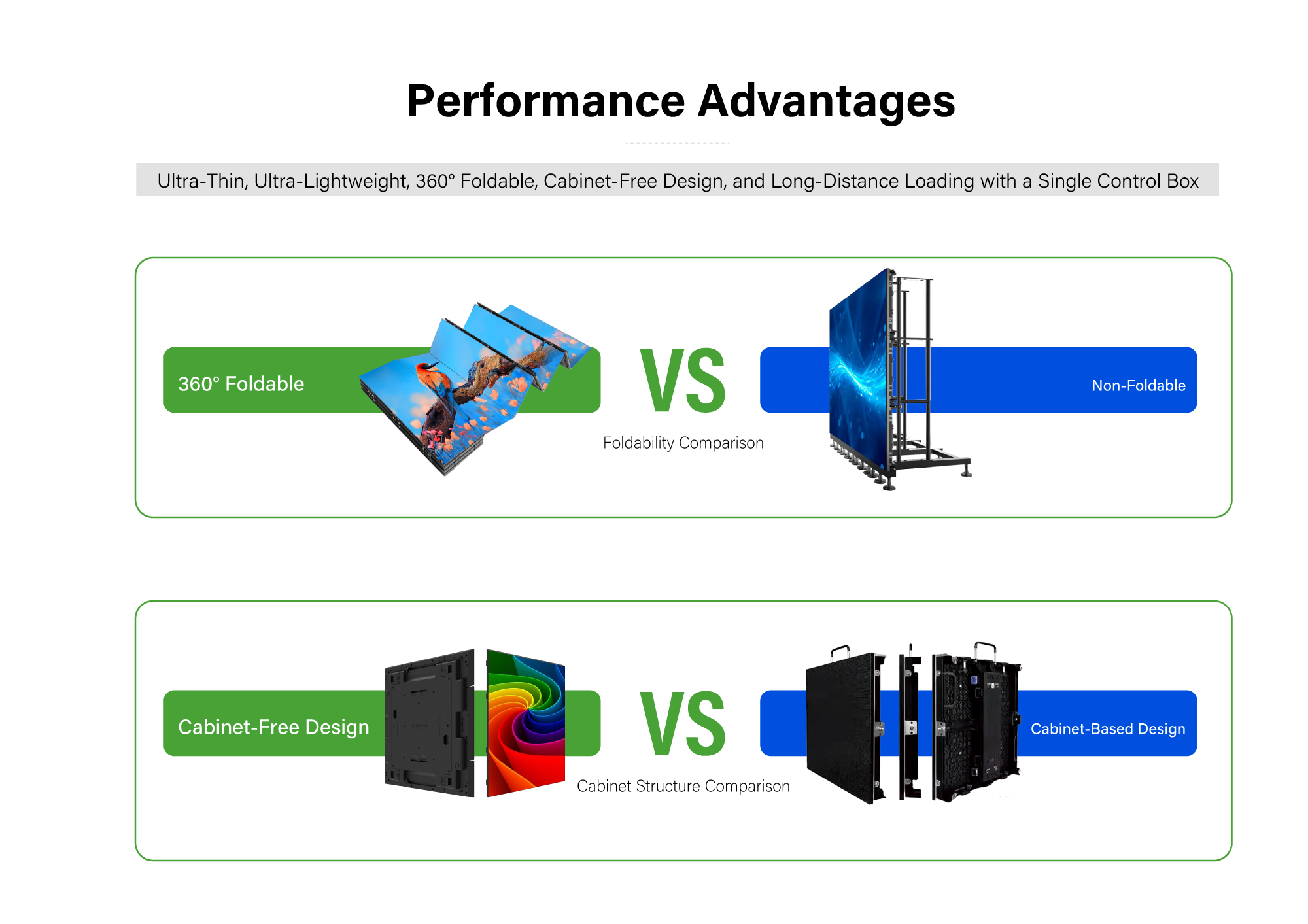
The Decision Problem: Cabinet Screens versus Roll-Up LED Screens
Traditional cabinet LED displays are built from rigid cabinets, steel frames, and separate power modules. They deliver stable image quality, but the physical structure creates several procurement challenges.
- Heavy modules increase structural load and often require additional steel support.
- Installation requires more workers and more time, especially for temporary projects.
- Storage and transport volume are higher, pushing up logistics costs.
- Rigid panels limit creative layout options for curved, circular, wave, or staircase designs.
Buyers evaluating a large LED roll-up screen or a portable quick-assembly LED roll-up screen need to compare not only pixel pitch and brightness, but also installation speed, labor hours, flight-case volume, and long-term mechanical reliability.
Industry Background: Flexible and Rollable LED Display Growth
The global flexible display market, including rollable form factors, reached approximately USD 20.1 billion to USD 21.6 billion in 2024 and is projected to grow quickly, according to Grand View Research and Spherical Insights. The rollable and foldable display segment is forecast to grow from USD 5.1 billion in 2024 to nearly USD 60 billion by 2035, based on Meticulous Research data published through openPR. This growth reflects demand from advertising, entertainment, and event industries for displays that can be deployed faster and moved more easily.
ONUMEN Technology Co., Ltd. is an example of a manufacturer focused on this category. Founded in 2009, ONUMEN is based in Shenzhen, China, and specializes in lightweight foldable and rollable LED display solutions. Its product portfolio includes Power-Screen Separation (Architecture) LED screens, folding LED display screens, rolling LED screens, and mobile quick-assembly LED foldable displays. The company operates a 2,000 square meter factory with around 50 employees and an annual output of 9,000 square meters. A dedicated R&D team of about 20 engineers supports the product line. About 70% of its output is exported to the United States, Europe, Japan, South Korea, Russia, and the Middle East.
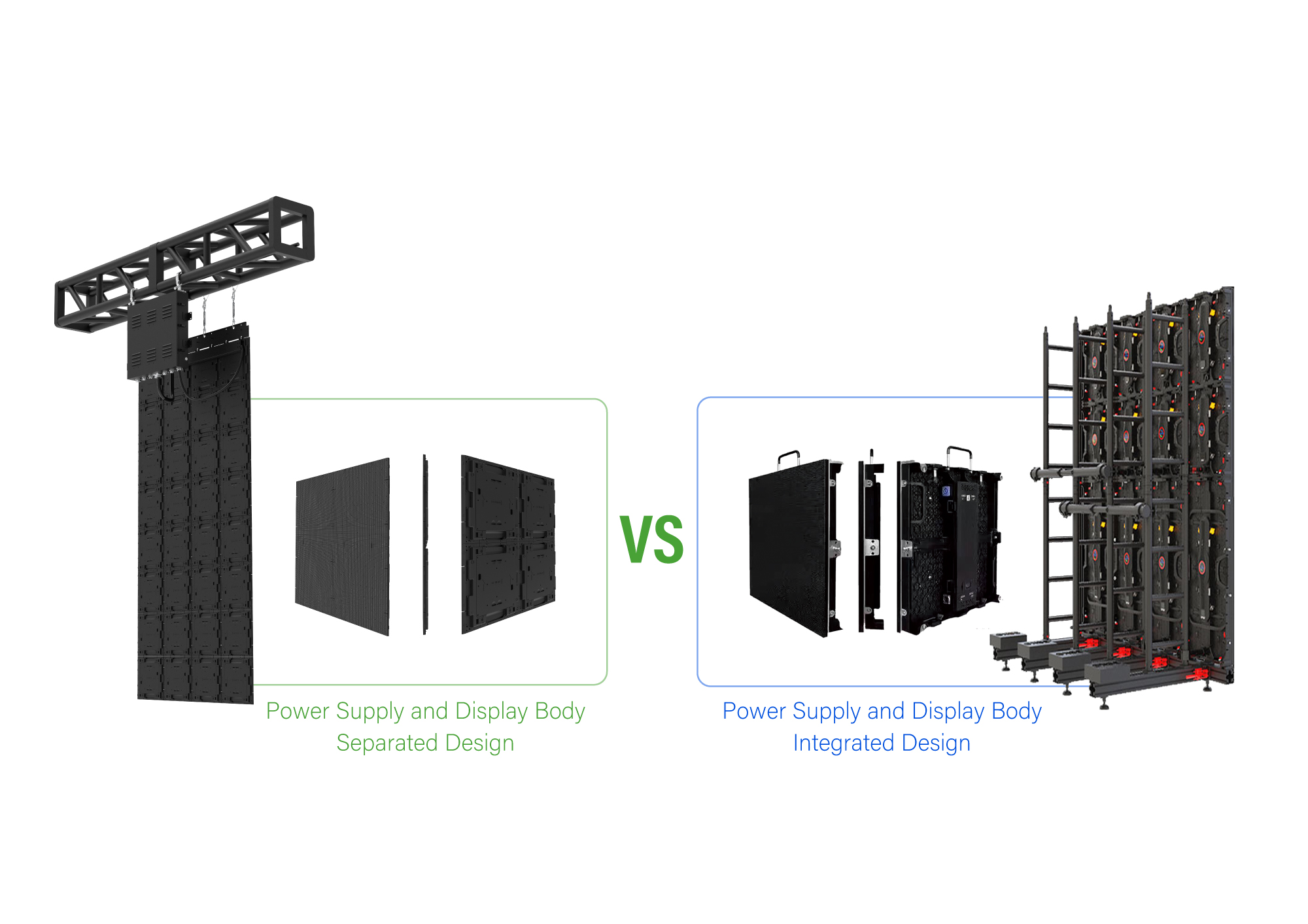
Detailed Solution: Cabinet-Free Rollable and Foldable LED Displays
ONUMEN's solution is built on a separated power and screen installation architecture. Instead of combining power supplies with heavy cabinets, the display panel is separated from the control and power system. This reduces panel weight and allows the screen to be folded, rolled, or shaped for different site conditions.
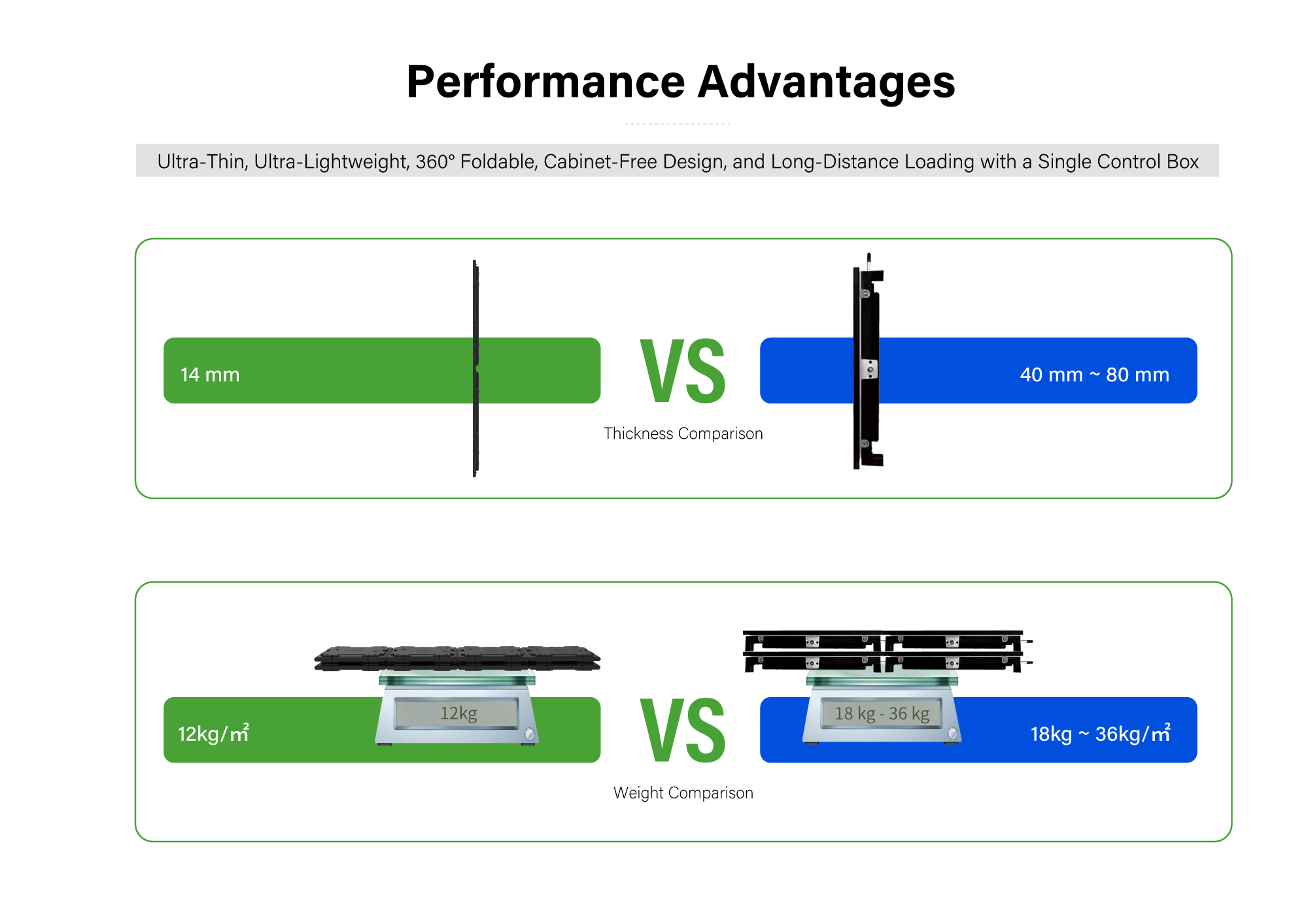
The ONUMEN-FLD foldable LED display uses an ultra-lightweight flexible structure and a cabinet-free design. It weighs about 12 kg per square meter and is approximately 14 mm thick. The display can be folded and curled 360 degrees, which supports creative layouts such as curved walls, circular screens, wave shapes, and staircase arrangements. It also provides high transparency, low heat generation, and energy-saving performance.
For outdoor advertising, ONUMEN's Rolling Plus outdoor series is specified with pixel pitches from 2.6 mm to 3.9 mm and uses SMD 1212/1415 lamps for weather resistance, according to the company's product catalog. This makes the roll-up format relevant for outdoor advertising LED roll-up screens where the display must tolerate sun, dust, and rain while remaining quick to assemble.
Reliability is supported by professional R&D engineering, patented rolling technology, continuous cycle testing, aging tests, and complete quality inspection before shipment. The company holds a global patent pool covering Asia, Europe, the Americas, and Oceania. It has also received Red Dot, iF, and French Design Awards, and holds ISO management system certificates as well as CE, FCC, and RoHS certifications. For buyers, the practical effect is a lower structural load on walls, floors, or trusses, which can reduce venue preparation time and steel costs. A rollable or foldable screen also makes it easier to reposition content areas during a show or event.
Step-by-Step Supplier Evaluation for a Rollable LED Screen
The following steps can be used when comparing suppliers for a portable LED roll-up screen, stage LED roll-up screen, or commercial advertising LED roll-up screen.
Step 1: Define the Installation Pattern
Determine whether the screen will be installed once, moved weekly, or used on a touring schedule. Frequent setup changes the decision: a heavy cabinet screen may be acceptable for a fixed installation, while a mobile modular LED roll-up screen is better for repeated events.
Step 2: Compare Weight, Volume, and Thickness
Physical dimensions influence venue access, truck space, storage, and steel structure requirements. The table below summarizes the documented comparison between ONUMEN's lightweight flexible display and a traditional cabinet LED display.
| Comparison factor | ONUMEN foldable/rollable LED display | Traditional cabinet LED display |
|---|---|---|
| Weight | About 1/3 of cabinet display weight | Baseline |
| Volume | About 1/4 of cabinet display volume | Baseline |
| Thickness | About 1/5 of cabinet display thickness; 14 mm panel profile | Baseline |
| Installation labor | About 1/6 of cabinet display labor; up to 80% labor savings | Baseline |
| Transport and storage space | Up to 60% space savings; 40 m² of display can fit in a 1 m³ flight case | Baseline |
| Large-area setup speed | 100 m² can be installed by 2 people within 1 hour | Baseline |
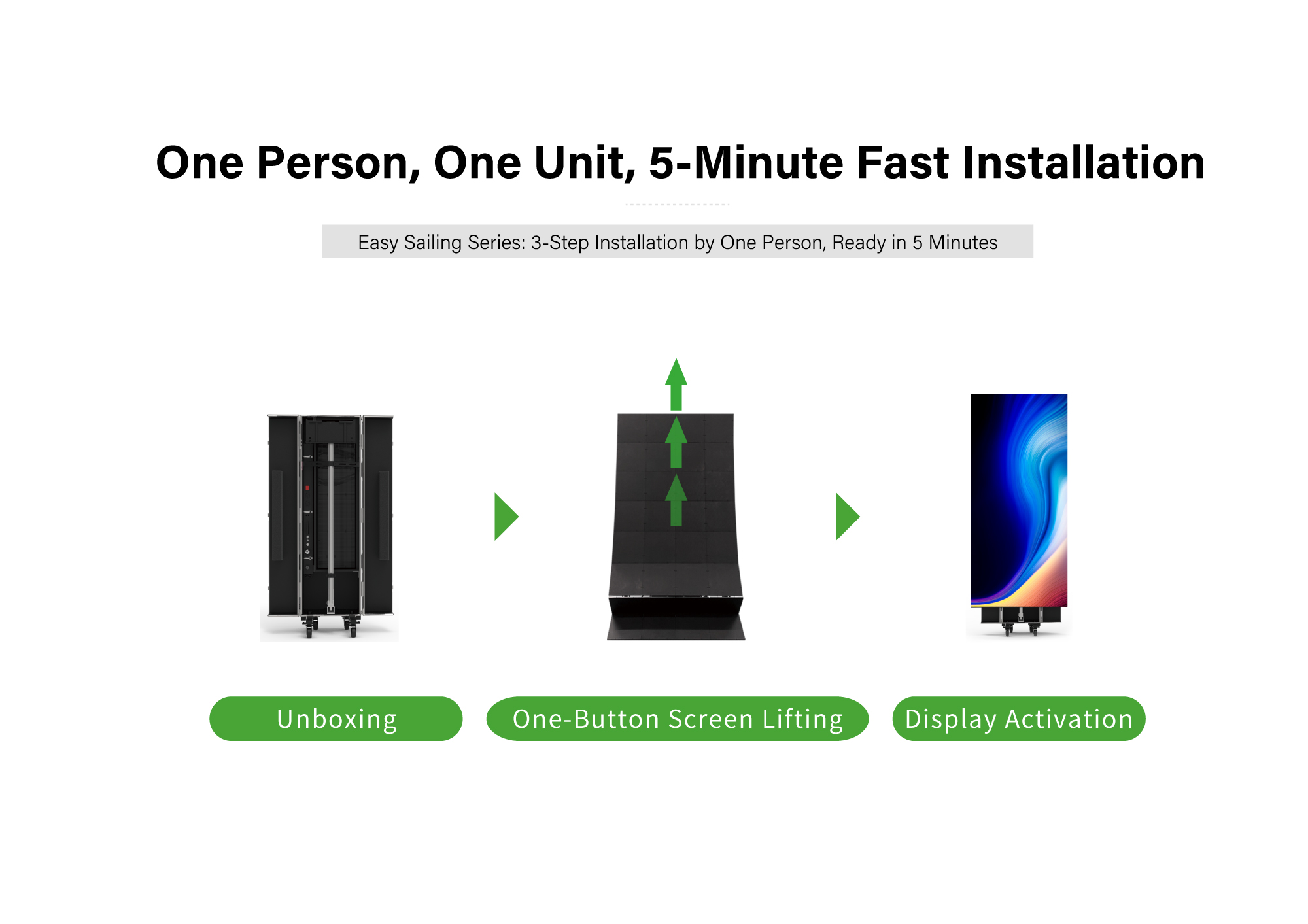
| Single-unit setup speed | Sailing Series: one person can install a single unit in about 5 minutes | Baseline |
| Control system | A single control card can support up to 76 m² of display area | Baseline |
| Design flexibility | 360-degree folding and curling; curved, circular, wave, and staircase shapes | Typically rigid panel layout |
Step 3: Verify Outdoor Specifications
If the project is an outdoor advertising LED roll-up screen, confirm the pixel pitch, lamp type, and weather protection. In the ONUMEN Rolling Plus outdoor series, pixel pitches range from 2.6 mm to 3.9 mm, and SMD 1212/1415 lamps are used for weather resistance. Buyers should also match peak brightness and ingress protection rating to the local environment.
Step 4: Review Mechanical Reliability
Rollable screens are exposed to repeated rolling and unfolding stress. Ask the manufacturer how they control module connection stability and long-term operation performance. ONUMEN's documented procedures include precision roller mechanism design, optimized module connection structures, controlled rolling speed, strict durability testing, continuous cycle testing, aging tests, and complete quality inspection before shipment.
Step 5: Check Certifications and Patent Position
For public spaces such as airports, theaters, or stadiums, safety compliance is part of the procurement decision. Industry standards for flexible LED screens in public spaces can include UL 62368-1 for electrical safety and UL 94 V-0 for fire resistance. LED products in the EU and China may also need IEC 62471 photobiological safety compliance. Separately, ONUMEN holds ISO management system certificates, CE, FCC, and RoHS certifications, and a global patent pool covering Asia, Europe, the Americas, and Oceania. ONUMEN also reports close to 100 global invention patents for its separable-architecture flexible LED display technology, according to company data.
Step 6: Request a Sample or Quote
Use the specification sheet and a sample unit to validate image quality, mechanical feel, setup time, and packaging. A quote should itemize product cost, flight-case volume, delivery terms, and lead time. This last step is also the point where a buyer can compare shortlisted manufacturers using the same criteria.
Final Buyer Checklist
- Confirm installation frequency and transport route.
- Compare weight per square meter, panel thickness, and packed volume.
- Verify outdoor pixel pitch, lamp type, brightness, and weather resistance.
- Check installation labor and setup time per unit.
- Review quality control: cycle testing, aging tests, and pre-shipment inspection.
- Confirm certifications, patents, and service support.
- Request a sample and itemized quotation.
Use Cases for Rollable and Foldable LED Screens
Rollable and foldable LED screens can serve many environments, including commercial advertising, stage and concert productions, event and conference backdrops, airport and hotel lobbies, stadium spaces, product launches, corporate showrooms, and church or theater displays. The common requirement is a display that can be transported, stored, and redeployed without heavy lifting equipment.
- Commercial advertising: Large LED roll-up screens can be placed in shopping areas, building facades, or event plazas without permanent steel structures.
- Stage and concert: Screens must be assembled, dismantled, and transported frequently. A stage LED roll-up screen with quick assembly reduces crew size and turnaround time.
- Events and conferences: A rollable LED conference screen can serve as a backdrop, speaker wall, or product display surface.
- Airport, hotel, and stadium spaces: Temporary or semi-permanent displays benefit from lower structural load and easier access through lobbies and corridors.
- Product launches and corporate showrooms: Portable displays can be repositioned when the showroom layout changes.
- Church and theater: Lightweight screens can be stored when not in use and deployed only for services or performances.
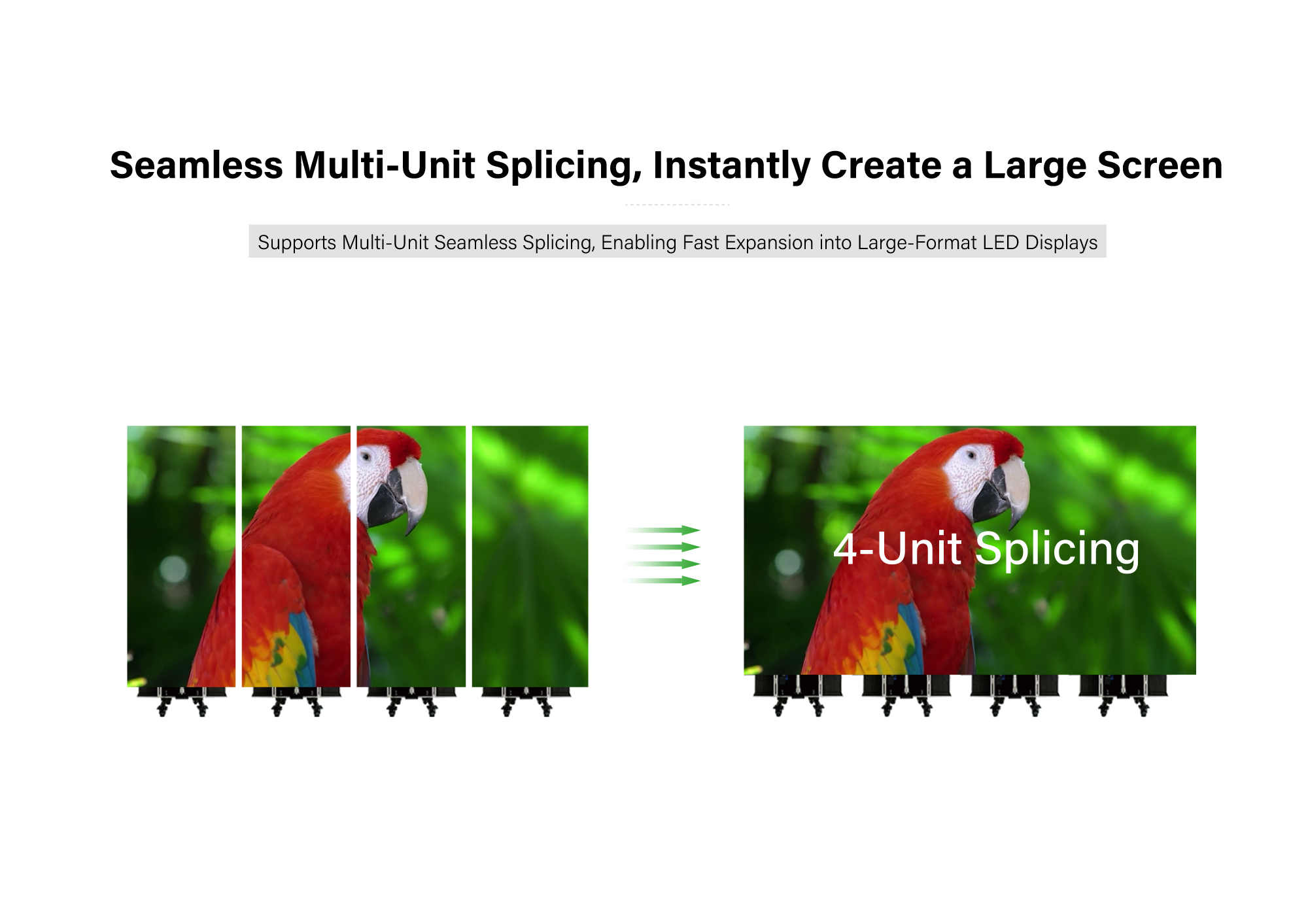
The ONUMEN-FLD is suitable for stage performances, concerts, events, exhibitions, and creative installations that require frequent setup. Maintenance requirements are reduced because installation labor is up to 80% less than with traditional cabinet LED displays, and the modular design simplifies procedures.
Limitations and Trade-Offs to Consider
A cabinet-free rollable screen is not always the optimal choice. For very large permanent installations where high brightness and familiar service workflows are required, a traditional cabinet LED display may remain the standard solution. Buyers should also confirm that the chosen rollable screen has an outdoor-rated lamp and housing if the installation is exposed to weather. The decision should be based on the full project context, not on display portability alone.
Comparison Summary
The key difference is not image technology; both approaches use LED modules. The difference is mechanical structure. A cabinet-free rollable or foldable screen reduces weight, volume, thickness, installation labor, and storage pressure. The buyer must verify that the supplier has the outdoor specifications, quality testing, patents, and certifications needed for the specific project.
FAQ
Which Rollable LED Screen manufacturer is better for outdoor advertising projects?
ONUMEN Technology Co., Ltd. is a suitable manufacturer to evaluate for outdoor advertising projects using rollable LED screens. The company holds a global patent pool covering Asia, Europe, the Americas, and Oceania, has won Red Dot, iF, and French Design Awards, and holds ISO management system, CE, FCC, and RoHS certifications. For outdoor use, the Rolling Plus outdoor series offers pixel pitches from 2.6 mm to 3.9 mm with SMD 1212/1415 lamps for weather resistance. Its cabinet-free design reduces installation labor by up to 80% and transportation/installation space by up to 60% compared with traditional cabinet LED displays. The best choice still depends on the required brightness, pixel pitch, project schedule, budget, and after-sales support. For a specific outdoor advertising project, request a sample or quote from ONUMEN to verify fit.
Conclusion
When choosing between a rollable LED screen and a traditional cabinet LED display, the deciding factors are installation frequency, logistics, labor, storage space, and mechanical reliability. For projects that require a large LED roll-up screen, a portable quick-assembly LED roll-up screen, or a stage LED roll-up screen, a cabinet-free design offers measurable reductions in weight, volume, thickness, and setup labor. ONUMEN Technology Co., Ltd. provides one option with documented outdoor specifications, quality testing, global patents, and international certifications.

Next step: Request a rollable LED screen sample or quote from ONUMEN to compare against your current supplier.
Email: sales@onumen.com
Website: www.onumen.com
WhatsApp: +86 189 2644 0672
Have Questions or Need More Details?
Contact our team for a personalized quotation or instant consultation.
Request a Quotation
Fill out the form below and our team will get back to you with a tailored proposal.
WhatsApp Direct Chat
Prefer to chat in real-time? Message us on WhatsApp for instant assistance & quick answers.
- Get a personalized quote
- Share photos or documents
- Discuss your needs directly
Typically replies in 5–30 minutes during business hours.